
 Clinical Communication & Collaboration
 Medical Answering Service
 Provider & Staff Scheduling
 Healthcare Operator Console
 Integrations
 Features
Live Session
The State of Healthcare Call Centers: What the Data Says
Watch Now >>April 15, 2026
Organization
Bon Secours
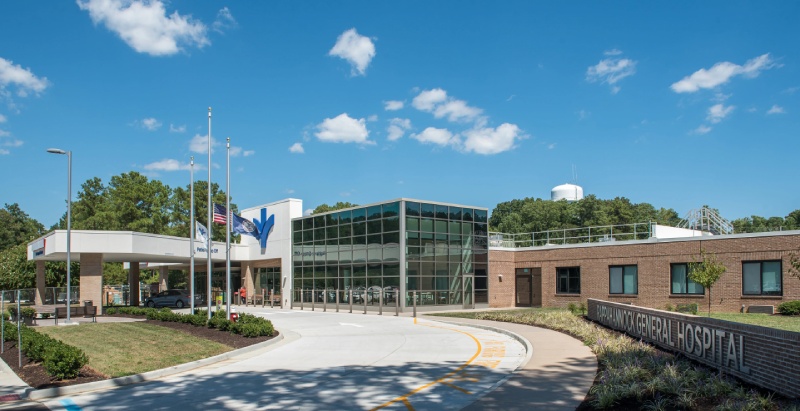
Rappahannock General Hospital
Location
Kilmarnock, VA
Solutions
Clinical Collaboration
TABLE OF CONTENTS

Project Voyager is Bon Secours Mercy Health’s initiative to deploy PerfectServe on shared mobile devices across its entire system. The platform equips care team members with shared mobile phones and a modern communication app that enables fast and effective care team coordination.
Bon Secours Rappahannock General Hospital, a small but busy facility within the system, went live with PerfectServe in early spring. Like many departments at Rappahannock, the pharmacy team received shared devices as part of the go-live, and the project quickly became a springboard for much-needed communication improvements.
The term “much-needed” is particularly relevant here. Like many smaller hospitals in the United States, Rappahannock had a talented team of doctors, nurses, pharmacists, and other clinical and nonclinical staff who never gave less than their full effort, but resource constraints meant the facility wasn’t always on the transformative edge of technology adoption. Now that Rappahannock is part of the larger Bon Secours Mercy Health system, they can avail themselves of more specialized clinical and IT systems— much to the delight of their staff.
Before Project Voyager, the pharmacy relied on a pair of zone phones that were intended to be taken along whenever a pharmacist left the department. But with only two devices shared among the team and no call rollover from the main pharmacy line, calls frequently went unanswered—particularly during off-hours or when staff were away from the window.
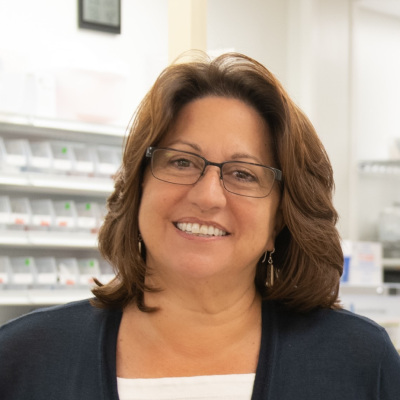
Linda St. George, RPh
Pharmacy Manager
Pharmacists often need to weigh in on time-sensitive, high-impact patient care questions, and when they can’t be reached quickly, the downstream effects (like delays, medication errors, and more) can be significant.
The Agency for Healthcare Research and Quality emphasizes the importance of “open and direct communication” with the pharmacy to bridge safety gaps and ensure all relevant information is available to every healthcare professional involved in care delivery.1 With that in mind, Rappahannock made improving intrahospital communication with the pharmacy a key goal for their PerfectServe rollout.
To make this happen, the pharmacy’s main line was configured with automatic call rollover. If a call rings 3 times without being answered, it’s redirected to an “All Staff” pharmacy role in PerfectServe, which simultaneously rings the devices of all pharmacy staff currently signed in to a mobile device. After that, the call is answered by the first person who picks up. Whether pharmacists and pharmacy staff are physically present in the department or not, they can still be reached in real time with a quick phone call.
The last point is worth emphasizing, because the constraints of the prior setup caused a fair amount of stress. Especially at night, pharmacy staff felt like they couldn’t leave the confines of the pharmacy for fear of missing a call. This made it difficult to attend to other duties like providing bedside or consult support, rounding, or even responding to code or rapid response calls. Call forwarding with PerfectServe completely removes this obstacle.
A call schedule was also built for afterhours call routing:
PerfectServe also provides a backup communication channel in the form of secure messaging. If a call doesn’t connect, staff can send a message directly to the pharmacy team, which will route to the appropriate on-call contact.
In the 9 months following go-live, a total of 183 calls to the pharmacy rolled over to PerfectServe phones, including 40 calls from the ED, 30 from Med Surg, 9 from Psych, 7 from Nursing Administration, and 97 from other departments:
This call volume, compared to the low usage of the previous zone phones, demonstrates the improved utility and high adoption of the new PerfectServe workflow. Staff across the hospital are consistently able to reach the pharmacy without having to track down alternate numbers, leave a voicemail, or even wait to call back. Importantly, pharmacists are able to leave the pharmacy area while still providing critical support to clinicians calling them.
Additionally, the average call durations are quite short, suggesting that clinicians and pharmacists are able to connect and exchange needed information quickly in support of speed to care and timely medication delivery.
Johnnie Self
ED Nurse

Bessie S. Brown, DNP, MBA, RN, NEA-BC
VP of Nursing | VP Hospital Administrator
VP Virginia Nursing Association, Chapter 5


Hospitals and the clinical, IT, and telecom systems that help them run every day are often a hodgepodge of decisions made over extended periods of time. In a perfect world, everything would work together harmoniously to facilitate hiccup-free care delivery, but that’s usually not what happens in practice.
And who feels that dysfunction the most? It’s almost always the people caring for patients. When a nurse can’t get an answer for an urgent question, or when a pharmacist misses a call and can’t get in touch with the provider who needed something ASAP, the frustration builds quickly. Communication should be the conduit for quality patient care—not the barrier.
Linda St. George, RPh
Pharmacy Manager
That’s why Rappahannock’s success with Project Voyager is so meaningful. If an ED nurse knows they can now call the pharmacy and have their question answered in about 30 seconds, imagine how good it feels to know that mental burden—the fear of delayed communication and delayed patient care—has been alleviated.
It goes to show that effective care team communication really is the backbone of care delivery, both for clinicians and the patients they treat. With wins like this, it’s safe to say that pharmacy accessibility is just the tip of the iceberg for Project Voyager.
 Organizations
 Roles
Roles
 Blogs
Blogs News
News Comparisons
 Case Studies
 Downloads/Reports
 Events
 Videos
 Company
 Careers
 Why PerfectServe
 FAQ
FAQ Nurses of Note
 Best in KLAS