



1 Million Users, $100 Million in Annual Revenue: Here's What We Didn't Do
Laying out the philosophies that define PerfectServe after nearly 30 years in business.


Our CEO, Guillaume Castel, recently spent some time with Mr. HIStalk to have an in-depth conversation about where we’ve been, where we are, and where we’re going.
(Quick aside: If you're not a HIStalk subscriber already, you’re missing out on some of the best behind-the-scenes info from the world of health IT.)
This interview comes at something of an inflection point for PerfectServe, which has been around for nearly 30 years but has experienced the most rapid growth in just the past 7 years. As Guillaume shared, we crested $100 million in annual revenue in 2025, our employee base has grown to 400+, and there are now 1 million users on our platform. A lot is happening.
But the story here isn’t really the numbers. The real story is the underlying philosophy that produced them.
The philosophy that differentiates PerfectServe is best described by outlining what we didn’t do and the trends we didn't chase. In a world where something like 90% of healthcare technology startups fail, you have to stay true to your mission and build products that actually matter if you want to succeed—especially when the people using them are making clinical decisions where “good enough” isn't good enough.
Here’s what we didn’t do to make sure we can keep doing the things we should do.
Balancing Financial ROI and Clinical Outcomes
ROI for health IT investments used to be tied primarily to things like throughput, length of stay, physician productivity, and patient satisfaction. These metrics are still very important, but in the past 5 to 10 years, decision-makers in healthcare have shifted their priorities.
Now, whether it takes 20 minutes or 2 hours to get there, the main question for vendors like PerfectServe is:
"What’s the financial return, and can you prove it?"
As Becker’s notes, “the pressure to demonstrate a clear, measurable return on technology investment has never been greater.”
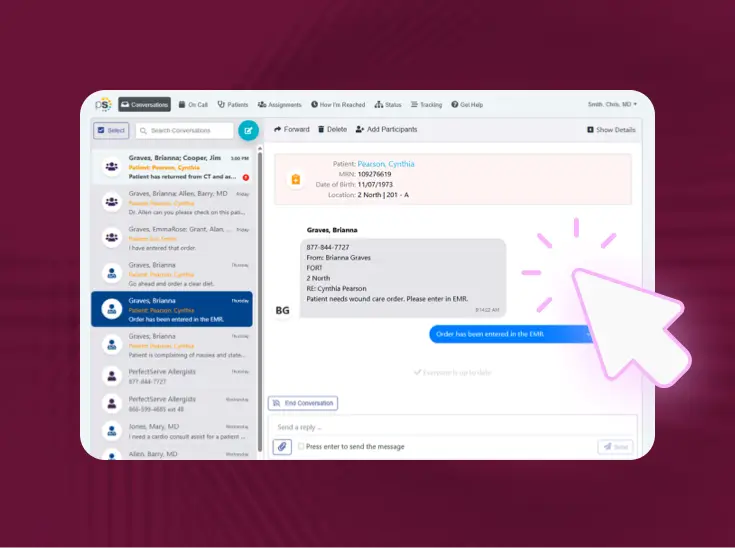
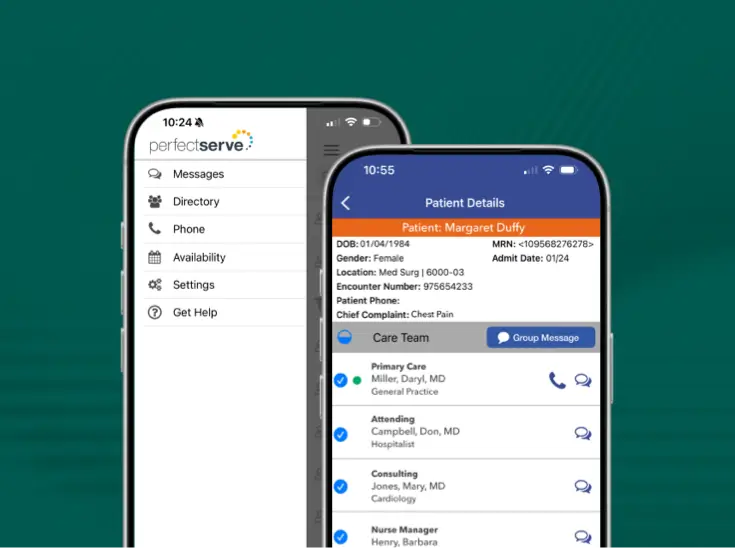
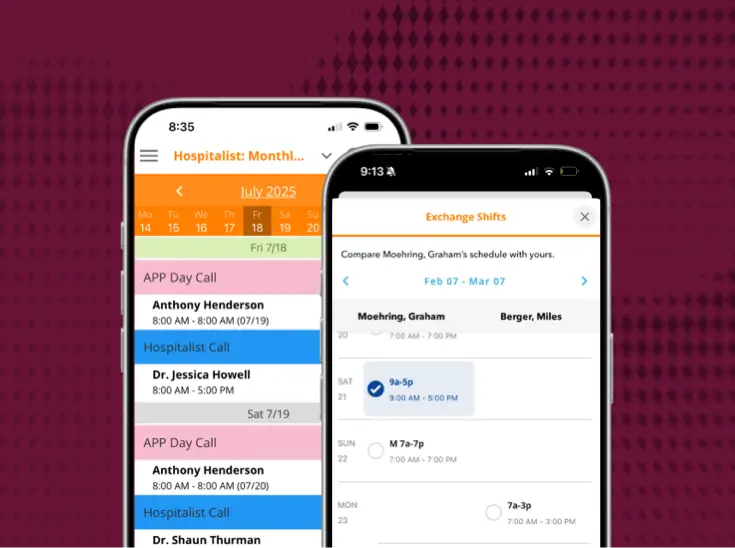
We didn’t create this shift, but we did watch it happen, and we listened closely to our customers to stay attuned to their evolving needs. As a result, we’ve been able to build a platform—combining clinical communication, provider scheduling, practice call management, switchboard workflows, and patient engagement in one place—that delivers immediate and demonstrable financial ROI through consolidation without sacrificing improvements in clinical outcomes.
In other words, we didn’t abandon clinical outcomes to chase ROI. As far as we’re concerned, the two go hand in hand.
Having one platform to facilitate a variety of important workflows, from scheduling your anesthesia team to delivering critical lab results to the ordering physician in 6 seconds flat, is better for everyone. It just so happens it’ll also save money along the way as you decommission siloed point solutions.
Build Things Worth Building, Acquire Things Worth Acquiring
Almost every growing technology company is faced with the decision to build or buy at some point. In reality, the best (and most realistic) strategy probably involves a bit of both.
Our stance is pretty simple: We don’t build easy things, and we’re not just going to buy our way to a product portfolio.
The internal standard is that we have something of an aversion to “me too” products. If it’s easily replicable or likely to commoditize fast, it’s not for us. Take our clinical communication and provider scheduling solutions as proof points. Dynamic Intelligent Routing® is still the market standard for routing intelligence after 20 years, and nothing can generate a near-perfect schedule quite like the power of combinatorial optimization. This is differentiated technology that stands the test of time.
And with the cloud-based switchboard, it’s the story of a solution developed in house that was probably ahead of its time but is now the product with the most momentum hospitals and health systems are eager to upgrade a long-overlooked part of their communication infrastructure. Building a product like that requires the confidence that you can build something best in class, along with the conviction to stay the course. When competitors start to follow your operator console lead, that’s a good sign.
PerfectServe's acquisition posture reflects this same discipline. We look at something like 4 or 5 companies every week, and we clearly have an acquisition history, but the bar is high. With any acquisition target, the value, culture, and people all have to align to pass muster. In a market where startup valuations are still out of whack with embedded value, we view that patience as a competitive advantage.
Integration is a Strategy, Not a Feature
We think about integration a lot. So much, in fact, that Guillaume penned an op-ed for MedCity News that addressed a common point of friction in health IT:
"No matter their purpose, many healthcare technology vendors follow a familiar playbook: Create a protected ecosystem for your solutions, make it hard for customers to use or integrate with products from competitors, then encourage them to go all-in on your product suite. This approach may seem advantageous for vendors in the short term, but it creates a lot of challenges for healthcare organizations and can negatively impact patient care."
It’s not our job as a vendor to tell you that all the technology decisions your organization has made over the past 10-15 years need to be scrapped in favor of building a walled PerfectServe garden. When we work with a new customer, we meet them in a way that helps them get the most from their current investments but doesn’t ignore the possibility of long-term optimization that could include sunsetting other solutions in the tech stack.
It's all about building a system that works best for your customer's needs. That's exactly why we've built a catalog of 270+ integrations with other clinical, IT, and telecom vendors—including friends, partners, and even competitors.
And that’s also why differentiated technology is so important to us. If your product is genuinely differentiated, integration doesn't threaten it—it extends its impact. As just one example, PerfectServe drives value with and for EHR companies in many customer environments, and we’re eager to do more.
That's only possible if the product is good enough to stand on its own and useful enough to make adjacent systems better.
With AI, It's Real Outcomes Over Hype
For a variety of reasons, healthcare hasn’t always been as quick as other industries to adopt new technology. Not so with AI.
October 2025 research from Menlo Ventures says that “22% of healthcare organizations have implemented domain-specific AI tools, a 7x increase over 2024 and 10x over 2023.” By comparison, only 9% of companies in the broader economy have implemented AI, and most rely on general tools instead of purpose-built solutions.
So yes, the pressure to adopt AI is real in healthcare, but the focus needs to be on movement that generates real outcomes. If you’re a fan of the Gartner Hype Cycle model like we are, it’s time to get to the Slope of Enlightenment, where the wheat has been separated from the chaff.
We firmly believe that the stakes are too high to take risks with imperfect AI models. Real clinicians are using our technology to facilitate care for real patients, and the consequences of taking shortcuts could be devastating.
We’re navigating these waters by taking a two-track approach. Internally, concerted AI usage has been ongoing for at least 2 years to boost productivity and efficiency in targeted areas of the business. There are even peer-led groups in departments like engineering that allow team members to share new tools and best practices on a regular basis.
Externally, AI application is deliberate and very outcome-oriented. The goal with our products is to convert workflows into actual work by using agentic AI to eliminate the friction between a process and its outcome. Guillaume offered a concrete example:
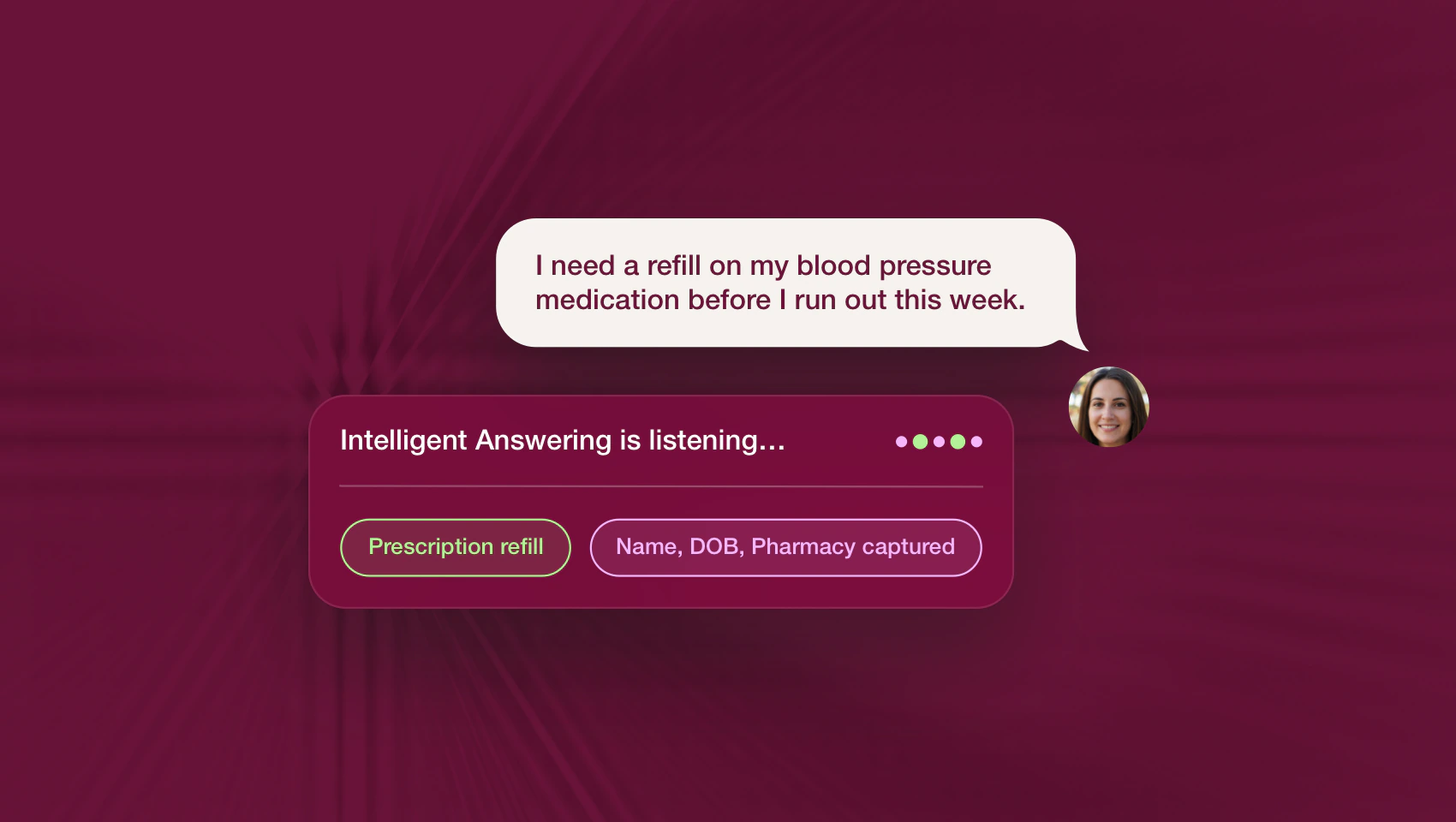
“If you're running a call center, you can definitely improve the experience by embracing AI at the first layer of triage levels so that the call gets to the right person in that transfer center, the right way, and with the right context. This is embracing AI in a way that makes an operational difference for the health system without putting at risk any of the clinical outcomes.”
That means we’re aggressively pursuing the possibilities afforded by AI—including a near-future roadmap that incorporates a range of new AI functionality into our clinical communication, provider scheduling, answering service, and operator console products—but we’re not doing it just to say we did it. We’re doing it because we think it can make a real difference for our customers.
Don't Lose Your Culture Along the Way
Everything represented here is a major piece of the PerfectServe manifesto: listen always, build carefully, integrate openly, and move deliberately.
The pace of change can be overwhelming, but we’re confident that maintaining these building blocks of our culture will set PerfectServe up for success long into the future. And though it’s not the reason we do our work, recent third-party recognition shows we’re firmly on the right path:
- Gartner positioned PerfectServe as highest in execution and furthest in vision in the 2026 Magic Quadrant™ for Clinical Communication and Collaboration.
- PerfectServe was also ranked #1 across all five use cases in the 2026 Critical Capabilities for Clinical Communication and Collaboration report.
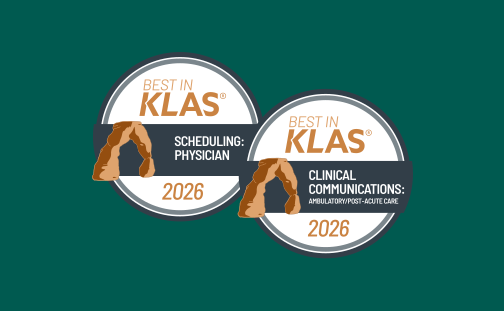
- We took home two Best in KLAS awards for 2026. Lightning Bolt was #1 in physician scheduling, and PerfectServe was #1 in ambulatory clinical communications.
As we move into the future, where trends like consolidation, growth in the non-acute space, and the ability to scale technology will be front and center, we like our spot in the market.
If a confident and collaborative partner that can merge decades of scheduling and communication expertise with the speed of innovation in 2026 sounds like an interesting proposition, you know where to find us.
See it working for real teams






.jpg)





.png)




Bring us the workflow that [hurts most]
We'll show you how it runs on PerfectServe, with your teams, your sites and your EHR.