




The [nervous system] for healthcare communication
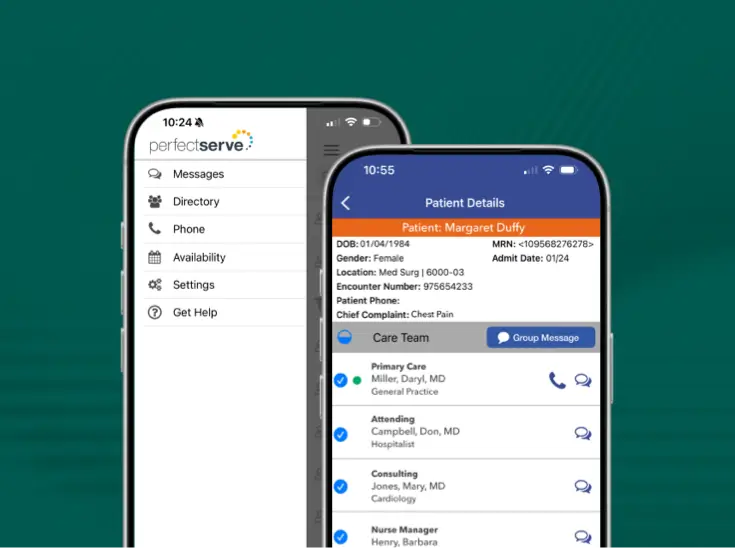
An AI engine that schedules the right people, equips clinicians with the information they need, and keeps patients in the loop.
The [connective tissue] of healthcare communication
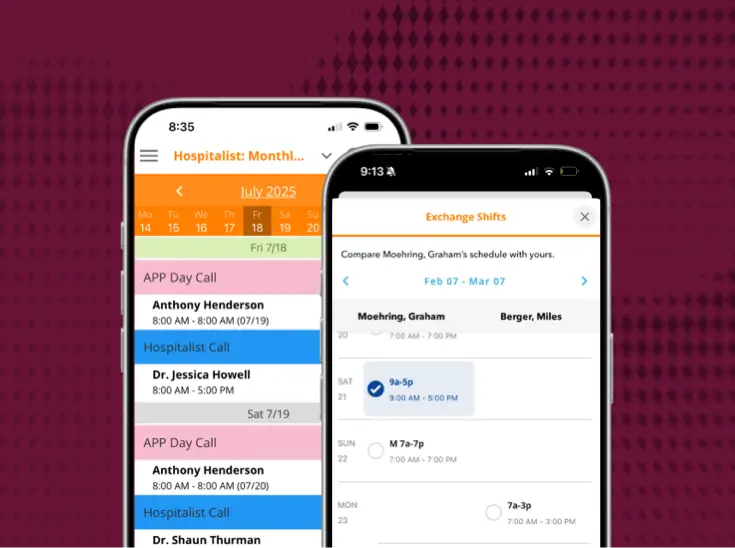
An AI engine that schedules the right people, equips clinicians with the information they need, and keeps patients in the loop.
Trusted by 500+ hospitals, 10,000+ practices, and 1M+ users.


How acritical lab resultgets handled
How a team alert activates the right team members immediately
- 1
Patient arrives at a rural ED
- Thorough evaluation is completed by ED staff.
- Patient is suspected to have suffered a stroke.
- 2
Team alert is initiated
- Telestroke alert is initiated in the communication platform by any ED staff member.
- One tap on a preset "Telestroke" message group immediately starts the process.
- 3
Staff at main hub hospital are alerted
- Transfer center team and on-call telestroke physician at the hub hospital are pulled into a group message.
- Communication platform references a live schedule to reach the right physician.
- 4
Patient transferred and IVT is given
- Telestroke physician confirms stroke diagnosis and patient is transferred to hub hospital.
- IVT is administered within the 4.5-hour window.
How a critical lab result finds the right clinician in seconds
- 1
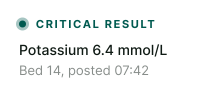
Critical result posts in the EHR
- The lab flags a critical value the moment it results.
- The alert is packaged and sent to the communication system.
- 2
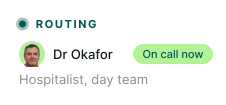
Routing reads role, schedule and urgency
- The system reads message type, service line and urgency.
- Routing checks the live schedule for who is covering.
- 3
The right clinician is notified
- One targeted alert to the clinician's device, no overhead page.
- If no response is recorded, backup coverage is notified.
- 4
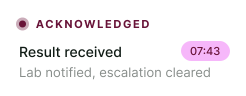
Acknowledged and recorded, care moves
- The recipient accepts the result and the time is recorded.
- The lab sees the acknowledgement and moves to the next patient.
How an after hours call reaches the right provider, not voicemail
- 1
A patient calls the practice after close
- Same main line the practice already publishes.
- The call is answered, not sent to a full voicemail box.
- 2
The reason for calling is captured
- Urgent clinical issues are separated from routine asks.
- Caller name, number, and reason go on the record.
- 3
Urgent reaches on-call, routine waits
- Urgent messages reach whoever covers tonight, by rule.
- The on-call provider is only woken for what matters.
- 4
Every call is documented, start to finish.
- Message, routing, and response all on the record.
- The morning team sees what happened overnight.
How a coverage gap gets filled without a single phone tree
- 1
A shift opens and the schedule flags it
- The request starts in the app, not a group text.
- Coverage risk surfaces before it becomes a crisis.
- 2
Eligible providers see the shift
- Only qualified, available clinicians see the offer.
- Fairness rules keep workload balanced across the team.
- 3
The swap is claimed and approved
- Approval follows the department's own workflow rules.
- Nobody is trading shifts in a side channel text.
- 4
The schedule updates everywhere
- Routing follows the schedule the moment it changes.
- Everyone sees the same schedule, no stale printouts.
One connected system orchestrating behind-the-scenes work in real time
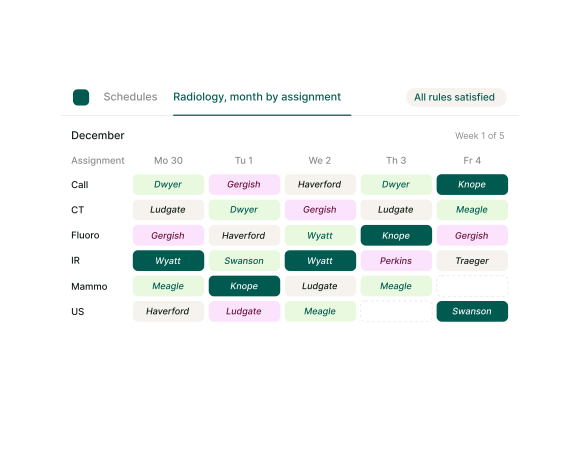
Schedules that build themselves



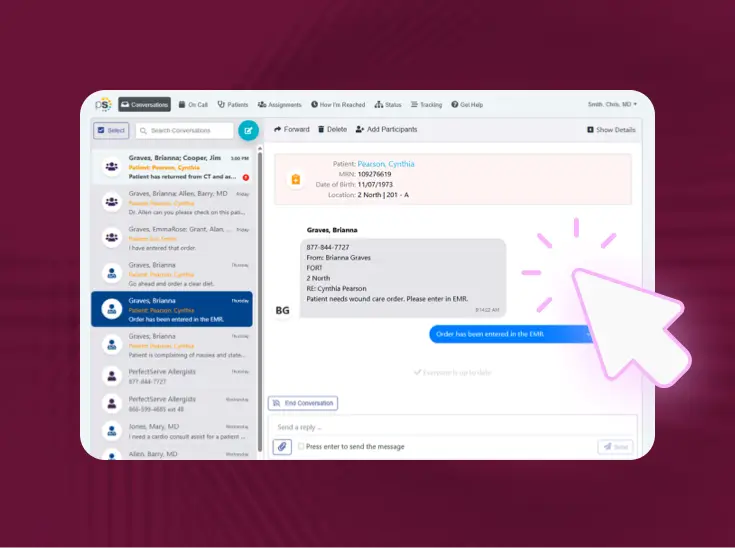
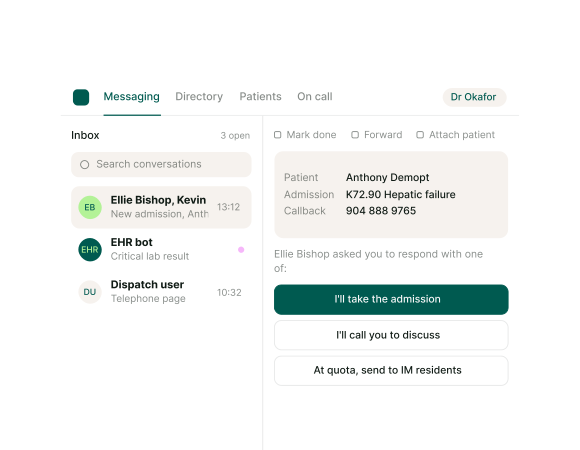
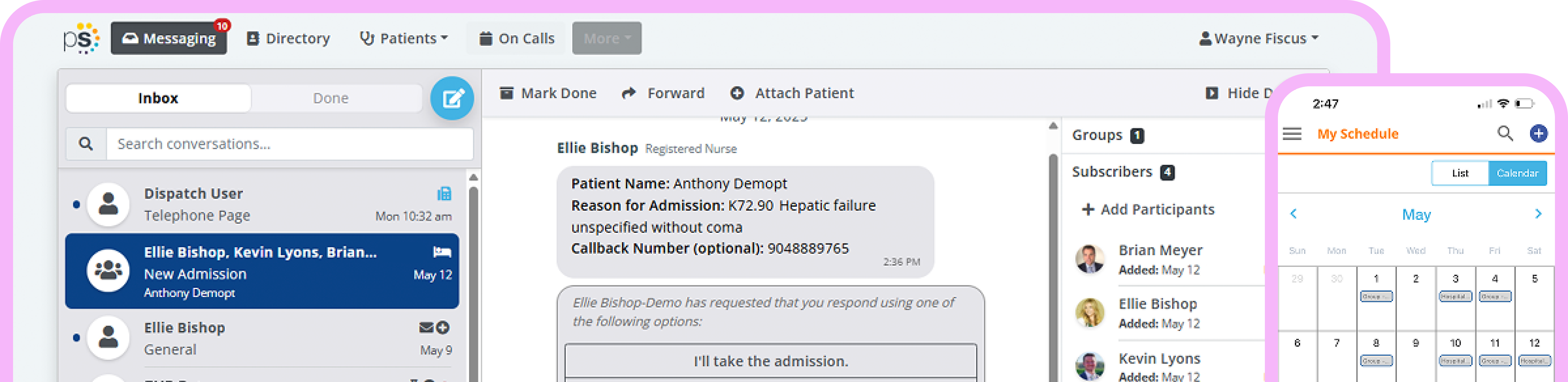
Messages that find the right person



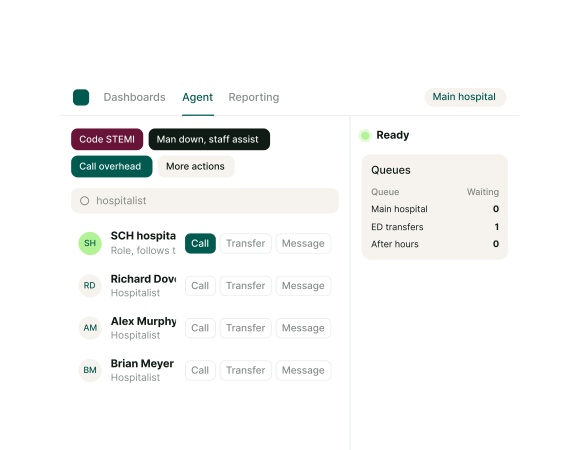
Modern switchboard easily directs traffic



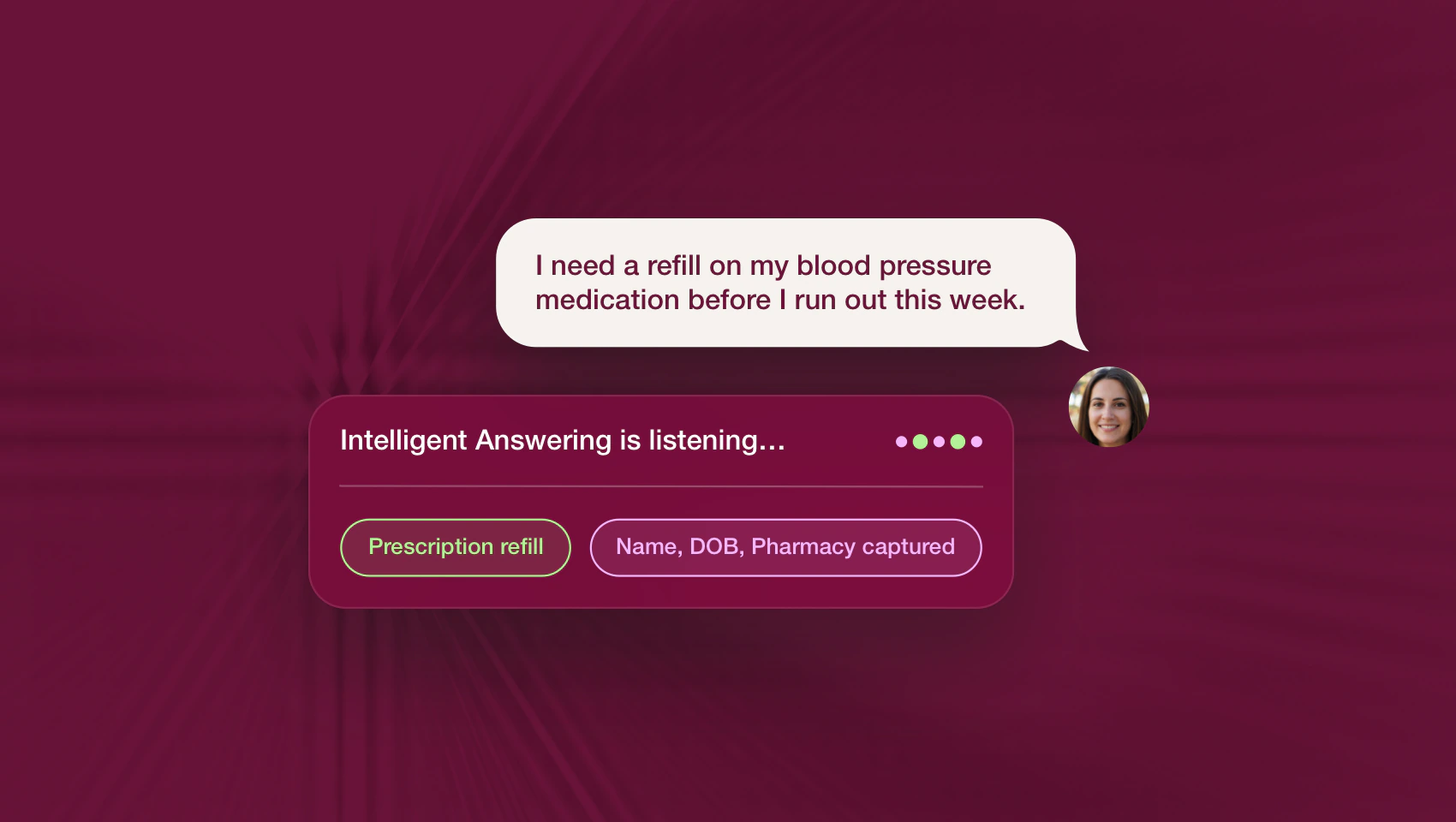
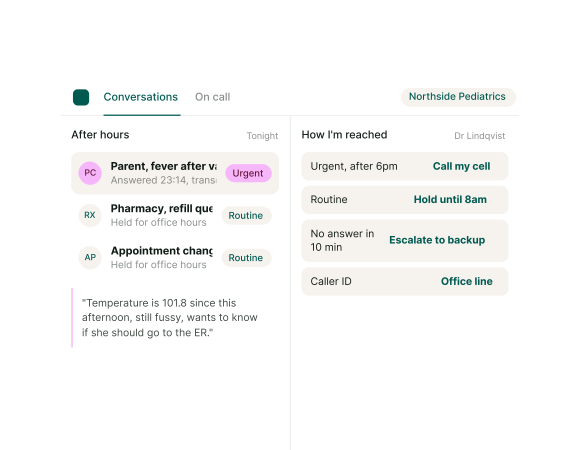
Every call answered, day or night



For a complex organization like ours that has a broad footprint, communication is vital. We've worked with PerfectServe for well over a decade now, and I can't imagine a better partner for getting it right. They're one of a handful of keystone vendors that we view as foundational for continued organizational success.

One of the biggest benefits that PerfectServe brings us is their dynamic routing. Their secure communications and dynamic routing are first class and one of the reasons we are hesitant to move away from this platform. I don’t have to go searching through different call schedules to make those decisions.

No other platform allows for communication pre-visit, during the visit, after the visit, and after hours with the kind of escalations and logic that PerfectServe supports. And the relationship has been second to none.
One thing that we like about PerfectServe is that they are a healthcare-designed, healthcare-driven, and healthcare-focused business. They aren’t a phone company trying to fall in line with healthcare. They are probably one of the best vendors.
Standardizing our scheduling infrastructure with PerfectServe gives our teams a single, reliable source of truth for provider availability across the entire health system. This level of visibility strengthens care coordination, reduces administrative burden, and ultimately helps our clinicians spend more time focused on patients.
I like the ability to do things on the fly in Lightning Bolt Scheduling. We were having an issue with last-minute changes, overnight changes, and weekend changes, and we appreciate the ability for each group to go in and adjust things if needed. That is the highlight of the solution.
We like that PerfectServe is innovative. They keep growing, and they really care to hear what their clients feel, think, want, and need when they’re focusing on innovation. PerfectServe is a thought partner.

See what this looks like in your world
Ranked #1 by end users and recognized by industry analysts
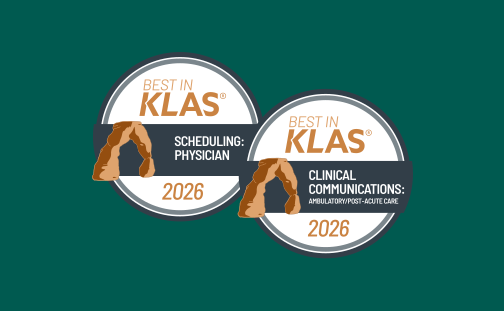
Best in KLAS in 2025 and 2026 for ambulatory and post-acute clinical communication and physician scheduling. Highest in execution and furthest in vision in the 2026 Gartner® Magic Quadrant™ for Clinical Communication and Collaboration.



A platform that never sits still




Questions everyone asks first
What separates PerfectServe from other platforms on the market?
The clearest differentiator is that PerfectServe’s scheduling and communication systems share the same underlying data. When a schedule changes, routing updates automatically. That means no manual intervention, no lag, no staff member chasing down who’s actually on call. Most platforms on the market either scheduling or communication well. PerfectServe is built so the two functions inform each other in real time.
What results have PerfectServe customers seen?
Advocate Good Samaritan Hospital reported a 99% decrease in overhead physician pages, Hospital for Special Surgery cut rapid response times 73% (2:30 → 40 sec), and Munson Healthcare’s 7-hospital system retired 600 pagers (~$120K/yr saved) and cut 56,000 calls over 13 months.
How much does PerfectServe cost?
PerfectServe uses custom pricing based on organization size and the solutions you need, such as clinical communication, scheduling, operator console, or medical answering service. Request a demo for a quote tailored to your environment.
Can PerfectServe replace our pagers?
Yes. PerfectServe runs on the devices teams already use (smartphones, desktops, and VoIP phones) and can work alongside legacy pagers during a transition rather than forcing an overnight switch. Organizations commonly use it to retire pager fleets while keeping critical alerts reliable.
Does PerfectServe integrate with our EHR and existing systems?
Yes. PerfectServe integrates with Epic, Oracle Health (Cerner), and 270+ clinical systems, including nurse call and alerting platforms, lab and radiology systems, telephony providers, and pager networks. Messaging can be embedded directly in the EHR, so patient context travels with every on-call message and clinicians don’t switch between applications.
Is clinical communication software only for large hospitals?
No. The best platforms can scale from single-specialty clinics to large health systems. PerfectServe serves both 500+ hospitals and 10,000+ medical practices, using the same routing engine for acute and post-acute care settings.
Is PerfectServe HIPAA-compliant and secure?
Yes. PerfectServe is HIPAA compliant and SOC 2 compliant. Messages are encrypted at rest and in flight, every action is captured in a complete audit trail, and every covered entity receives a signed Business Associate Addendum before going live. See how we make trust and security a priority.
How long does a demo take?
A demo with PerfectServe typically lasts about 20-30 minutes. Schedule one now to see how our solutions can benefit your organization.
Don’t have time? Take a product tour of our solutions.
Do I need a special device to use PerfectServe?
No. PerfectServe works on your legacy devices, smartphones (including both BYOD and shared device models), VoIP and landline phones, desktops, and even pagers. No proprietary devices are required.
What is PerfectServe?
PerfectServe is a leading provider of technology that helps healthcare organizations communicate, coordinate real-time care delivery, and schedule their most valuable assets, including people, rooms, and even equipment. With our clinical communication, physician scheduling, operator console, and medical answering service solutions, we help our customers accelerate speed to care by ensuring the right people are in place at the right time to take action on important information related to patient care.
Bring us the workflow that [hurts most]
We'll show you how it runs on PerfectServe, with your teams, your sites and your EHR.