
 Clinical Communication & Collaboration
 Medical Answering Service
 Provider & Staff Scheduling
 Healthcare Operator Console
 Integrations
 Features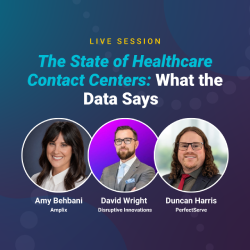
Live Session
The State of Healthcare Call Centers: What the Data Says
Watch Now >>April 2, 2026
Organization
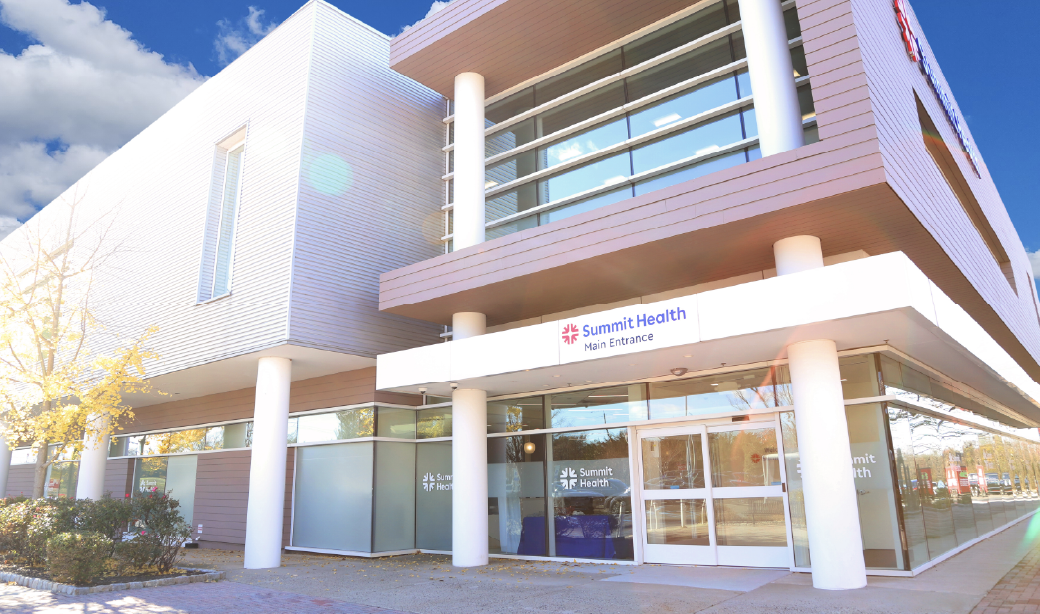
Summit Health
Location
New York Metro Area
Solutions
Lightning Bolt + Answering Service
TABLE OF CONTENTS
of urgent patient calls are now resolved in under 5 minutes.
of calls to the pediatric nurse triage line are diverted from the ED.
of physician schedules are now automated.
Before PerfectServe, Summit Health tracked physician coverage manually, using methods like paper schedules and Excel spreadsheets. Staff responsible for this process were dedicated and understood the organization’s requirements, but building and managing schedules by hand took a fair amount of time and required an extra dose of vigilance to reduce the likelihood of errors or oversights. And because schedules weren’t maintained in one system, coverage visibility across the organization wasn’t as consistent as they wanted it to be—it wasn’t ideal for staff to have to reference multiple static schedules to get the full picture.
After-hours call management, which was handled by a thirdparty vendor, also needed some help to meet Summit’s standards. Providing top-notch, attentive patient care is one of their primary differentiators, so this vendor’s shortcomings— including limited customization options for their app and phone menus, a high turnover rate for their agents, surprise fees that popped up far too often, and inefficiencies that occasionally impacted patient hold times—stood out right away.

For the team at Summit, it became clear that their organization had simply outgrown the vendor’s capabilities, and they knew they needed to make a switch to maintain both patient and clinician satisfaction.
Jasmin Young
Director of Program & Initiatives, Primary Care Service Line, Summit Health

According to Jasmin Young, Director of Program & Initiatives for Summit Health’s Primary Care Service Line, the organization needed a healthcare-native technology partner that could:
Jasmin Young
Director of Program & Initiatives, Primary Care Service Line, Summit Health
PerfectServe’s clinical focus, strong customer references, and combination of important functionality—covering clinical communication, after-hours call management, physician scheduling, and even an integration with Conduit Health Partners, a nurse triage service—tipped the scales.
Rolling out the PerfectServe platform required careful change management.
Understanding that fast, wholesale change is not always the best route, Summit embraced a pragmatic rollout that Jasmin called “functionality in phases.” The first step was simply getting everyone live on the platform. Then, other rules and advanced features were layered in gradually.
Custom routing patterns— including an “all-Summit” line that ensures urgent calls always reach the right clinician, even when coverage is shared across departments—were built to reflect Summit’s real-world needs.
Throughout the implementation process, PerfectServe’s team maintained a “one band, one sound” approach—calm, adaptable, and responsive even as Summit continued to adjust elements of the project.
Milestones were tracked for go-live dates and feedback patterns, with Jasmin reviewing complaint trends to distinguish one-off user errors from true workflow or configuration issues that required system updates.
A year into Summit Health’s partnership with PerfectServe, the impact has been dramatic and multifaceted:
of urgent patient calls are now resolved in under 5 minutes.
of urgent patient calls receive a callback within 30 minutes.
of 155 pediatric nurse triage calls were safely diverted from the ED.
of schedules are already auto-generated in Lightning Bolt, with plans to increase that percentage over time.
50% of urgent patient calls are now resolved in under 5 minutes, and 89% receive a callback within 30 minutes (based on 2,000+ interactions).
PerfectServe’s ability to include built-in backups and escalations for every communication “made response time everyone’s business—accountability turned the curve,” Jasmin noted. “If the primary recipient doesn’t respond, it escalates automatically.” This escalation to service line leaders creates peer accountability and eliminates the old “I never got the call” excuse.
In pediatrics, a one-month sample showed that roughly 75% of 155 nurse triage calls were safely diverted from the ED. In another instance, a pulmonary patient who previously would have gone to the ED instead received a rapid refill because the triage nurse captured the nuance and used PerfectServe to alert the physician immediately. This kind of real-time collaboration simply isn’t possible when people can’t easily communicate with one another.
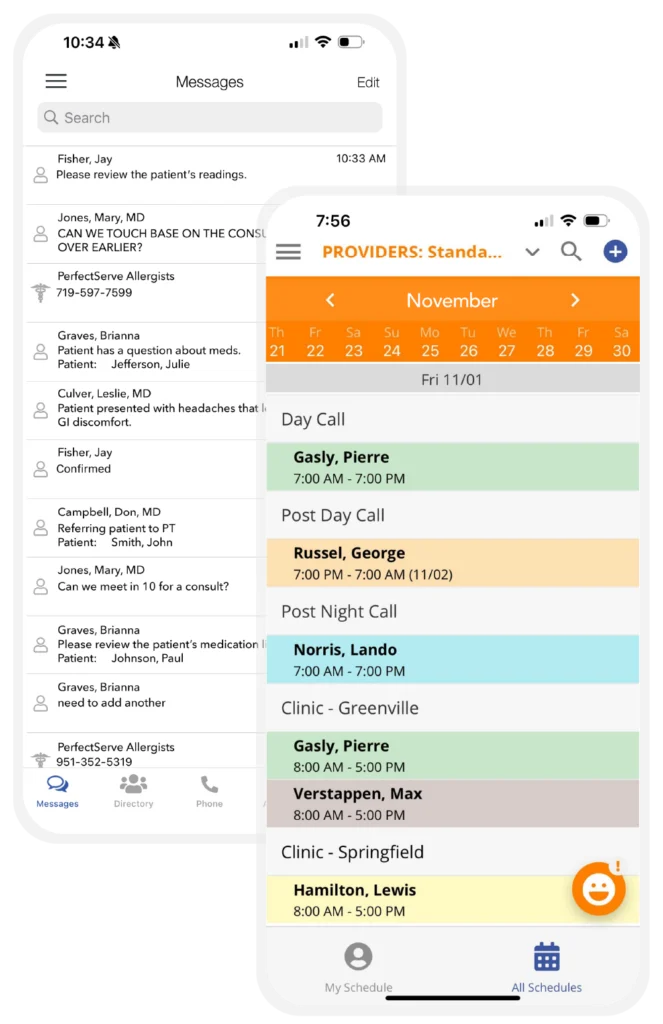
Of 53 scheduled assignments (where an “assignment” correlates with a specific type of shift), 31 (or 60%) are already auto-generated in Lightning Bolt, with plans to increase that percentage over time. “[Lightning Bolt] gave us a source of truth for schedules and a way to honor physician time off without spreadsheets and Post-It notes,” Jasmin explained. Providers can plan their lives months ahead, request time off in a single system, and build after-hours coverage around external hospital schedules they don’t control. Autogeneration is also a tremendous time saver for those who used to build schedules with no technology assistance.
Having one source of truth for scheduling—versus schedules being kept in Excel files or on dry erase boards that aren’t visible to other offices—has removed a common roadblock for Summit. Efficient patient care requires everyone to have access to a real-time schedule so they can easily see who’s working at any given moment.
One of the most striking improvements for Summit relates to after-hours delivery of lab results, which was once a source of frustration and unnecessary cost.
Previously, lab staff had to call the answering service to see who was on call as they tried to relay results to providers. Summit was billed for every call. Because non-clinical agents couldn’t share lab results, providers would either call the lab back directly or wait on hold so an agent could connect them with the lab.
Today, the lab enters results directly into a web interface powered by PerfectServe and Lightning Bolt schedules, which automatically routes to the correct provider. Providers receive context-rich messages with read receipts, which allows them to make instant decisions without a call back.
“Our lab-to-provider flow went from phone tag and guesswork to secure messages full of information with read receipts,” Jasmin said. “It saves time for both providers and lab staff and ensures critical results get to the right person fast. These folks are so happy—nobody has to pick up a phone and sit on hold anymore. They’re loving it.”
The next goal is to automate lab result delivery end to end so that every critical result is received and acted on within an hour—whether that means acknowledging the result, starting treatment, or another appropriate next step. This automation will also extend to outside labs like LabCorp and Quest to keep everything on the same fast track.
PerfectServe’s universal directory— which enables PerfectServe users to communicate with one another even if they don’t work at the same organization—is also unlocking powerful new network effects.
“PerfectServe’s directory connects providers across organizations and EHRs, which opens up opportunities for us to close difficult care coordination gaps,” Jasmin explained.
During one patient’s out-of-state vacation, providers used the directory to locate and message a regional cardiology group even though the teams worked in completely different EHRs. This capability also allows hospital systems to reach Summit providers 24/7 without phone tag, ensuring seamless coordination of care.
As they think about future plans with PerfectServe, Summit Health plans to expand automation to daytime lab workflows and integrate scheduling with their EHR to further reduce errors and improve patient access. They also want to capitalize on some of the early wins with schedule auto-generation to bring more assignments into the fold.
But for now, Jasmin and her team—and all of Summit’s patients and the many dedicated clinical staff who serve them—are reaping the benefits of smarter communication, better scheduling, and a technology partner who’s fully invested in their success and always willing to draw up a new game plan.
Jasmin Young
Director of Program & Initiatives, Primary Care Service Line, Summit Health
 Organizations
 Roles
Roles
 Blogs
Blogs News
News Comparisons
 Case Studies
 Downloads/Reports
 Events
 Videos
 Company
 Careers
 Why PerfectServe
 FAQ
FAQ Nurses of Note
 Best in KLAS