 Clinical Communication & Collaboration
 Medical Answering Service
 Provider & Staff Scheduling
 Healthcare Operator Console
 Integrations
 Features
Report
Learn how PerfectServe's rules engine makes care team collaboration easier.
Read Now >>TABLE OF CONTENTS
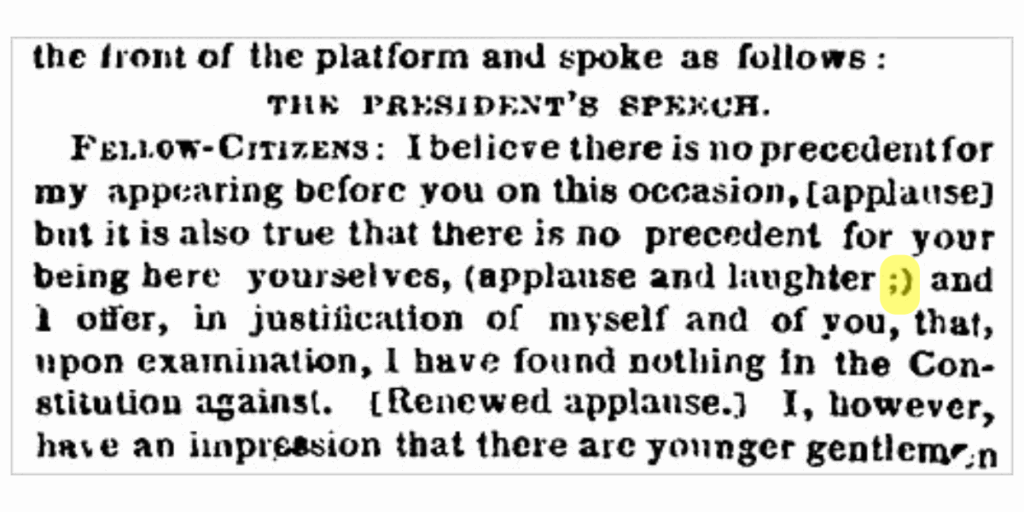
Since at least 3000 BC, pictures and symbols have been used to communicate. Hieroglyphic writing, which has become synonymous with ancient Egypt, employed some logographic elements and included as many as 1,000 distinct characters. From pintail ducks to eyes to scarab beetles, Egyptian hieroglyphs contain a huge variety of images. Symbols are also widely utilized in many Asian languages. Chinese, for example, is similarly logographic in nature, meaning “every symbol either represents a word or a minimal unit of meaning.” Writing in the language “requires thousands of symbols.”
But what about in the profession of medicine? As someone who was an ER and trauma nurse for more than 20 years, I can tell you that the use of pictures in medicine is not new either.
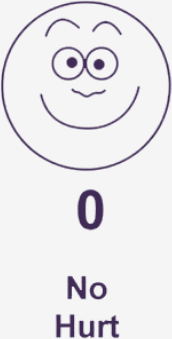
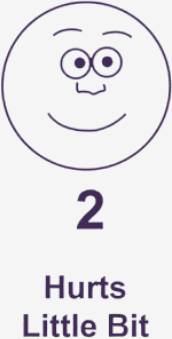
The Wong-Baker FACES® Pain Rating Scale— an example of which is shown here—was created by Donna Wong and Connie Baker in 1983 to help children effectively communicate about their pain. Once practitioners clearly understood the child’s pain, they could develop a quality treatment and support plan.
Today, though, much more than smiling or frowning faces have begun to surface in day-to-day communications between clinicians. Electronic health records, patient engagement tools, and messaging platforms like PerfectServe have created immediate, asynchronous channels for communication. What many used to consider the pleasantries and flourishes of communication reserved for the casual world have entered into the realm of healthcare’s traditionally more stoic exchanges.

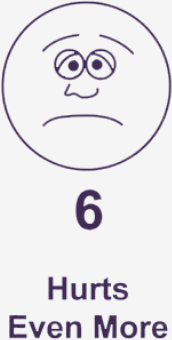
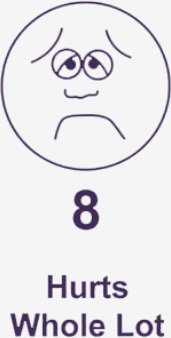
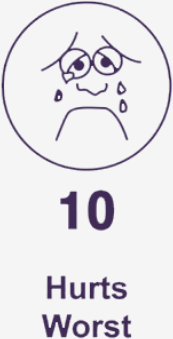
While they’re not exactly hieroglyphic in nature, it’s safe to say that modern emoji— defined by Merriam-Webster as “any of various small images, symbols, or icons used in text fields in electronic communication (as in text messages, email, and social media) to express the emotional attitude of the writer, convey information succinctly, communicate a message playfully without using words, etc.”— have become a similarly pervasive symbolic communication tool in modern society. By examining thousands of years of human history and tradition, along with the fact that an estimated 10 billion emoji are now sent every day, we can assert with confidence that pictorial communication comes naturally to humans. Emoji have become a familiar and standard tool for colloquial communication, and professional communication might stand to benefit from thoughtfully considered emoji use as well— especially within the healthcare industry.
According to Adobe’s 2019 Emoji Trend Report, more than 70% of healthcare workers who were initially hesitant are now integrating emoji in their daily work communication. Once upon a time, using emoji (or “emoticons,” the precursor to modern emoji) meant manually typing characters like “:-)” or “:-/” into a message. As these smiling, grimacing, smirking, crying, and laughing images have made their way into every digital keyboard, they have not stopped at the doors of the hospital or doctor’s office. Emoji have only been part of the PerfectServe platform since 2015, but just six years later, they are now a fairly common occurrence among the 50+ million messages sent each month by our care team users.
Our team decided to investigate emoji use within the PerfectServe ecosystem, with a special focus on type, frequency, and user role. Especially in a climate of extreme stress on medical professionals during the combined epidemics of COVID-19, staff shortages, and burnout, how could emoji trends show us the real humanity in medical communications? Would these tensions come across through frustrated and angry emoji? Would fears about emoji being antithetical to medical “professionalism” be realized?
We found the opposite to be true. Our research paints a clear picture of emoji used to convey politeness and positive intent. The data show care teams collaborating with smiling faces and the emoji version of “please and thank you.” Interestingly, the most popular emoji were not necessarily specific to medicine. Instead, emoji were more commonly used to add positive emotional intent to messages.
In these difficult times, physicians, nurses, and care teams worked to support each other with emoji use that was far more positive in tone than how the general public uses emoji. In the following report, we’ll explore these trends further across settings, specialty, and time. Here are some choice findings:
I’m not much of a prognosticator, but I can tell you one thing: Emoji in medical communication is not a passing fad, and their popularity will likely continue to grow. What was perhaps unheard of just a decade ago is now a daily occurrence and part of the culture of medicine.
It’s with this perspective in mind that we set about exploring emoji usage across the PerfectServe landscape. Read on 🧐 for more of our findings and make sure to gather your thoughts 🤔 to share with us at the end.
The following research shows that emoji have become an important tool in modern clinical communication. With nearly universal adoption of computers, smartphones, and electronic health records across all settings of medical practice, the vast majority of clinicians are communicating electronically in daily patient care. With 92% of the world’s online population using emoji in communication today, the increasingly digital-first medical workforce has naturally adopted them as well.
Our research team pulled a total of 10 reports for this project. We chose a sample of highest-volume customer organizations in five major geographical areas of the United States: Central, Northeast, West, Southwest, and East. Reports were run for the months of April 2020 and April 2021 to see if there were any changes in the emoji use across different phases of the pandemic. Emoji appear to be a stable element in today’s modern medical communications. Our data show that usage didn’t increase or decrease significantly, with analysis of the emoji character included in 15,976 messages between 2020 and 2021.
of emoji users agree
that the icons make
it easier to express
themselves.
of emoji users are more
comfortable expressing
their emotions through
an emoji than via the
telephone or an in-person conversation.
say they’re more likely
to feel empathetic
toward someone if
they use an emoji.
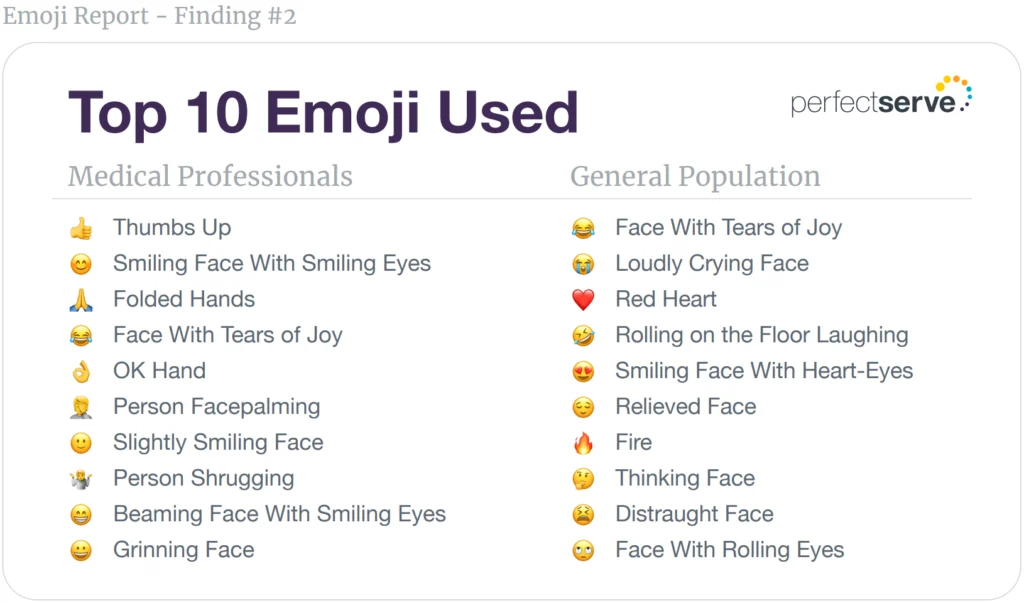
According to our research, the thumbs up emoji is the undisputed king of clinical communications. For the 21 different specialties we analyzed in our sample, the thumbs up emoji was tops across the board.
This quick, positive confirmation has become the modern version of “10-4 little buddy” in medical slang. It’s much faster than typing out “okay” or “got it,” and especially on a mobile phone, it’s easy to see how this emoji saves significant communication time in the clinical setting.
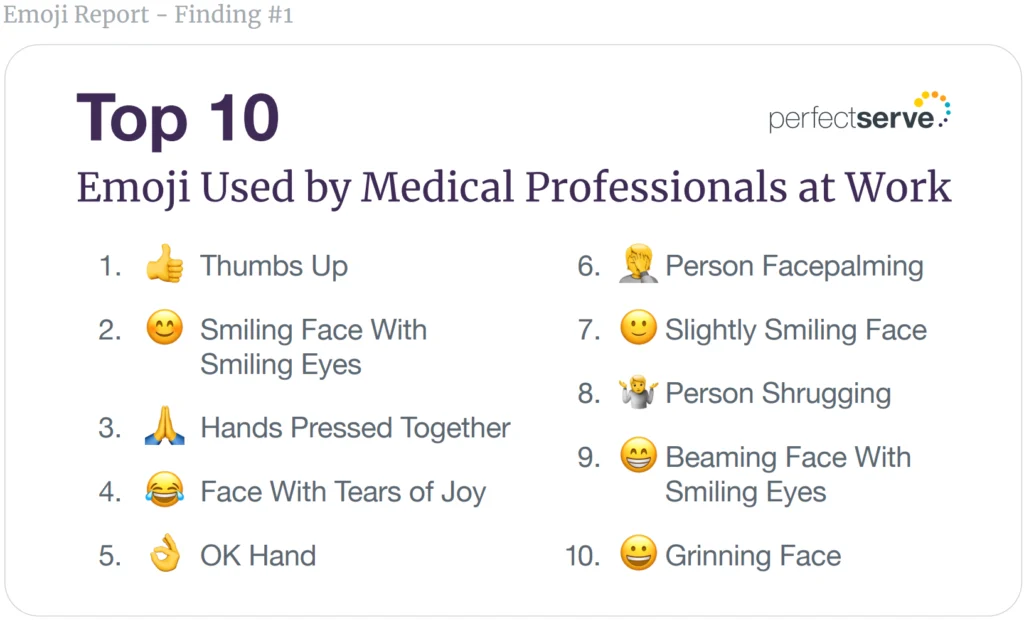
Only one of the top 10 most-used emoji in the clinical setting lined up with the general population’s most-used emoji worldwide: Face with tears of joy is ranked number one worldwide and number four on PerfectServe’s list. The stark difference between these lists reflects both the uniqueness of professional clinical communications—generally more positive and less intense in tone—and potentially that clinicians are developing their own nomenclature, medical jargon, and communication protocols using these shortcut tools.
Practitioners, including MD, DO, NP, and PA roles, sent more emoji in their communications than other care team members, including RN, CNA, MA, case manager, and administrator roles. Overall, the practitioner group sent 17,830 emoji compared to just 267 for the care team group within our sample.
Why the large disparity?
Even today, the majority of nurses are not yet equipped with smartphones in the clinical setting—whether they’re shared devices or personal devices used as part of a Bring Your Own Device program—which almost certainly accounts for the large usage gap in this report. However, this is changing fast, as many health systems are either deploying or planning to deploy smartphones in the hands of nurses to enable more efficient and effective patient care while untethering them from workstations on wheels (WOWs) or desktops at nurse stations. This kind of “nurse mobility” is one of the top trends in the current healthcare communication and collaboration space.
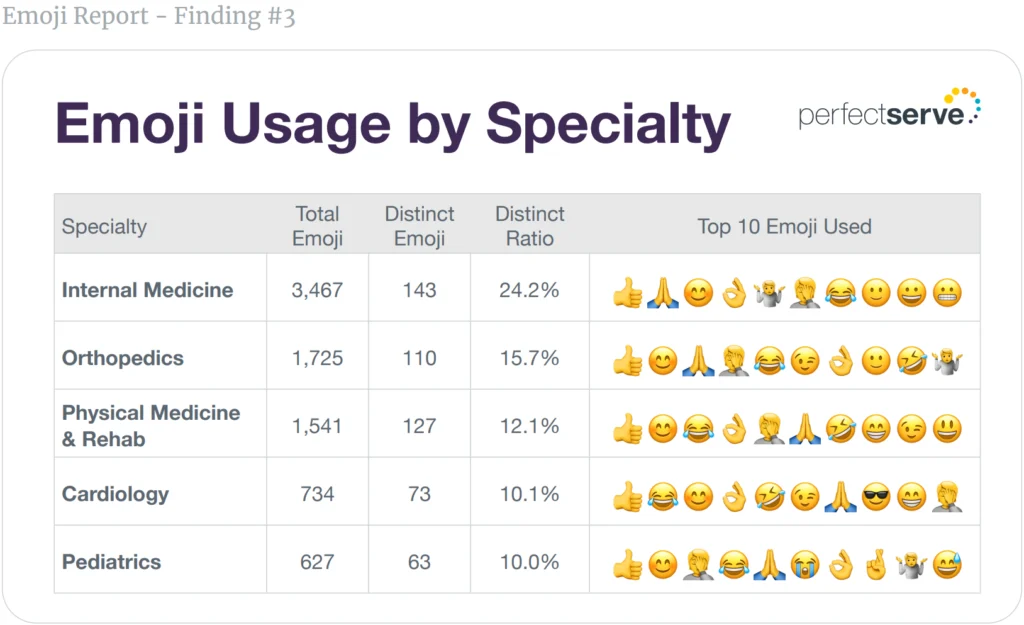
Looking across the aforementioned 21 different clinical specialties, ranging from internal medicine to neurology, our researchers identified the top 10 emoji used by each specialty. Of all specialties analyzed, internal medicine personnel used the most emoji in their communications, which featured 143 unique emoji and 3,467 total emoji. Internal medicine accounted for a whopping 25% of total clinical emoji usage in our data.
In this initial report, we are including a closer look at the top five most active specialties when it comes to emoji use: internal medicine, orthopedics, physical medicine and rehabilitation, cardiology, and pediatrics.
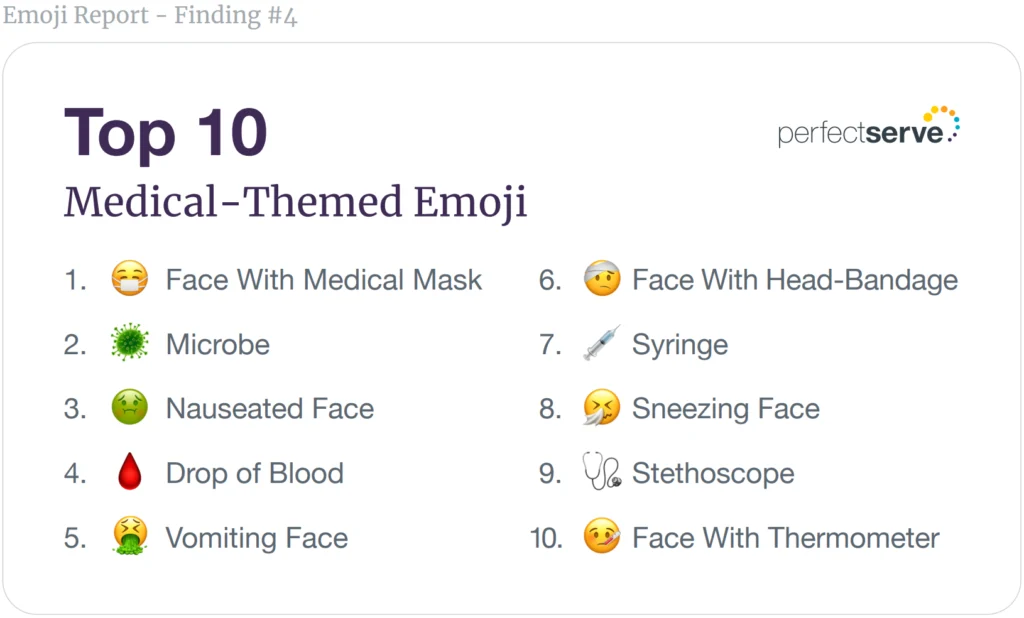
Our research team had anticipated that medical-themed emoji would be quite popular in clinical communication. In looking at the usage of a subset of medical emoji, there were two frontrunners—the face with medical mask was the clear winner, and it was followed by the microbe emoji in second place. The fact that these were the top medical emoji used during the pandemic is perhaps no surprise, and importantly, their effectiveness even stands up against communication obstacles like language barriers.
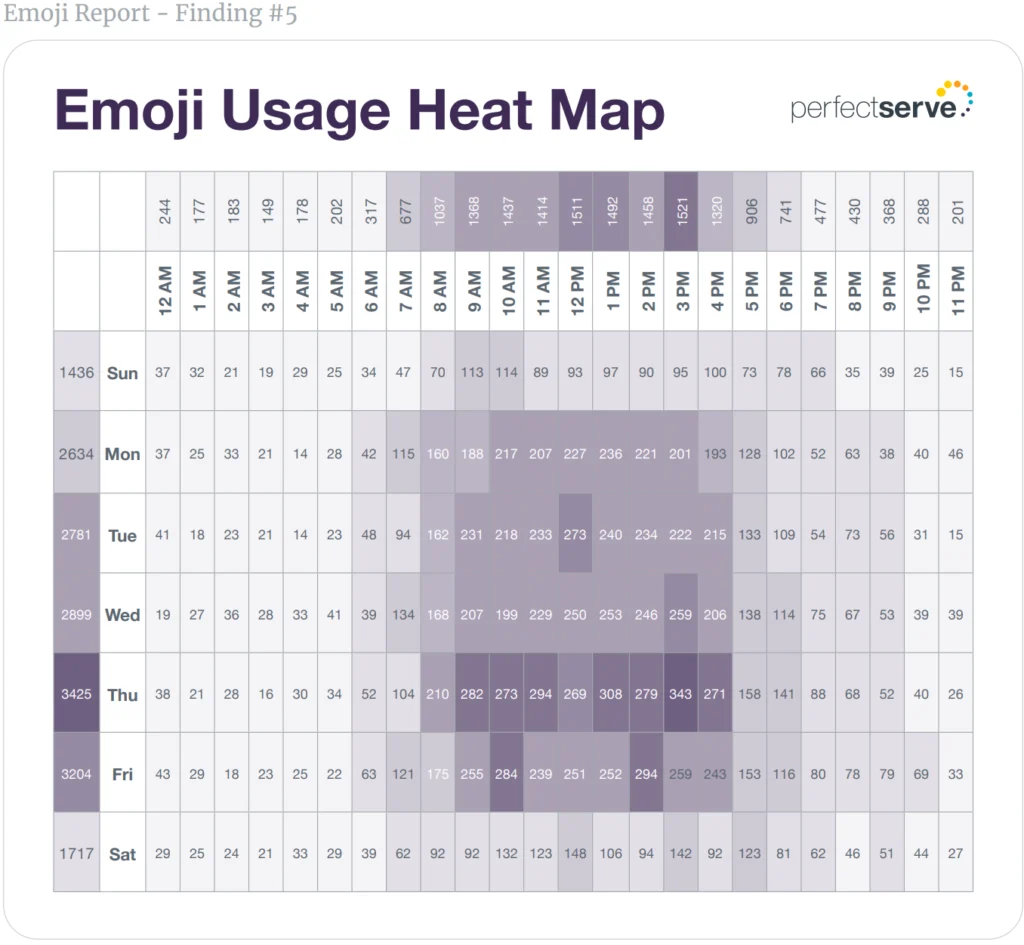
Diving further into the data, our research team determined that Thursday at 3:00 p.m. local time is the most active time for emoji use in the clinical setting, followed by Friday afternoon at 2:00 p.m. local time. These afternoons during the latter part of the week are possibly important communication windows as clinical teams prepare patients for discharge before the weekend or transition to new care teams coming on shift. Overall, Thursdays and Fridays saw notably more emoji activity than other days of the week.
Communications have undergone a transformation over the past decade driven by both technology and social platforms. Beyond healthcare, we have seen cell phones emerge and landlines disappear. From flip phones to smartphones, you can find an app for nearly any purpose. Texting for nonurgent matters is now the status quo across all age groups.
A mere decade ago, healthcare communication was still predominantly driven by pager technology. In many instances, a numeric page displayed the callback number and, if necessary, “911” was appended to convey urgency. As cell phones emerged, the callback could be completed promptly. In some instances, providers would take calls to their cell phones in lieu of the ever-beeping pager. As texting capabilities expanded, many providers preferred a text message to their pager or cell, providing expanded detail regarding the communication. Technology in the communication space was evolving, and many clinicians adopted the change in their personal lives, but healthcare communications often lagged one step behind.
Social platforms introduced emoji and gave us a new way to communicate emotion without words. With the widespread adoption of smartphones and social platform apps, emoji communication was at our fingertips. Before long, iOS and Android platforms integrated emoji into a phone’s native keyboard, allowing any type of communication, from text to email to blog post, to include emoji. As our personal communications included a smattering of emoji, our communications among clinicians have as well. With a single keystroke, one clinician can convey their thoughts to another in a “language” that’s familiar across all roles and age groups.
Beyond simple communication, emoji bring an aspect of emotion to the conversation. Including emoji may convey a sense of familiarity or camaraderie among clinicians, in much the same way emails with a business associate may include a smiling face. Perhaps emoji bring a certain tone to the message, conveying a sense of happiness or frustration to a message that may otherwise be interpreted in a variety of ways.
While our research uncovered interesting trends in clinical emoji use, another big takeaway is that this area of clinical communication remains relatively unexplored. There is a lot to still be determined about the use of emoji in clinical settings and what the potential impact is on communicating in a healthcare environment. It’s likely that most organizations have not even touched on emoji usage in their communication guidelines for staff, so we’re very much at the beginning of this conversation.
However, one thing is hard to deny: As long as people have digital keyboards for texting and emailing, they will also have the ability to send emoji. These expressive icons probably aren’t going anywhere—and our research suggests that’s not a bad thing.
Author Will Schwalbe touched on the effect emoji have on tone: “The biggest problem about all electronic communication is that it’s toneless. In the absence of tone, people read negative tone into it. Whether you’re using the exclamation mark, which we called the ‘ur emoticon,’ or emoticons, or emoji, they all serve the same incredibly valuable purpose, which is they take this very dull, flat, affectless form of communication and they make it cheerful, friendly, they bring a smile … They kick it up a notch.” Our research reflected this theme, showing that emoji use among the clinicians we analyzed conveyed positivity, optimism, camaraderie, and politeness.
Being a clinician is a tough job, period. The culture of medicine has taken a big hit in the last decade. Many clinicians are leaving the field, the dual provider shortage and burnout crises are ongoing, and a global pandemic has created additional chaos and crisis. The net result is that positivity and feelings of happiness and joy have been harder to find in the field of medicine for some time.
Our research indicates that emoji use among providers—and between providers and patients—adds a refreshing human touch in a setting that can be very intense, with lives on the line. More positivity is needed in medicine, and whether it’s a physician sending a nurse a “smiley face” emoji to accompany a “thank you,” or a clinician sending a thumbs up to a patient, this simple, visual form of communication can inject a bit of emotion, warmth, and humanity into a medium where those qualities aren’t always possible without an image.
We imagine the future of emoji use in medicine will be a constant evolution—one that our researchers will continue to study and that healthcare leaders will continue to manage. How should a hospital set up protocols and communication standards for clinical emoji use going forward? What are the challenges and opportunities for emoji in the context of medical “professionalism”? Are there risks involved when using emoji? All of these questions will require further exploration because the simple fact is that the stakes are higher in medicine than many other industries. Getting something wrong, or even being a bit too vague, can have serious consequences.
But after analyzing this data, what’s clear is that a simple image can be a powerful tool for building a healthier culture in medicine and strengthening camaraderie among colleagues.
The PerfectServe database team pulled a total of ten reports for this project.
PerfectServe’s in-house data analyst cleaned all medical specialty names and added fields for analysis:
The column with message contents had all emoji encoded in unicode. A table of all emoji was pulled from the internet into Excel via the “From Web” data source.
The data analyst then extracted emoji from the message contents and deleted all message details to avoid sharing or consuming PHI.
 Organizations
 Roles
Roles
 Blogs
Blogs News
News Case Studies
 Downloads/Reports
 Events
 Videos
 Company
 Careers
 Why PerfectServe
 FAQ
FAQ Nurses of Note
 Best in KLAS