



Workplace Violence in Healthcare: How Organizations Can Protect Clinical Staff
Workplace violence affects nearly 70% of healthcare workers. What can healthcare orgs do to protect their staff?
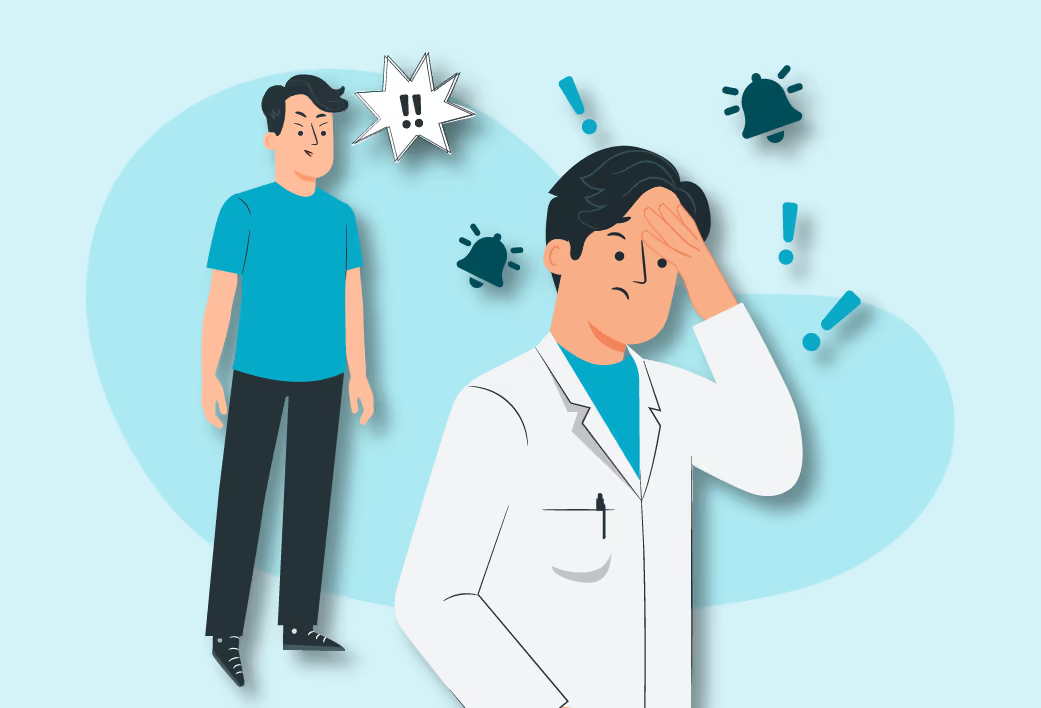

Two nurses are assaulted every hour in the US. Unfortunately, that number likely understates the true extent of the problem: workplace violence against nurses is “severely underreported,” says Melissa Bennett, Director for Nursing Professional Development at Ohio-based Bon Secours Mercy Health (BSMH).
The stats we do have are eye-opening. According to a 2026 report from the Ohio Nurses Association, 68.72% of direct care nurses and health professionals experienced workplace violence in the past 12 months. More than 91% of direct care health professionals say they’re working in conditions where staffing is “not consistently safe.”
Jodi Pahl, BSMH’s Chief Nursing Executive, sees it first-hand: “Like many healthcare organizations, we encounter situations where caregivers face difficult or, at times, inappropriate behaviors, reinforcing the importance of our ongoing safety and support efforts.”
Preventing workplace violence in healthcare requires a systemic response: making it easier for staff to report incidents, investing in ongoing training, and giving clinicians the tools they need to alert their teams to threats in real time. Here are the practical steps healthcare leaders can take to protect their people.
How to Prevent Workplace Violence in Healthcare
Build a culture where reporting is safe
Caregivers should feel that their safety is a core organizational value, and that violence will not be tolerated. The importance of instilling this kind of culture is likely why the Joint Commission issued new standards for “workplace violence prevention systems” in 2022. Their framework, which is part of their accreditation evaluations, includes leadership oversight, policies and procedures, reporting systems, data collection and analysis, post-incident strategies, training, and education.
One obvious step is that healthcare leaders have to stop minimizing the impact and seriousness of workplace violence. Treating it like an inevitable part of the job sends the wrong message. Instead, staff should see leadership actively engaging with the challenges they face and putting real processes in place. That starts with tackling the stigma around reporting: it must be clear to clinicians that reporting is not an admission of failure, and that the organization will follow through with support and visible, meaningful action.
Make reporting simpler and faster
As well as reducing the mental resistance to reporting, organizations need to make it easier. At BSMH, they’ve simplified the process so it takes just 5 minutes, down from 17. There are clear steps for managers to debrief staff after a report is filed, along with well-defined organizational interventions.
The result, says Melissa, is that “the problem is evident, it’s visible, we know it’s there, and we have a plan of attack on how we will develop a strategy and actually intervene in the situation.” Accelerating reporting also gives leaders a more accurate view of the highest-risk areas. That means managers should follow the debrief protocol every time to normalize it.
Give clinicians real-time ways to summon help
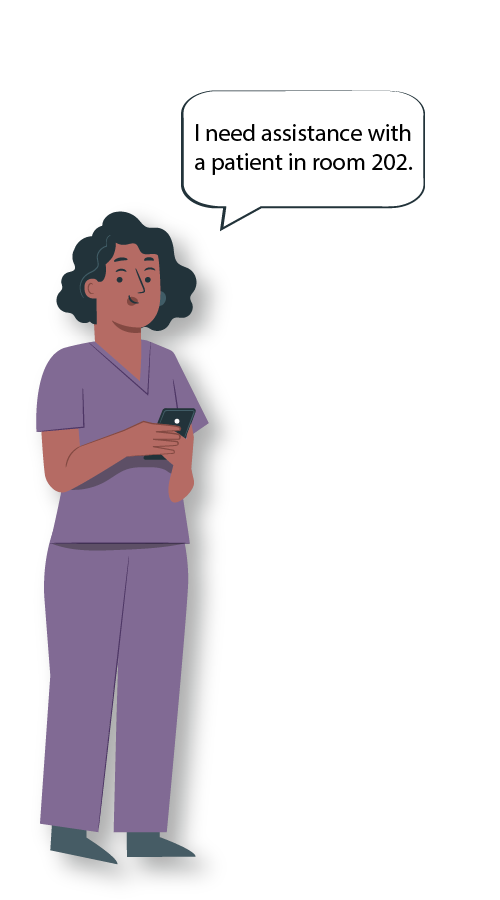
Clinicians need tangible protections where the work actually happens. Two measures stand out. First, 911 badges should be available across all freestanding emergency departments and behavioral health units, so clinicians can summon help instantly without needing to leave the room.
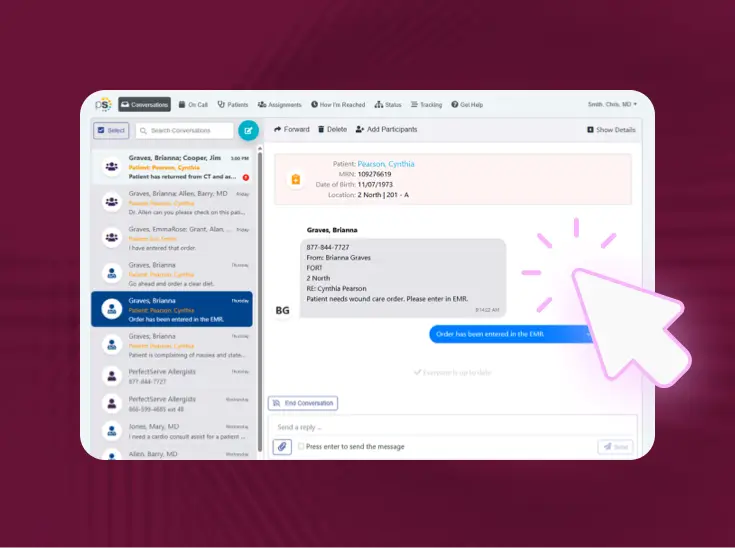
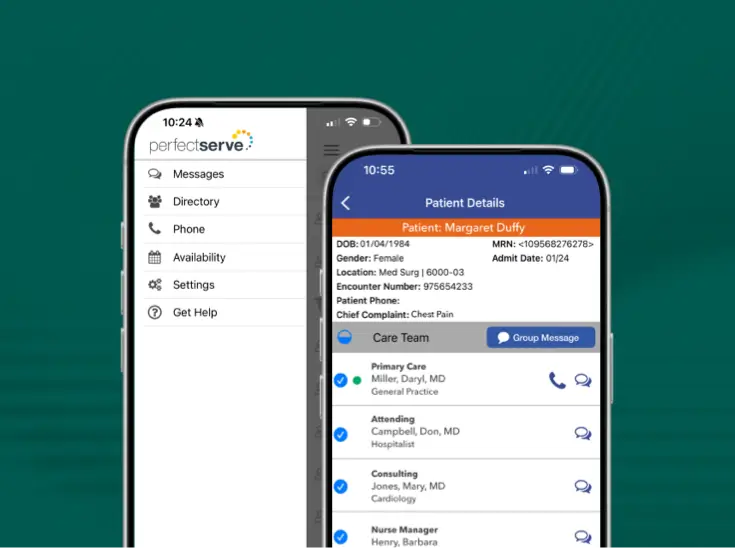
Second, discreet security-assist notifications can be triggered when a patient, family member, or visitor poses an immediate threat to themselves or others. Communication platforms like PerfectServe support immediate notification pathways that automatically alert a predefined response team, which might include security, a charge nurse, a chaplain, or a member of the workplace violence committee. Unlike a phone call or an overhead page, these alerts can be initiated quickly and silently, so they’re less likely to escalate an already tense situation.
(For a quick primer on how these tools work, see what a clinical communication platform does.)
Add physical access controls
Metal detectors are being introduced across BSMH facilities, and most sites have moved to a single point of entry, with emergency department access restricted after hours.
Standardize post-incident support
BSMH offers forensic nurse access, accompaniment for staff who choose to press charges, and structured manager debriefs following any reported incident. Making this support routine, rather than something staff have to ask for, reinforces that the organization takes each event seriously.
Expand safety and self-defense training
New nurses are almost always unprepared for the level of violence they’re likely to face. “It’s not really talked about in nursing schools,” says Melissa. There’s an understandable desire not to poison the well before students become nurses, but the point of education is to prepare them for the challenges ahead, not to blind them to circumstances that are much harder to digest when they’re completely unexpected.
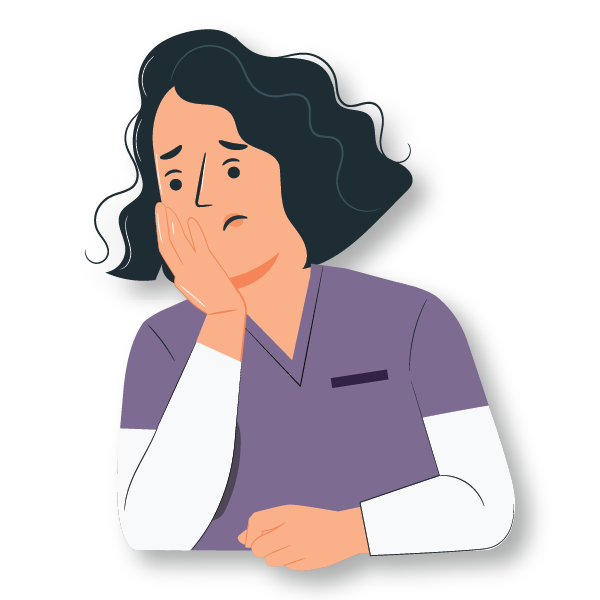
At BSMH, new associates are trained to recognize the signs of an escalating situation, plus communication techniques, body language, and something as fundamental as where to position yourself in a room so you always have a way out. For higher-risk environments like emergency departments and behavioral health units, training goes further, covering physical techniques for breaking chokeholds, hair pulls, and wrist grabs.
Crucially, staff get time to practice. “You’ve got to have some muscle memory,” says Melissa, “because otherwise, when the situation arises, you’re going through your checklist thinking, wait, what do I do now?”
She also notes that minimum safety-training requirements don’t go far enough, so BSMH is expanding training to include self-defense, de-escalation, and escape techniques for all caregivers — not just those in the highest-risk departments. That includes reception staff, who may also have to handle violent or abusive visitors. The goal isn’t to turn nurses into security personnel, but to ensure that caring for patients safely doesn’t come at the expense of their own wellbeing.
Lead proactively with a workplace violence working group
An effective working group is the first step for identifying and solving issues particular to each organization. Committees should collaborate to review events, share best practices, and customize interventions for each site. Their work and recommendations should be visible and communicated to staff with regularity.
Why is Hospital Workplace Violence on the Rise?
While violence against clinicians in healthcare environments isn’t new, Jodi notes that incident rates have climbed since the COVID-19 pandemic. Readily available (but not always accurate) online health information means patients may not have objective or realistic expectations when they arrive. When clinicians don't confirm what they’ve read, the situation can get tense.
This tracks with data from two BSMH hospitals, both of which use PerfectServe’s secure messaging platform to discreetly initiate a team alert (named Security Assist internally) that summons collective assistance from house supervisors, charge nurses, physicians, and even spiritual care when patients escalate or threaten violence:
- One of the hospitals saw 106 Security Assist alerts triggered in 2025, including more than 20 in January alone.
- The other hospital went live with Security Assist in November. By the end of the year, more than 40 alerts had been initiated.
In other words, clinicians at both facilities face aggressive or violent patient behavior at a regular pace. And, given the underreporting Melissa describes, the true magnitude is almost certainly larger.
Other factors have contributed. Trust in healthcare professionals has been eroded by negative messaging during the pandemic. Substance abuse has surged, increasing the likelihood that a patient may become confrontational or violent. And patients and their families may also be frustrated by the complexities of the healthcare system, or simply stretched to their limit by a challenging economic environment.
The result is a highly volatile work environment that too often skews dangerous. Physical assaults are the most visible form of violence, but one study suggests they represent only 28% of total workplace violence incidents in healthcare. The other 72% are verbal assaults, both from patients and patient families.
Not all incidents are deliberate; an elderly patient with a UTI can become confused and combative without any awareness of their actions. And, of course, not all workplace violence is overt. Microaggressions, dismissive language, and inappropriate physical contact may sometimes be absorbed in silence: rationalized, minimized, or simply never mentioned.
As Melissa reiterates, underreporting is an ongoing challenge: “To many people, there's a stigma to reporting.” Nurses may avoid filing reports because they feel they somehow failed to manage the situation effectively, or their innate sympathy may make them reluctant to report an incident where a patient lashed out because they were confused, in pain, or dealing with a condition that affects behavior.
The result is that the true scale of the problem remains hidden, making it harder to design targeted interventions. What does get reported tells a difficult enough story: staff suffering from burnout, stepping back from bedside nursing, or leaving the profession altogether. The resulting gaps fall the hardest on night shifts and the highest-risk units.
Let's Make a Change on the Floor
Unlike some problems that feel more abstract, workplace violence is a daily reality that understandably drives talented, dedicated clinicians out of a profession they otherwise love. After all, how can you continue showing up with grace and confidence when you can’t even be sure you’ll finish your shift unharmed and without getting dressed down by patients or their family members?
Nobody should have to fear for their safety when they clock in to provide care for others. Addressing this problem is difficult, urgent, and deeply personal for those working to change it.
To learn more about the clinicians on the front lines of patient care, read How Nurses Change Lives by Showing Up.
See it working for real teams






.jpg)



.png)






Bring us the workflow that [hurts most]
We'll show you how it runs on PerfectServe, with your teams, your sites and your EHR.