



Why healthcare contact centers are stuck with [good enough]
Executive summary
Most healthcare contact centers are running five or more technologies that don’t talk to each other. They’re hitting speed-to-answer targets, but leaving patients waiting on hold or causing delayed clinical responses. Nearly a third are still using pagers despite their well-documented limitations in urgent response scenarios. Only 40% have integrated with an EHR.
There’s a significant gap between what contact centers need to be able to do and what they’re currently able to deliver. This report examines what 105 IT and operations leaders who oversee operator environments told us about their tech stack, where it’s failing them, and what it would take to fix it.
Key takeaways
- Healthcare communications technology is holding organizations back. Integration complexity is the #1 barrier to adopting new technology (46%), ahead of budget (36%). 85% report moderate to very high IT maintenance burden, and IT maintenance is the top frustration with the current stack (33%).
- Speed metrics are masking deeper problems. 53% say long wait times are harming the patient experience. 44% cite multiple transfers. Most organizations aren’t tracking the metrics that would show why.
- AI ambition is outpacing infrastructure. 67% call AI-enabled routing critical or very important, but 68% of architectures are still hybrid or on-premises, the kind that makes the transition to AI more difficult. 9 out of 10 contact center professionals we talked to said they’re still at early-stage AI maturity.
- Tech that may not fit a contact center’s needs in turn causes operator staffing problems. 84% say technology gaps affect recruiting, training, and retention. The top justifier for investment is reduced operator workload (64%).
- Only 15% of respondents want to stay with their existing vendor, but over half say switching vendors would be difficult. Switching costs and vendor lock-in make taking the leap difficult for many organizations.
Healthcare contact centers aren’t simple switchboards directing calls anymore. The average contact center now runs 5 or more distinct functions; has over 50 operators; handles clinical alerts, on-call escalations, codes, and patient transfers; and serves over 2,500 employees.
But the tools they use simply haven’t kept pace. Our recent survey of 105 healthcare organizations found that hospital contact centers are struggling with a complicated, frustrating, and poorly integrated tech stack.
Our respondents were primarily senior leaders at large, sophisticated healthcare organizations. You might expect them to report top-of-the-line tech. On the contrary, they told us that they’re stuck with contact centers that are actively damaging their patients’ experience and their operators’ working environment.
The “good enough” contact center comes at a high cost. Technology gaps make it harder to hire and keep staff. Patients get transferred multiple times and still don’t reach the right person. IT teams spend their time keeping aging systems running instead of improving them. Transfers get missed. Code calls take too long to complete. And when organizations try to layer AI on top of all of it, they find the foundation just isn’t ready.
In this report, we’ll break down what’s really happening in healthcare contact centers, what’s getting in the way of improvement, and what operations and IT leaders need to do about it.
“Contact center operators usually aren’t at the top of the priority list: less budget, less authority in those high-stakes calls. They just want tools they can actually work with.”

Sean Collins, Vice President at PerfectServe with 20+ years of experience in healthcare communication
The problem with the “good enough” hospital contact center
A functioning contact center needs to have at least two distinct layers working together. There’s the external-facing CCaaS or telephony platform (think Cisco, Avaya, Genesys, Five9) that handles inbound calls from patients, families, and outside providers. And then there’s the internal-facing layer: the switchboard or platform that routes internal traffic to make sure all communications reach the right clinician, on-call provider, or care team once they’re inside the building.
Most organizations have accumulated both layers over time, from different vendors, often without a clear plan for how they’d connect. The result is a setup that technically works … until it doesn’t. And when it stops working, it might just become a major crisis.
What gets measured, and what doesn’t
Most healthcare organizations believe they’re performing well. But that’s partly because they tend to track outdated metrics.
Average speed to answer
Average hold time
Average handle time (AHT)
Call abandonment rate
First-call resolution
Agent occupancy
Service level (% answered in target time)
Organizations predominantly track speed-related metrics:
track speed-to-answer
track hold time
track handle time
By those measures, most healthcare contact centers are performing well:
of respondents are hitting their service level targets.
However, speed isn’t the only important consideration for contact center performance. Only a third of respondents are tracking agent occupancy (the percentage of time agents actively spend on interactions), making it extremely hard to measure workforce efficiency. The metrics that matter to patients like transfer rates, after-call experience, and information consistency go largely unmeasured.
The speed metrics most organizations use were designed to measure activity on a traditional telephone switchboard. But healthcare contact centers now perform a far more complex role for the organization. Health systems are larger and more distributed, spanning more sites and care settings than they were a decade ago, and they’re asking operators to handle a more diverse set of tasks. But most organizations have no way of knowing whether their tools are keeping up.

The inertia of “good enough”
Long vendor relationships and high switching costs can create a strong attachment to familiar tools, even imperfect ones. That’s exactly why 51% of respondents said switching vendors would be somewhat or very difficult.
When someone has spent years learning every workaround in a legacy platform, replacing it feels like a significant risk.
The result is that many hospitals put off upgrading their contact center technology until they’re forced to, explains Sean Collins:
“They wait until there’s a big compelling event like an outage, or until the lack of integration leaves someone saying ‘I just can’t do my job anymore,’ or until the person with the tribal knowledge of how the system works leaves.”
Our respondents are aware their contact center systems are failing them.
Not very confident
Somewhat confident
Very confident
Less than one in three respondents are very confident their current stack can support future complexity. 57% say they are somewhat confident, which is often a polite way of saying, “We have some concerns.” 11% aren’t confident at all.
In addition, 85% report a moderate to very high IT maintenance burden.
In other words, “good enough” is clearly not good enough anymore.

A wide but poorly integrated tech stack
In many cases, healthcare contact centers have added tools over the years without making sure those tools work together. The result is a wide stack that isn’t well connected. That creates real costs in IT maintenance, operator frustration, and workflow friction.
What most healthcare contact centers look like today
Most contact center tech stacks are struggling to keep up with today’s demands.
The average stack includes 5 or more technologies, with the most common being scheduling software (65%), clinical communication systems (64%), and phone and PBX systems.
have EHR integration
use a CCaaS platform
of architectures are a hybrid mix of cloud and on-premises
of architectures are primarily on-premises
still rely on pagers
The picture that emerges is of a tech stack covering a wide range of functions, but with poor interconnectivity. In most cases, it wasn’t designed this way. It just accumulated tools over time as healthcare communications became more complicated, ending up as an unwieldy, ineffective “Frankenstack.”
And much like the famous monster, getting all these pieces to work together harmoniously is a challenge.
Many healthcare organizations lack key communications integrations
Most of our survey respondents reported that their internal phone systems and scheduling software are integrated in their contact centers (71% each). However, the most clinically significant integration is missing more often than not: less than 40% have EHR integration.
One likely contributing factor? A similar number are using a CCaaS system. Organizations running general-purpose CCaaS platforms typically can’t natively integrate with the EHR. They were never designed to handle clinical routing, on-call schedules, patient census data, or other healthcare-specific tasks. So operators often run two screens: the contact center platform on one, the EHR on the other, switching between them manually mid-call. As Sean put it,
“Everything’s there, but nothing talks to each other. If I want to transfer a call, I’ve got my directory in one place, the phone somewhere else, and if I need to send a page, that’s another system entirely. And if I need Salesforce, I’ve got to go there too.”
The burden of managing this falls heavily on IT:
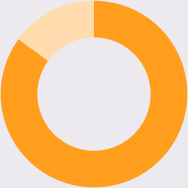
of respondents reported moderate to very high ongoing IT maintenance effort
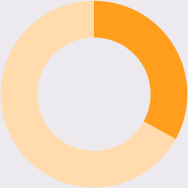
of respondents reported that IT maintenance is the biggest frustration with the current stack, making it the most-cited response
And when organizations try to improve things by adopting new technology:
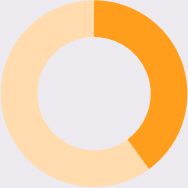
of respondents ranked integration complexity as the number one barrier.
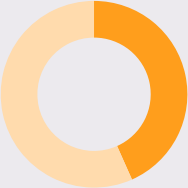
pointed to compliance concerns as the biggest hurdle.
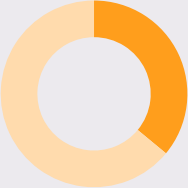
cited budget as their primary obstacle.
What an outdated contact center is costing healthcare organizations
The cost of maintaining the existing stack is often more than the cost of improving it. Sometimes, the savings from retiring legacy tools alone is the biggest, or at least the most immediate, ROI.

Munson Healthcare, a northern Michigan health system, used to have nearly 1,500 pagers deployed with their on-prem communication system. After moving to PerfectServe’s cloud-based communication platform with integrated operator console, they retired 600 pagers and saved $10k a month.
Read the full storyPaying for external IT support adds another hefty line item to the budget. Internal teams are stretched too thin to manage the complexity on their own, so they’re often forced to pay for outside help. Only 18% of organizations rely on internal IT alone for technology decisions. Most lean on external consultants (30%), vendor professional services (19%), systems integrators (18%), or peer organizations (15%).
That dependence on external resources isn’t just an expense. 30% of respondents cite it as a barrier to adopting new technology. The complexity that makes outside help necessary is the same complexity that makes change difficult. When consultants and integrators build connections into a fragmented stack, they add yet another layer of complexity.
Where the communication tech stack breaks down
Suffice it to say, most contact centers aren’t suffering from a shortage of tools. The problem is whether or not those tools were built for the complexity of a healthcare environment. Can they handle the specific workflows, escalation paths, and variations by speciality, shift, and site?
When the tools don’t reflect how operators have to handle calls (looking up a patient, finding the right on-call provider, routing a transfer), operators have to fill in the gaps themselves.
That leaves them spending their working hours switching screens, re-entering information, and checking a separate system for the on-call schedule. Our research found that the negative fallout from these manual workflows shows up in everything from the patient experience to operator retention.
Workflow failures
When we asked respondents to identify the biggest gaps in their communication tech stack, the top “moderate or major gap” areas all relate to workflows and tools:
Switching between systems
Finding the right person quickly
Managing transfers and escalations
Training and onboarding operators
Nearly a quarter (23%) of operators have to manually switch tools during calls, a clear integration issue.
Problems with finding the right person and managing transfers are workflow issues. These respondents are feeling the fallout of using an old system that can’t keep up with the more complex demands of a modern contact center.
Training and onboarding carry the highest “major gap” rate at 16%. Every tool added to the stack is another system a new operator has to learn, so the onboarding problems compound over time.
Duncan Harris, Director of Product Management at PerfectServe, explains that much of the workflow breakdown can be attributed to manual scheduling: “A core component of getting calls to the right place at the right time is having accurate and up-to-date on-call schedules,” he explains. Yet many hospitals are still handling scheduling in a binder, not a digital platform. Operators are printing out faxes and re-entering schedule data they dug out of an email. “It’s still incredibly common,” says Duncan.
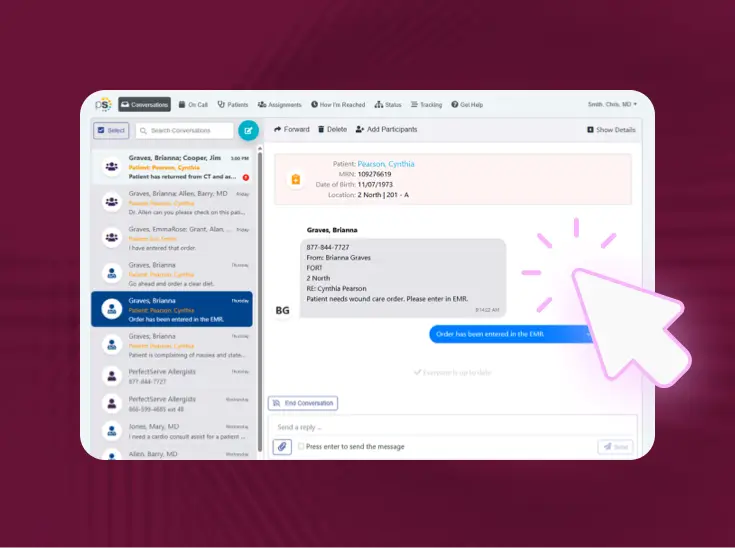
The impact of fixing these workflows is measurable. Munson Healthcare reduced total call volume by 53,000 in the first 13 months after consolidating onto PerfectServe’s modern operator console platform. Internal calls to the switchboard dropped by 34%.
When operators aren’t manually bridging gaps between disconnected systems, the volume of calls needed to complete basic tasks drops significantly. At the same time, Munson Healthcare saw an increase in clinician-to-clinician messaging routed through PerfectServe, offloading internal call routing for operators in the process.

Poor patient experience
Missing or broken communications tooling is creating real clinical risk, our research showed.
Long wait times
Multiple transfers
Inconsistent information
Delayed clinical response
After-hours coverage gaps
These problems aren’t random. They map directly to communications workflow gaps. Fragmented systems mean calls need to be transferred more often. Poor call routing causes delays in clinical responses when it takes several tries to contact the right provider. And reliable after-hours coverage depends on the system knowing who’s on call and routing calls to them automatically. When on-call schedule data is out of date or lives in a separate system, that routing is bound to break down, serving as a blocker instead of a way to enable a better patient experience.
Recruitment and retention issues
Fully 84% of respondents say technology gaps affect agent recruiting, training, and retention. In fact, nearly 2 in 3 (64%) said that reduced operator workload would most justify investment in new tech. That’s ahead of lower operating costs or even faster answer times.
Nearly 1 in 3 (31%) call the impact of new tech significant. The disconnected tech stack is making operators’ jobs harder than they need to be, which in turn makes it harder to hire, onboard, and keep them. And leaders are clearly aware of the issue.
AI ambition outpaces the infrastructure healthcare organizations need
AI adoption in healthcare contact centers is more widespread than you might expect. But most organizations are still testing AI capabilities rather than running them as a core part of daily operations. And the tools they’re using often live outside the core platform, adding another layer to an already fragmented stack.
What AI adoption looks like now
Most contact centers are somewhere in the middle of AI adoption: past the starting line, but not yet fully deployed.
We asked respondents about their use of five AI capabilities:
Automated call routing
Virtual after-hours agents
AI-assisted call documentation
Natural language call handling
AI-driven directory search
87% of contact centers rate themselves as beginning or intermediate in AI maturity.
Only 13% consider themselves advanced.
Where organizations want AI to go
Despite the maturity gap, ambition is high. 98% of our respondents say AI-enabled routing is important to their future strategy, and over half are prioritizing workflow and routing use cases in the next year or two.
Workflow and routing
Real-time language translation
Real-time transcription
Operator copilots for codes and escalations
Call sentiment analysis
Fully agentic virtual operators
Automated overhead paging

Sean reports that multiple health systems hope to be able to use AI to safely triage routine calls, which would allow operators to focus on the top priority: life-saving calls that require human intervention.
Why the current infrastructure isn’t ready for AI
80% of respondents would like AI built into their existing platform (38%) or integrated via partners (42%), not bolted on as a separate tool. But AI delivery is currently as fragmented as the rest of the stack.
Contact center platform
Separate AI tools
Consultant-built solutions
EHR

And, with 68% of architectures still hybrid or on-prem, the infrastructure may simply not be ready for the ambition. To quote Sean, “If your systems are disjointed and not speaking … it’s not like an AI agent’s going to help you. You’ve got to fix your house before you put a solar roof on.”
The path from fragmented, disconnected systems to agentic AI requires fixing the foundation first. In other words, healthcare contact centers will need integrated data, connected workflows, and a stable platform to give AI agents full context before they can see widespread benefit from these AI agents in contact center use cases.
Why healthcare contact centers are hard to change
Only 15% of respondents want to stay with their existing vendor. But 51% say switching vendors would be somewhat or very difficult. Switching costs and vendor lock-in tend to create inertia. This leaves organizations stuck between the stack they have and the platform they want. Our research surfaced several issues that make contact centers hard to improve:
Multiple stakeholders and fragmented decision-making
Contact center technology decisions in healthcare don’t have a single, clear owner.
Operations/People
IT
Shared ownership
Finance
This diffuse decision-making structure creates its own problems. The contact center is often the least understood part of the hospital. C-suite visibility is limited. Decisions typically live at the VP or Director level, and the people making them don’t always have a shared picture of what the problem is. As Sean puts it:
“You can ask the same question to three different people at the same hospital and you’ll probably get three different answers.”
Vendor lock-in
Even when there’s alignment on the problem, switching is still hard. 25% cite vendor lock-in as a barrier to adoption. And tribal knowledge creates an additional, hidden dependency. Operators may be reluctant to replace tools they know well with ones they don’t, even if the new tools work better.
Many organizations simply don’t know better options exist. The contact center market is fragmented and poorly understood, even internally. Organizations that have only ever used one vendor often have no frame of reference for what a modern platform can do.
And for a fair number of organizations, the search for better contact center tech starts with a CCaaS vendor and inevitably folds in a discussion about their legacy switchboard vendor, which they may have used for several decades. Replacing multiple vendors comprising all facets of contact center functionality can feel like a tall order.
Yet the appetite for consolidation is clear. 44% of respondents prefer platforms designed for multiple teams, a strong signal that they want a more unified platform.
What finally drives change
Because of the challenges of switching contact center technology, most organizations don’t move until something forces them to. There are two typical triggers:

A system outage or integration failure that makes the cost of inaction impossible to ignore.

A business or operational change that puts the contact center on the agenda for the first time in years, such as a consolidation, a new site opening, or a leadership change.
When organizations do start evaluating alternatives, the financial case tends to close the argument. The total cost of staying on legacy infrastructure adds up: upgrade cycles, maintenance fees, integration work, external consultants.
Sean explains why making the switch is pragmatic: “By the two-and-a-half to three-year mark, you’re ahead of the game. You’re saving money, you’re not doing upgrades, you’re not going down. Things just work, and you’re not breaking your integrations every time you need to update something.”
What would justify investment?
Despite the challenges of switching platforms, most healthcare contact center leaders have a clear picture of what would make it worth it.
Reduced operator workload
Improved clinical coordination
Lower operating costs
Better patient experience
Faster speed to answer
Speed to answer ranks last. The people running call centers are more interested in improving the day-to-day experience for operators, clinicians, and patients. 84% told us that contact center issues were impacting staffing; 31% said significantly. Training and onboarding was seen as the most common “major gap” at 16%.
Healthcare leaders are less interested in having their contact centers run faster than they are in building a more sustainable, more efficient system. In many cases, the main blocker to investment is simply lack of awareness that a better option exists.
“Maybe they just didn’t know there’s a better, more sophisticated, modern way of doing things: less weight on their IT staff, less costly over time.”
Sean Collins, Vice President at PerfectServe with 20+ years of experience in healthcare communication
A better contact center starts with better workflows
Most healthcare contact centers have spent years optimizing for speed-at-pickup. The data in this report suggests that was the wrong priority. The problems that really matter to healthcare organizations, such as patient hold times, transfers, routing failures, and operator burnout, have gone untracked and unaddressed.
The path forward isn’t more point solutions. It’s platform consolidation, connected communication workflows, and AI that lives inside the core system rather than alongside it. It’s about the central hub. Healthcare organizations ahead of the curve on orchestration that move first on building an integrated, fit-for-purpose operator environment that covers both internal and external traffic will have a compounding advantage in operator retention, patient experience, and readiness for AI.
Curious what your switchboard is actually costing you? Chat with our team to learn more.
Talk to PerfectServe