






How CIOs Can Build a Stronger Healthcare IT Business Case for 2027

For healthcare CIOs tasked with managing everything from cybersecurity and integrations to EHRs and scheduling software, the expression “wearing many hats” likely feels especially fitting. As CIOs prepare their 2027 budgets, yet another responsibility (and hat) comes into focus: making the case fortechnology investments in terms that connect with the rest of the C-suite.
CFOs look at the economics, margin, and capital allocation,” shares PerfectServe’s VP of Enterprise Partnerships, Rhan Beyer. “COOs focus on operations, capacity, and throughput, while clinician leaders like Chief Medical and Nursing Officers prioritize well-being and patient outcomes. Meanwhile, CIOs look at architecture, integration, and security, while also having to translatetechnology investments into the languages each executive uses.”
Naturally, that mix of priorities can make budget conversations challenging, but for CIOs preparing their budgets for the year ahead, those priorities don’t have to be at odds. It just means threading the needle and building a health IT business case that answers three questions:
- Why this IT investment?
- Why now?
- What happens if we do nothing?
Threading the Needle Between Hard ROI and Operational Impact
Answering those questions requires CIOs to look beyond their next investment and build a clear picture of its financial and operational impact. While every health system has different priorities and challenges, the process of putting together a business case should start with understanding three fundamentals:
- The problem: What's problem are we trying to solve?
- The current cost: What’s that challenge or problem costing us today?
- The potential value: What could the new investment change both financially and operationally?
From there, Rahn says CIOs should build their case and its potential value around two types of dollars: green and blue. “Green dollars point to revenue impact, like eliminated contracts, cost takeout, reduced overtime, and retired infrastructure,” he says. “Blue dollars represent operational capacity, including easier scheduling, time back to nurses, or less administrative work.”
Both types of value matter, but they require CIOs to gather different types of evidence. For example, hard ROI or direct cost savings require CIOs to find a defensible financial calculation, likely in partnership with the CFO. Operational improvements, in contrast, require CIOs to define what will change, how they’ll measure the impact, and when those improvements could generate a financial return.
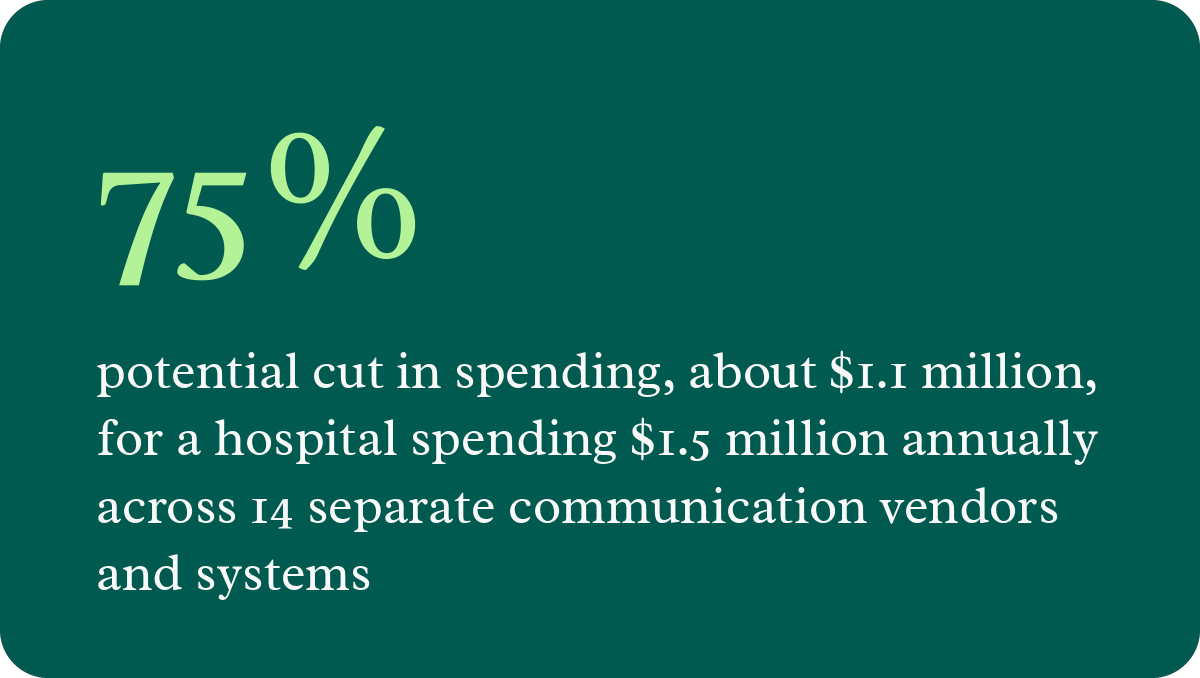
Consider the potential savings from consolidating clinical communication systems. A hospital spending $1.5 million annually across 14 separate communication vendors and systems could cut spending by 75%, or about $1.1 million, by rationalizing this part of their tech stack.
That's compelling, but the headline savings aren’t necessarily what the organization will need. Rahn encourages CIOs to look at the complete picture, including existing vendor agreements, maintenance and support requirements, infrastructure, and any costs associated with implementing the replacement technology.
This is the net-net, he says: the number CIOs can say the organization can realistically save, and when. It’s also the difference between simply promising cost savings and building a business case a CIO can confidently defend.
Blue dollars present another challenge. Making the case for new communication software, for example, to improve physician callback times is valuable, but how will that turn from blue to green? The key is to show how those improvements will affect existing workflows and their impact on time, capacity, or cost.
If faster callback times will free up nurses, for example, CIOs can measure how often those follow-ups happen and how much time they consume on average. From there, they can estimate (in partnership with the COO) how much time a new system could recover.
The key here is to take the calculation one step further and determine how the operating model will evolve to put those reclaimed hours to good use. Will it translate into faster discharges that free up additional beds? Could nurses manage the same patient volume without additional overtime?
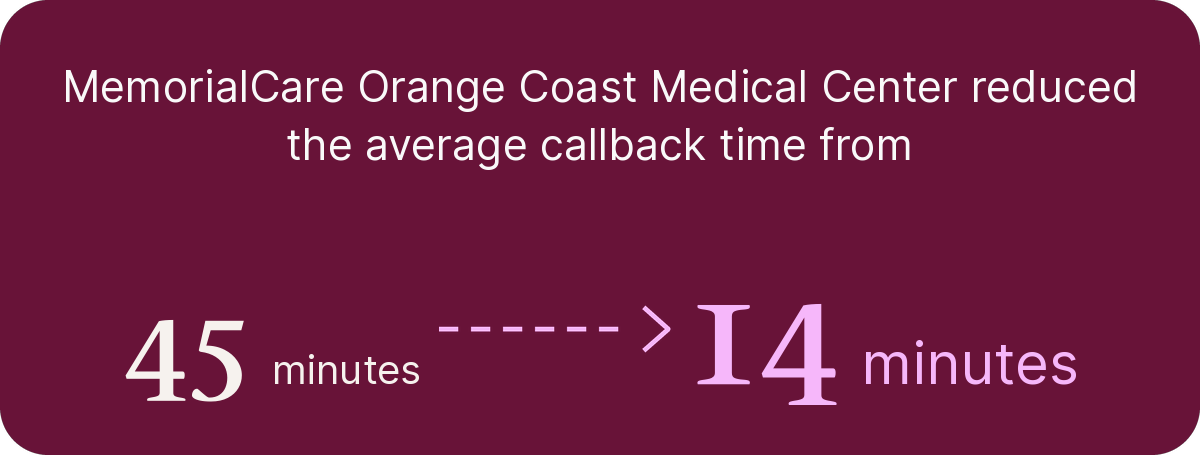
MemorialCare Orange Coast Medical Center worked with PerfectServe to streamline nurse communication workflows after noticing that the cycle for nurses to contact physicians was complicated, disjointed, and had multiple potential gaps. After implementing PerfectServe’s Clinical Collaboration solution, the medical center streamlined the process and reduced the average callback time from 45 minutes to 14 minutes, which could potentially reduce overtime and the associated costs, not to mention making patient care more efficient. Think about it: If a team of nurses during one shift collectively needs 20 callbacks, better communication eliminates 600 minutes of wasted time right away.
This is how CIOs thread the needle between green and blue dollars. As Rahn explains, “Technology creates capabilities, but a CIO has to convert that before the CFO determines whether they show up economically.”
Connect Financial ROI to Long-Term Clinical Outcomes
Hard ROI is often the strongest argument CIOs can make to get an investment approved, but Rahn believes the most compelling cases also demonstrate what that investment could mean over time.
“CIOs need to think about how investments and business cases tie back to the system’s mission,” he shares, “and how it translates into better patient experiences.”
For a clinical communications investment, that could mean:
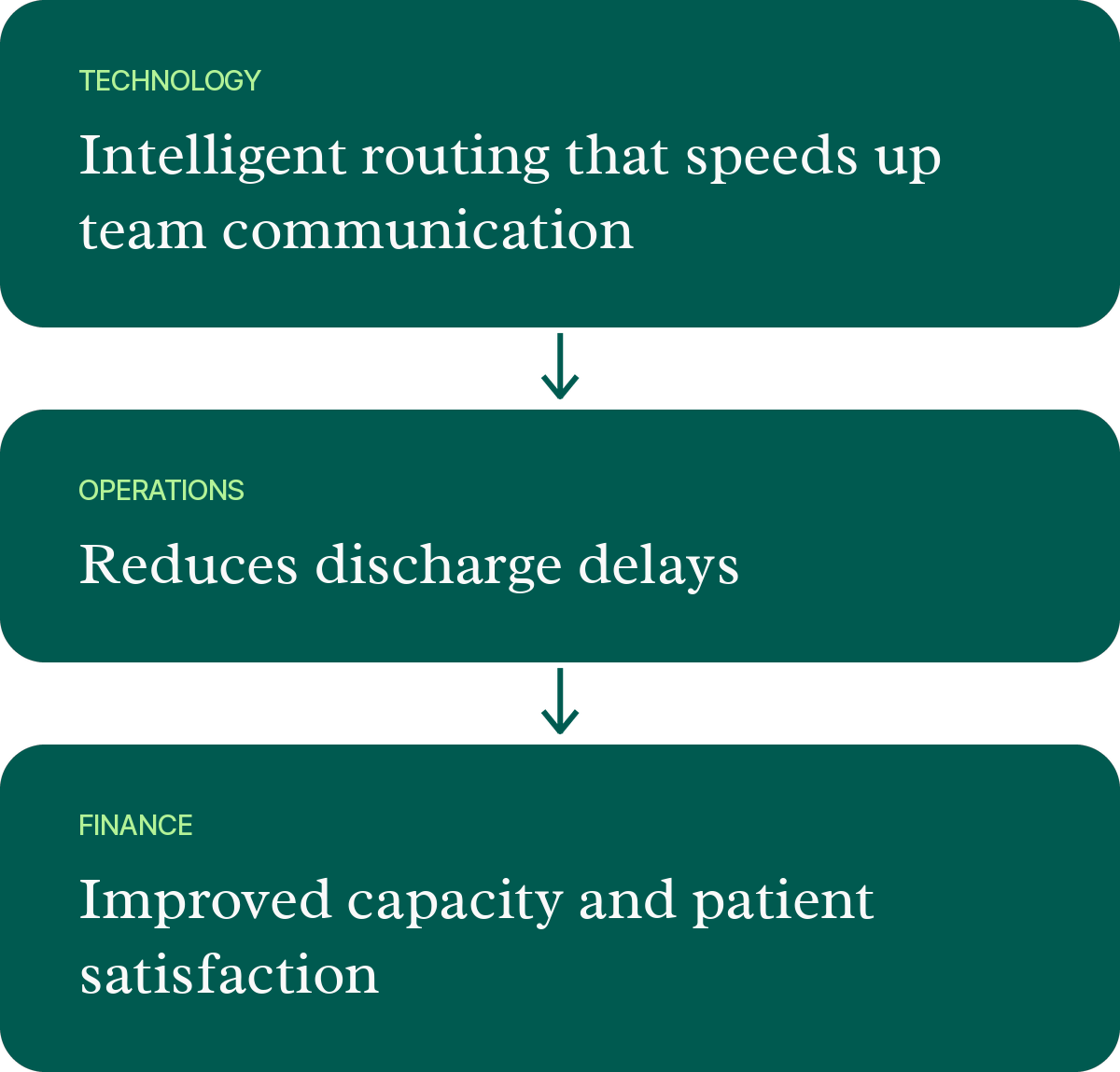
- More efficient patient care with communication guided by intelligent routing
- Fewer discharge delays and better patient satisfaction
- Less administrative work that takes clinicians away from patients and causes unnecessary stress and burnout
That last point is particularly important as clinicians navigate rising patient acuity, workforce shortages, and inefficient workflows that can make even routine tasks unnecessarily complicated. In fact, our survey of 343 clinicians found that nearly all report regularly losing time in patient care due to systemic operational issues, from disjointed communication that causes delays to inaccurate schedules that make care team coordination difficult.
The friction and frustration create daily disruptions that can affect care, but for CIOs, the bigger concern is the longer-term impact of burnout-induced staff turnover and the added costs of recruiting, replacement, and lost productivity. Its estimated that replacing a single provider can cost an estimated $500,000, while replacing a nurse can cost more than $60,000.
Of course, CIOs can’t promise new technology will prevent clinicians from leaving, but they can work with COOs to establish current turnover rates, estimate replacement costs, and identify workflow improvements that could directly support retention. As Rahn will tell you, this is where “CIOs and COOs need to bring their superpowers together.”
But this doesn’t all have to happen at once. Instead of promising everything will materialize overnight, CIOs can strengthen their case by taking a phased approach that starts with the biggest or most addressable problem.
For example, if the goal is to improve communication, start in one department, establish a baseline, and measure initial improvements with something like physician response times. A phased rollout also gives CIOs a chance to address potential risks, such as whether a new integration clashes with existing technology or whether clinician adoption concerns arise. From there, track adoption, measure longer-term improvements, and validate the hard ROI before expanding that IT investment to other departments.
Start the Conversation Early and Build a Stronger Business Case with Other Leaders
No CIO should build or defend their business case alone. While they may ultimately own the implementation, support, and success of the investments, every outcome we’ve covered extends well beyond their purview.
As Rahn puts it: “If the CIO is standing alone defending their technology, something went wrong upstream,” he says. “If the CIO hasn’t validated the green dollars with finance, the capacity assumptions with operations, and workflows needed with clinical leaders, supporting it with implementation, integration, security, and support will be difficult.”
The conversations shouldn’t stop at the C-suite, either. Nurses and other frontline teams need a chance to share their perspectives on the technology and workflows causing much of the friction in the first place, which is a chance they haven’t always been afforded. According to our clinician wellness survey, in the 12 months before publishing, only 33% of clinicians said their leaders changed the organization’s operational tools and workflows after soliciting feedback from clinicians. Meanwhile, 22% said their feedback didn’t lead to any changes, and nearly 40% said leadership simply never asked for their input.
“What clinicians are describing are symptoms of deeper operational issues: how schedules are built, how alerts are managed, and how communication flows during a shift,” said PerfectServe SVP of Client Services Miriam Halimi, JD, DNP, MBA, RN-BC. “To make a real impact on wellness, leaders have to strengthen these core systems. When operations run smoothly, care teams can focus on patients instead of fighting the process.”
With these perspectives, CIOs can strengthen their business case by answering three critical questions: Why this investment, why now, and what are the risks of doing nothing? A knowledgeable technology partner can help guide the process.
Making the Case for Healthcare IT Across the Organization
As we move into the new year, expectations around health IT investments continue to evolve as a result of changing priorities and external pressures in healthcare. CIOs, in turn, may have to rethink how they present some of these proposed investments.
That means bringing a few pieces together into a logical sequence:
- Define the problem and cost of inaction: Establish what’s working, its current financial or operational impact, and why inaction will be just as costly.
- Build the financial justification: Compare existing costs with the total cost of the health IT investment, including implementation, migration, and savings.
- Connect technology with outcomes: Identify where the technology will improve workflows, capacity, or patient care, and how those improvements will be measured.
- Present a realistic phased implementation plan: Explain the rollout timeline, integration dependencies and risks, adoption requirements, and safeguards to ensure continuity of care.
- Validate assumptions cross-functionally: Confirm the hard ROI with finance, operational outcomes with the COO, and clinical workflows with CNOs and CMOs.
Combined into a business case, these elements give CIOs a more defensible case for their investment and ultimately the confidence they need to connect the financial realities of today with the operational and clinical outcomes organizations hope to realize tomorrow.
Ready to start building a business case? Check out our 6-question checklist that will help you review current technology and operations spending while establishing investment priorities for 2027.
-
See it working for real teams
















Bring us the workflow that [hurts most]
We'll show you how it runs on PerfectServe, with your teams, your sites and your EHR.