




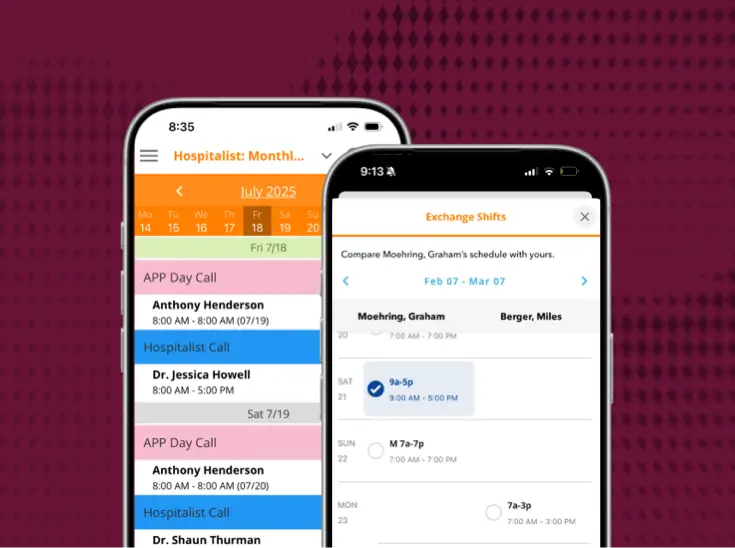

Your tools were bought separately. Your results are [measured together].
Every delay on this page happens in a handoff: between an accepted transfer and a clean bed, between a page and the clinician on call, and between what the schedule says and what the operator can see.


What's slowing your facility down?
Operations leaders usually arrive here with one specific problem. What's yours?

Patients are waiting on the phone system

Coverage looks fine on paper but breaks at 3 AM

Every site does it a different way

You're paying for too many systems
What one health system got back
One health system's numbers after standardizing operations on the platform.


6 things that change when the handoffs close
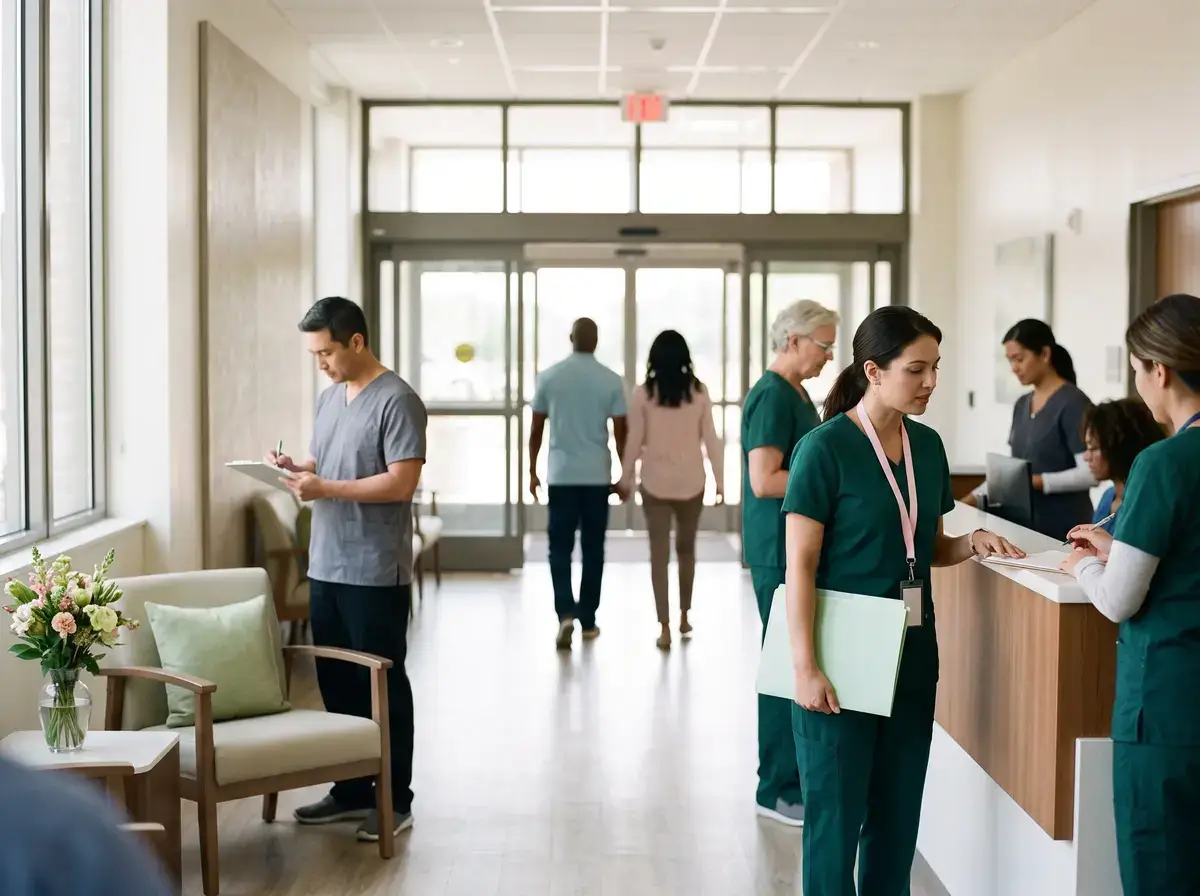
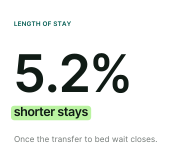
Patients spend less time in a bed
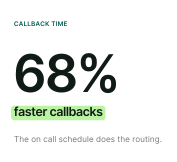
Callbacks stop holding up decisions
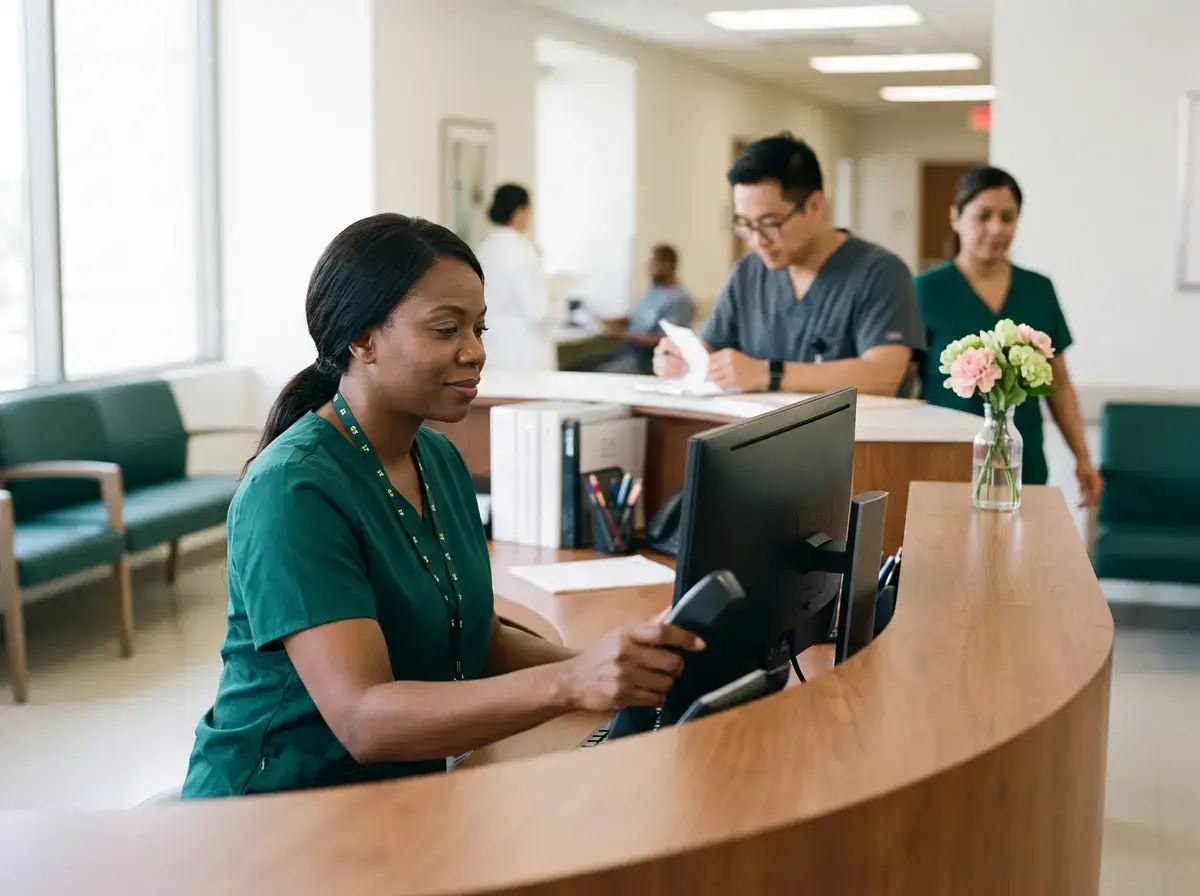
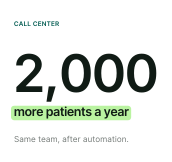
The call center handles more without adding headcount
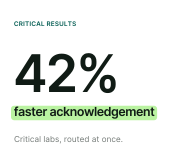
Critical results reach a clinician faster

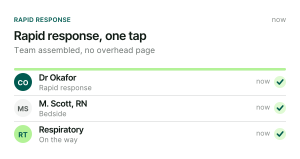
Rapid response gets assembled in one step

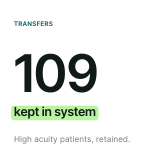
Fewer patients leave for a competitor
Where this lives in the platform
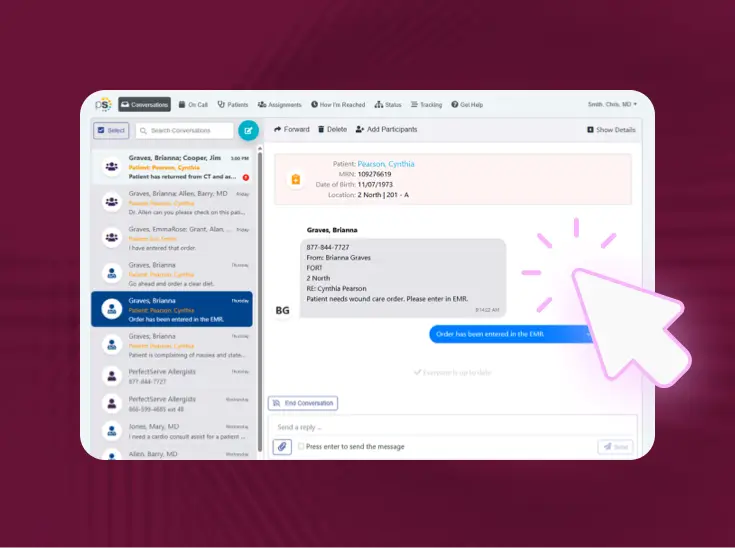
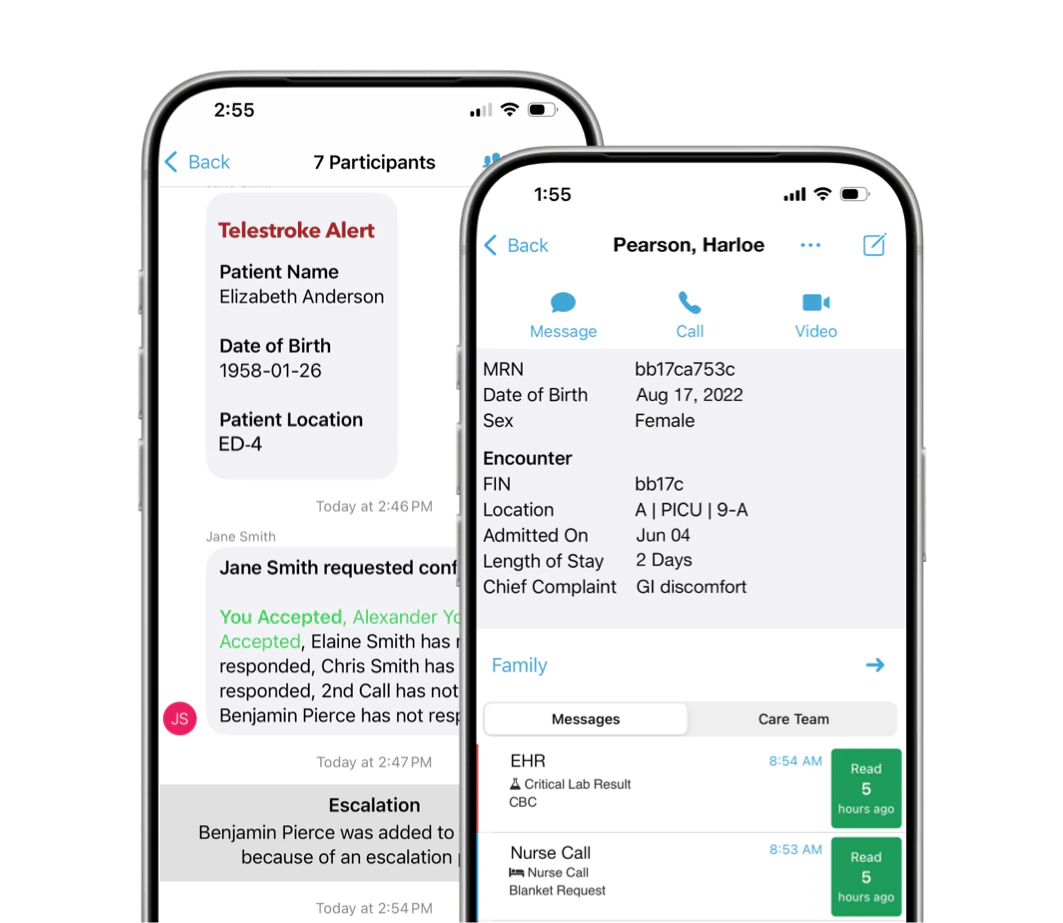
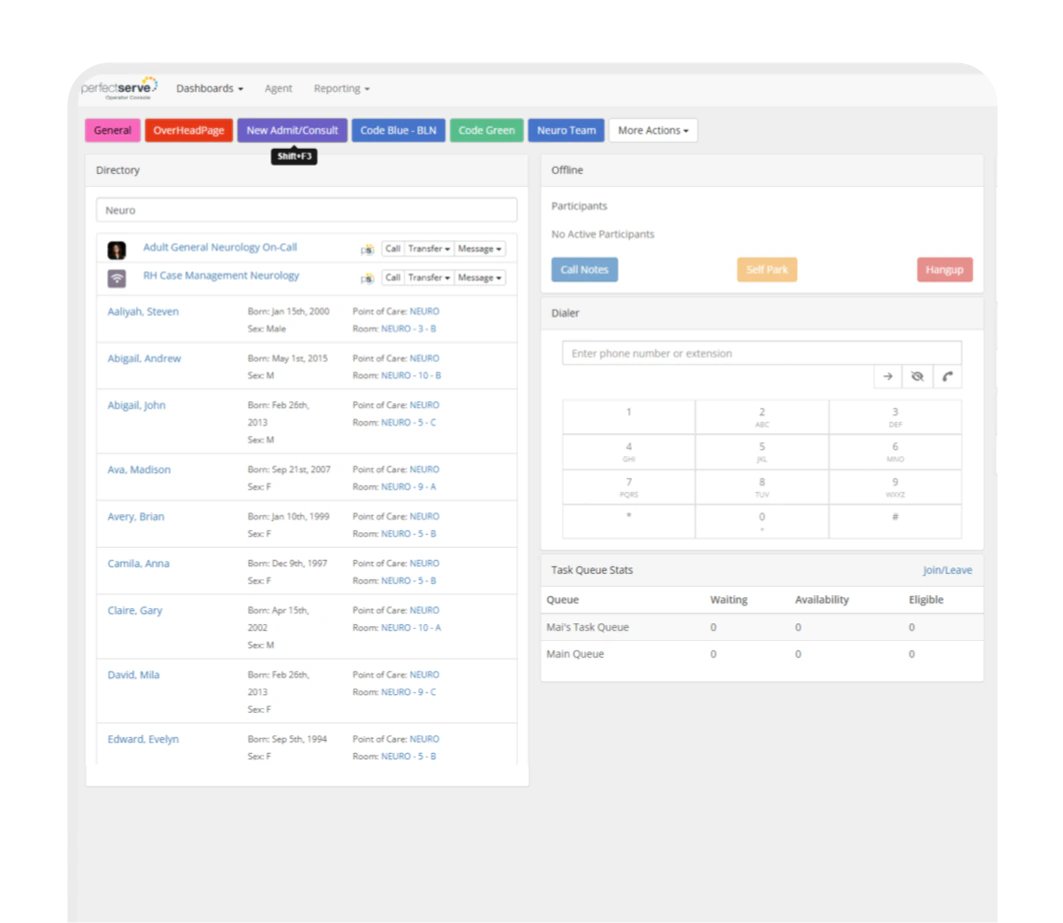
Everything on this page runs on Operator Console and Lightning Bolt Clinical Team Scheduling working together, with Clinical Collaboration carrying the message once a page reaches someone. Used together, they share 1 live directory and 1 schedule, so every site dials into the same truth.
Clinical Collaboration

Lightning Bolt Clinical Team Scheduling
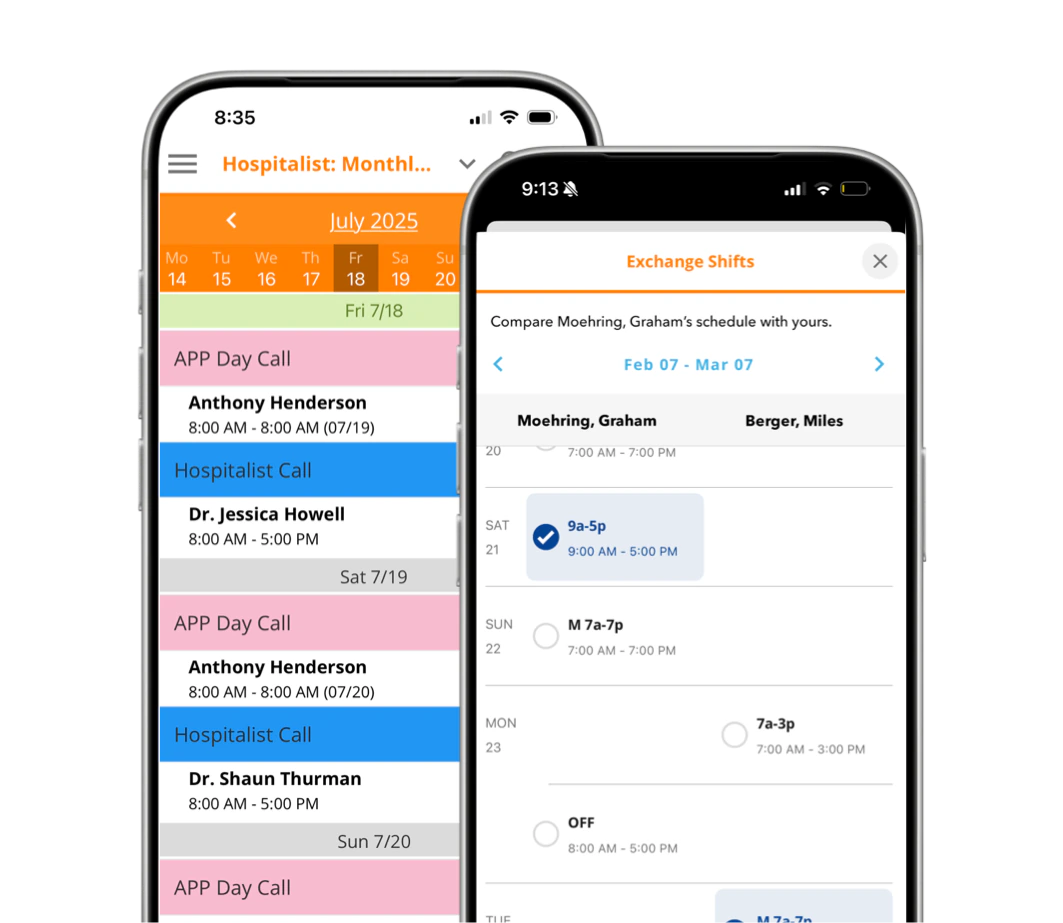
Operator Console
It holds up in real hospitals
The PerfectServe project showed us what's possible when tech actually supports the way clinicians work. It wasn’t about adding yet another tool to bog our staff down. It was about creating a smarter and simpler path to better care.

The 2026 healthcare contact center report
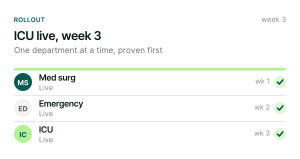
The rollout starts with workflows, not the whole platform
Consultative implementation
We map how a transfer, a 3 AM page, a mid-shift coverage change, and other workflows move through your building today, then we scope new ones for your facility.

A team that stays
A team of PerfectServe consultants handles setup, and dedicated support stays with you as you add sites and workflows.

Built to expand
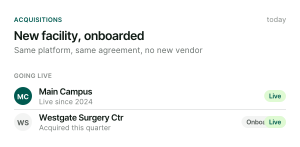
The first site becomes the template for the next one, whether you end up with 1 product or 3.

What operations leaders ask first
What separates PerfectServe from other platforms on the market?
The clearest differentiator is that PerfectServe’s scheduling and communication systems share the same underlying data. When a schedule changes, routing updates automatically. That means no manual intervention, no lag, no staff member chasing down who’s actually on call. Most platforms on the market either scheduling or communication well. PerfectServe is built so the two functions inform each other in real time.
What results have PerfectServe customers seen?
Advocate Good Samaritan Hospital reported a 99% decrease in overhead physician pages, Hospital for Special Surgery cut rapid response times 73% (2:30 → 40 sec), and Munson Healthcare’s 7-hospital system retired 600 pagers (~$120K/yr saved) and cut 56,000 calls over 13 months.
How much does PerfectServe cost?
PerfectServe uses custom pricing based on organization size and the solutions you need, such as clinical communication, scheduling, operator console, or medical answering service. Request a demo for a quote tailored to your environment.
Can PerfectServe replace our pagers?
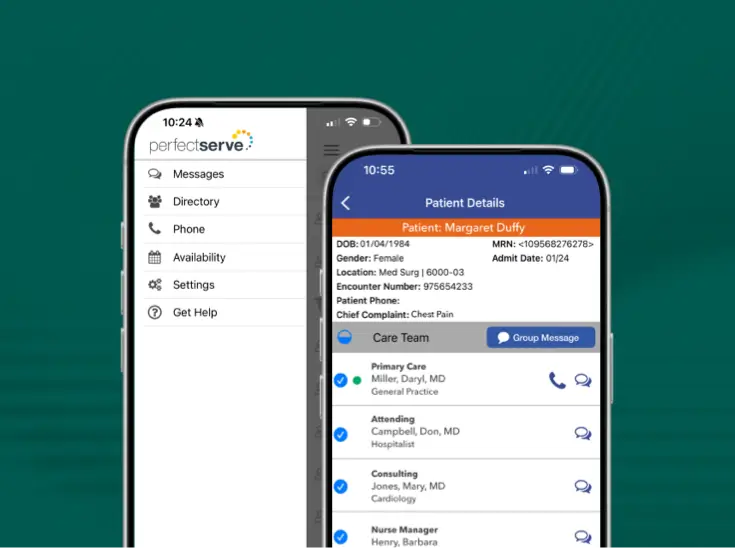
Yes. PerfectServe runs on the devices teams already use (smartphones, desktops, and VoIP phones) and can work alongside legacy pagers during a transition rather than forcing an overnight switch. Organizations commonly use it to retire pager fleets while keeping critical alerts reliable.
Does PerfectServe integrate with our EHR and existing systems?
Yes. PerfectServe integrates with Epic, Oracle Health (Cerner), and 270+ clinical systems, including nurse call and alerting platforms, lab and radiology systems, telephony providers, and pager networks. Messaging can be embedded directly in the EHR, so patient context travels with every on-call message and clinicians don’t switch between applications.
Is clinical communication software only for large hospitals?
No. The best platforms can scale from single-specialty clinics to large health systems. PerfectServe serves both 500+ hospitals and 30,000+ medical practices, using the same routing engine for acute and post-acute care settings.
Is PerfectServe HIPAA-compliant and secure?
Yes. PerfectServe is HIPAA compliant and SOC 2 compliant. Messages are encrypted at rest and in flight, every action is captured in a complete audit trail, and every covered entity receives a signed Business Associate Addendum before going live. See how we make trust and security a priority.
How long does a demo take?
A demo with PerfectServe typically lasts about 20-30 minutes. Schedule one now to see how our solutions can benefit your organization.
Don’t have time? Take a product tour of our solutions.
Do we have to buy the whole platform?
No. Our customers have different product mixes depending on their needs. The benefits tend to compound when multiple solutions are used together, so talk to our team about the ideal setup for your organization.
What does hospital operations software do?
It connects the systems that determine how quickly a patient moves through a hospital: call routing and transfers, provider on-call coverage, and care team communication. PerfectServe combines all three on one platform and routes each message or call based on schedule, role, and escalation rules.
How does this affect patient throughput?
By removing the waits between steps. When the operator can see the on-call specialist and the bed in one console, and a page reaches the clinician who is genuinely on call, decisions happen sooner.
Can PerfectServe support a patient command center or integrated operations center?
Yes. Two published clients built one with PerfectServe as the communication backbone, managing placement across thousands of beds and running multiple call queues with a real-time wall board showing queue load across sites.
Do we have to replace our EHR or our scheduling system?
No. PerfectServe integrates with 270+ clinical systems, including EHRs, nurse call, and payroll, and supports integrations with third-party scheduling solutions already in place.
Can we standardize across multiple hospitals?
Yes. One directory, one set of escalation rules, and unified after-hours call handling across sites, including non-acute settings that are part of your network.
What does it replace?
Pagers, texting apps, on-prem operator consoles, DECT phones, voicemail-based routing, and scheduling spreadsheets.
Is PerfectServe secure and HIPAA-compliant?
Yes. PerfectServe is HIPAA compliant and SOC 2 compliant, with AES-256 encryption at rest, TLS 1.2+ encryption in flight, full audit trails, and no locally cached PHI.

Bring this to [your building]
We'll show you how it runs on PerfectServe, with your teams, your sites and your EHR.