



Your phone shouldn't carry [clinical risk]
Right now, routine calls and urgent calls get the same treatment: a live agent, a menu, or whoever's cell phone is on tonight. That's where documentation gaps open up and exposure starts.
What's happening on your after-hours line today
Routine calls reach the on-call provider
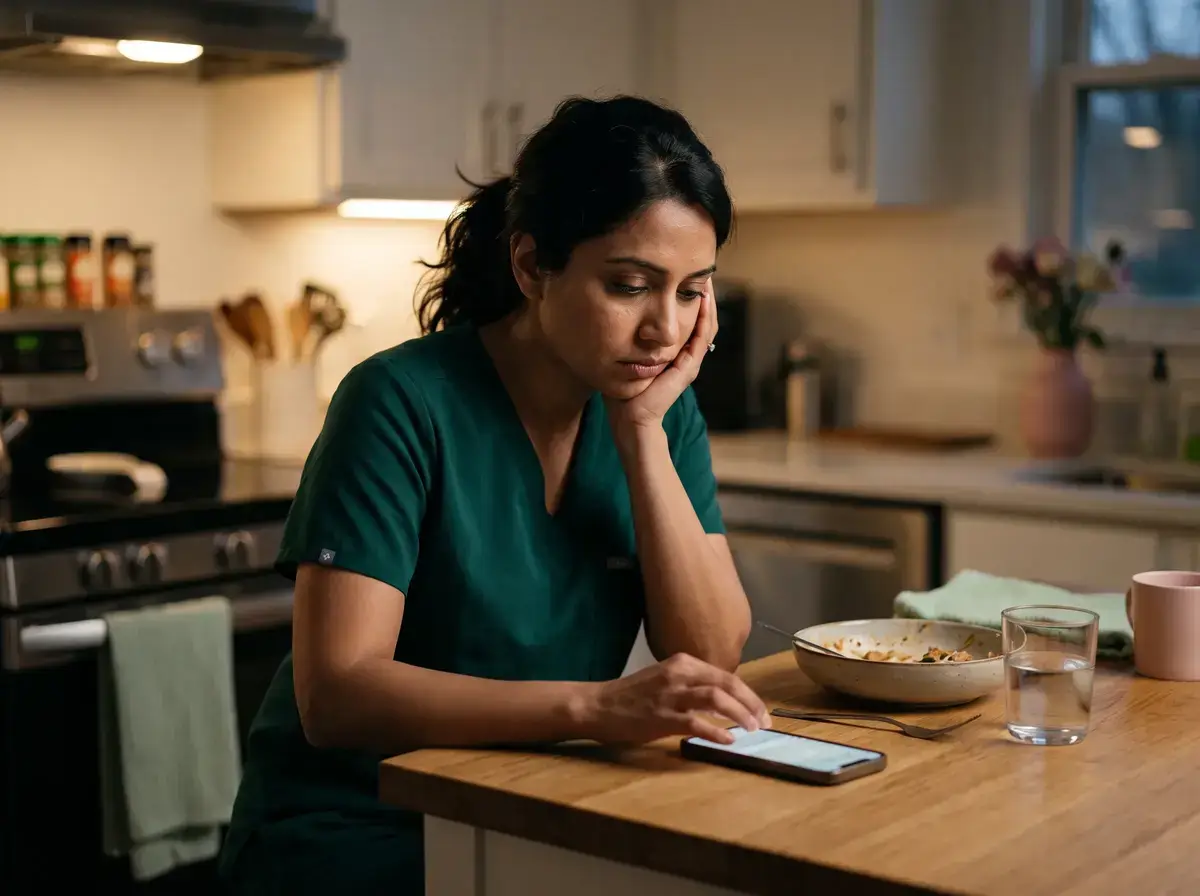
No routing, no live schedule
Missing documentation
Costs that rise every renewal

Patients who can't reach the right provider
How PerfectServe closes the gap

What closing the gap looks like
Farragut Family Practice, a 4-physician division of Summit Medical Group in Knoxville, used to relay after-hours messages by texting providers' personal phones, with calls between shared locations routinely misrouted.



The answering service you've always needed
Intelligent Answering powered by ConnectiveIQ


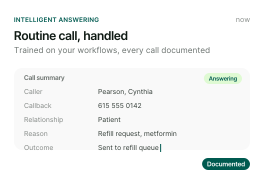

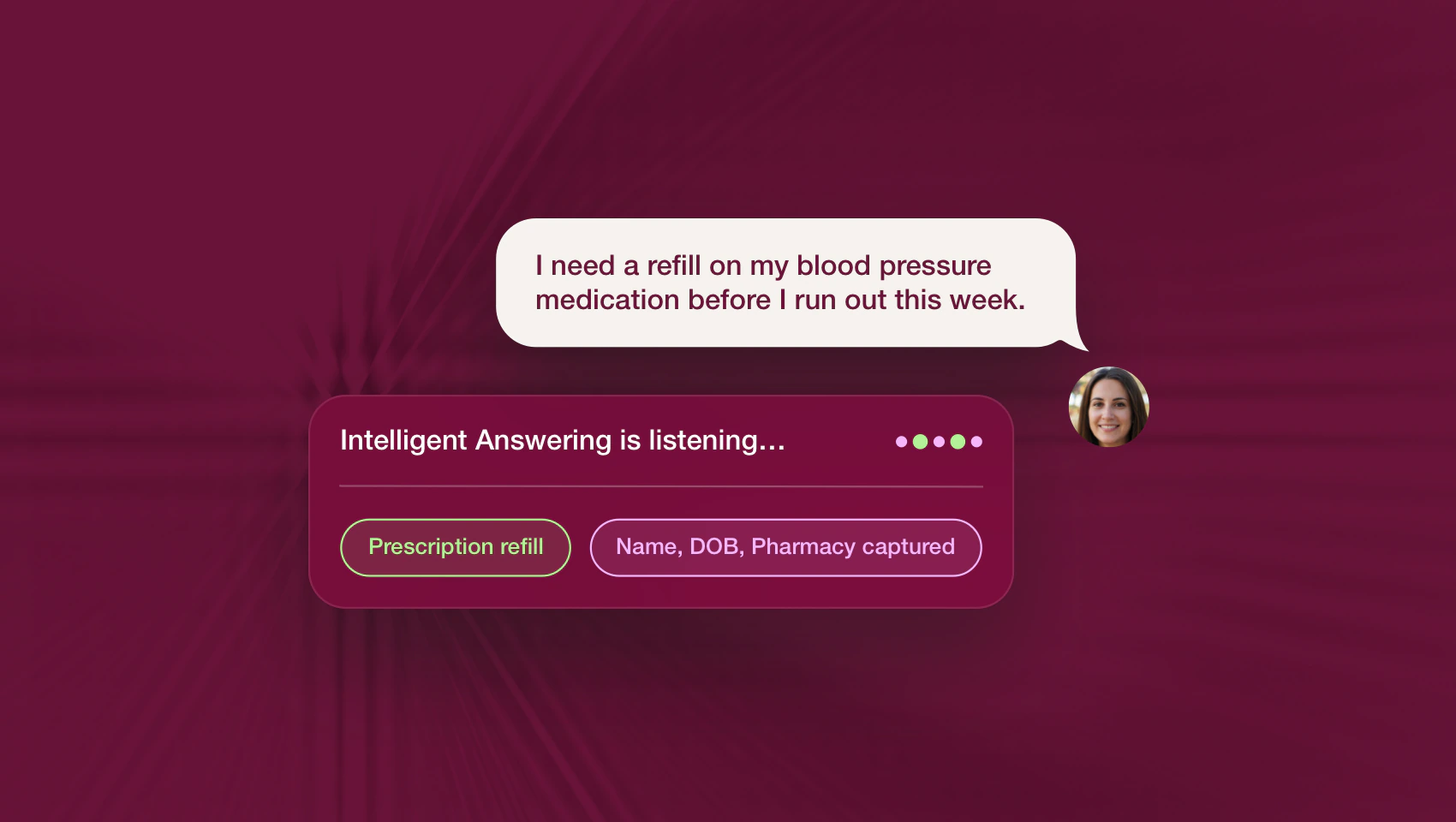
How Intelligent Answering handles a call
The call comes in
It checks itself against your protocols
The routine ones get handled without a provider
A documented record, not a liability question
How we implement


Built for the primary care practice you run

Independent practices

Multi-site primary care groups
What primary care practices ask first
What separates PerfectServe from other platforms on the market?
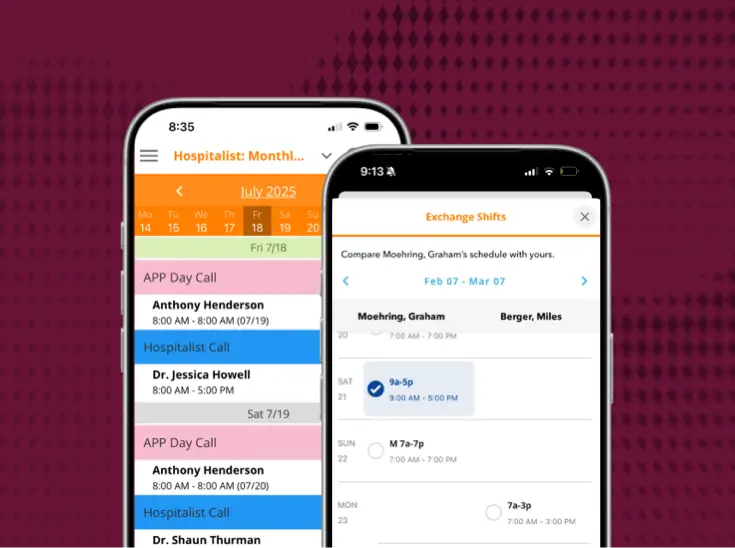
The clearest differentiator is that PerfectServe’s scheduling and communication systems share the same underlying data. When a schedule changes, routing updates automatically. That means no manual intervention, no lag, no staff member chasing down who’s actually on call. Most platforms on the market either scheduling or communication well. PerfectServe is built so the two functions inform each other in real time.
What results have PerfectServe customers seen?
Advocate Good Samaritan Hospital reported a 99% decrease in overhead physician pages, Hospital for Special Surgery cut rapid response times 73% (2:30 → 40 sec), and Munson Healthcare’s 7-hospital system retired 600 pagers (~$120K/yr saved) and cut 56,000 calls over 13 months.
How much does PerfectServe cost?
PerfectServe uses custom pricing based on organization size and the solutions you need, such as clinical communication, scheduling, operator console, or medical answering service. Request a demo for a quote tailored to your environment.
Can PerfectServe replace our pagers?
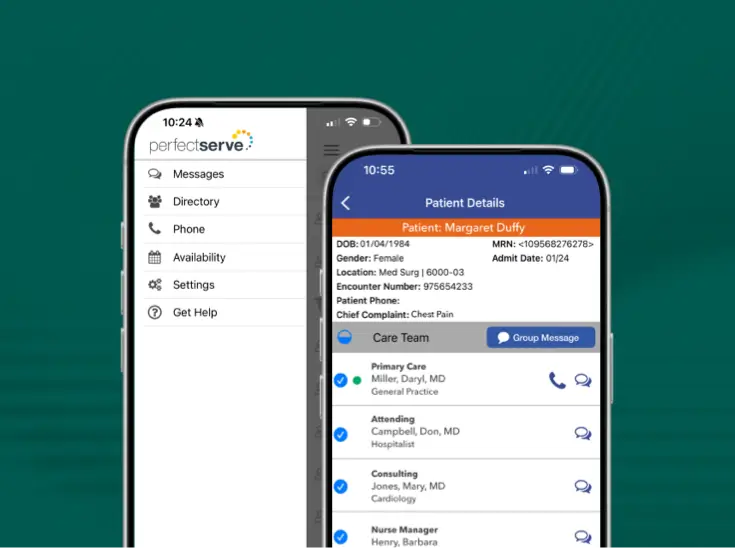
Yes. PerfectServe runs on the devices teams already use (smartphones, desktops, and VoIP phones) and can work alongside legacy pagers during a transition rather than forcing an overnight switch. Organizations commonly use it to retire pager fleets while keeping critical alerts reliable.
Does PerfectServe integrate with our EHR and existing systems?
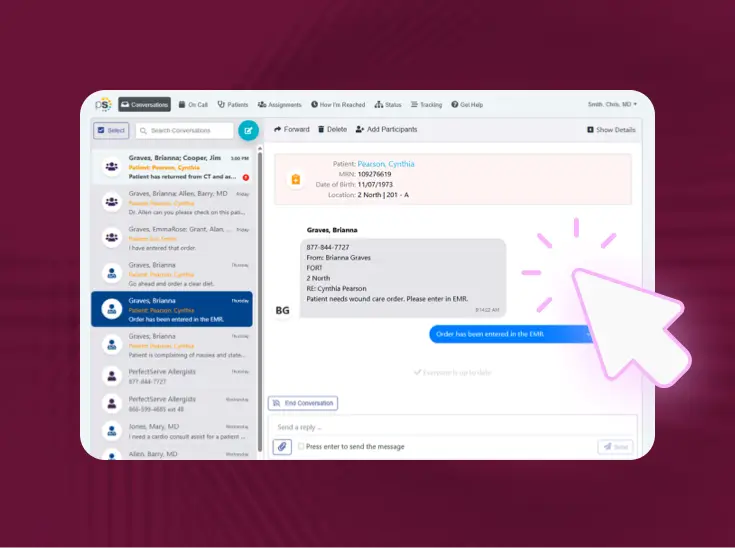
Yes. PerfectServe integrates with Epic, Oracle Health (Cerner), and 270+ clinical systems, including nurse call and alerting platforms, lab and radiology systems, telephony providers, and pager networks. Messaging can be embedded directly in the EHR, so patient context travels with every on-call message and clinicians don’t switch between applications.
Is clinical communication software only for large hospitals?
No. The best platforms can scale from single-specialty clinics to large health systems. PerfectServe serves both 500+ hospitals and 30,000+ medical practices, using the same routing engine for acute and post-acute care settings.
Is PerfectServe HIPAA-compliant and secure?
Yes. PerfectServe is HIPAA compliant and SOC 2 compliant. Messages are encrypted at rest and in flight, every action is captured in a complete audit trail, and every covered entity receives a signed Business Associate Addendum before going live. See how we make trust and security a priority.
How long does a demo take?
A demo with PerfectServe typically lasts about 20-30 minutes. Schedule one now to see how our solutions can benefit your organization.
Don’t have time? Take a product tour of our solutions.
Do I need a special device to use PerfectServe?
No. PerfectServe works on your legacy devices, smartphones (including both BYOD and shared device models), VoIP and landline phones, desktops, and even pagers. No proprietary devices are required.
What is PerfectServe?
PerfectServe is a leading provider of technology that helps healthcare organizations communicate, coordinate real-time care delivery, and schedule their most valuable assets, including people, rooms, and even equipment. With our clinical communication, physician scheduling, operator console, and medical answering service solutions, we help our customers accelerate speed to care by ensuring the right people are in place at the right time to take action on important information related to patient care.
Can Intelligent Answering follow our practice's own protocols?
Yes. Routing runs on your practice's rules, including what counts as urgent for your patient population and who is covering, not a generic menu applied to every caller the same way.
How is this different from IVR or a chatbot?
It understands what callers mean, not just keyword matching. Full intent understood, full context of the call captured. IVR cannot do that, and chatbots aren't there yet.
How does it distinguish urgent from non-urgent?
Semantic analysis: it understands context, not trigger words. A patient worried about an abnormal lab result gets a morning callback, not a 2 AM page.
What if it fails at 2 AM?
Redundant AI providers and automatic IVR fallback. No single point of failure.
Is every call documented?
Every call is logged automatically, including caller name, date of birth, and callback number, with a full audit trail.
What does this mean for our physician owner's personal liability?
Every after-hours contact is documented automatically with a full, defensible audit trail, closing the exposure that built up every time an undocumented call landed on a personal cell.
Will our costs still swing with call volume?
No. Both Medical Answering Service and Intelligent Answering run on one flat monthly rate, not per-minute billing, so a busy month doesn't mean a surprise invoice.

See it on your [call schedule]
See Intelligent Answering close the documentation gap against a schedule like yours.