




Vendor sprawl shouldn't be the cost of [running a health system]
You own the technology strategy and security risk, and every point solution you add makes an already complicated tech stack harder to secure and manage.
What one platform gets you back
IT and clinical results reported across PerfectServe customers who've consolidated their communication and scheduling stacks.


6 things that get simpler when the stack consolidates
Retiring legacy pagers and point tools

Standing up EHR-integrated communication

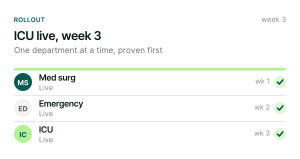
Rolling out by department, not all at once

Reducing your security and compliance surface area

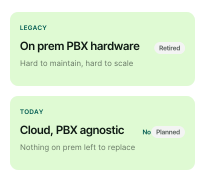
Retiring aging switchboard hardware

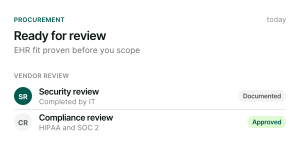
Reviewing a new scheduling platform before procurement

Where this lives in the platform
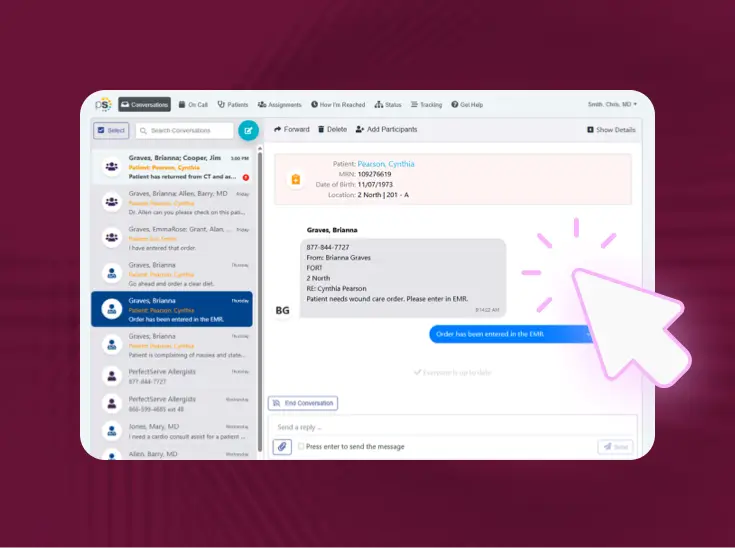
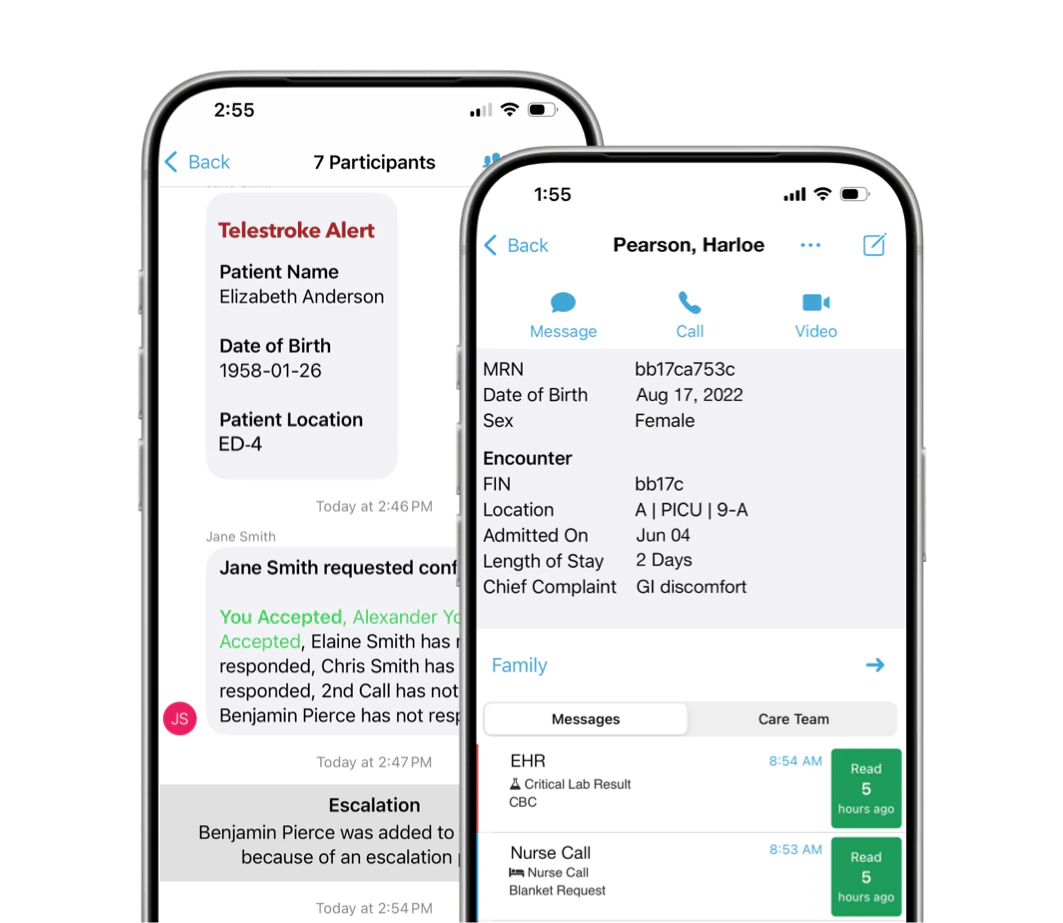
Everything here runs on 3 connected products: Clinical Collaboration, Operator Console, and Lightning Bolt Clinical Team Scheduling, all on the same infrastructure and integrated with other critical systems like your EHR.
Clinical Collaboration

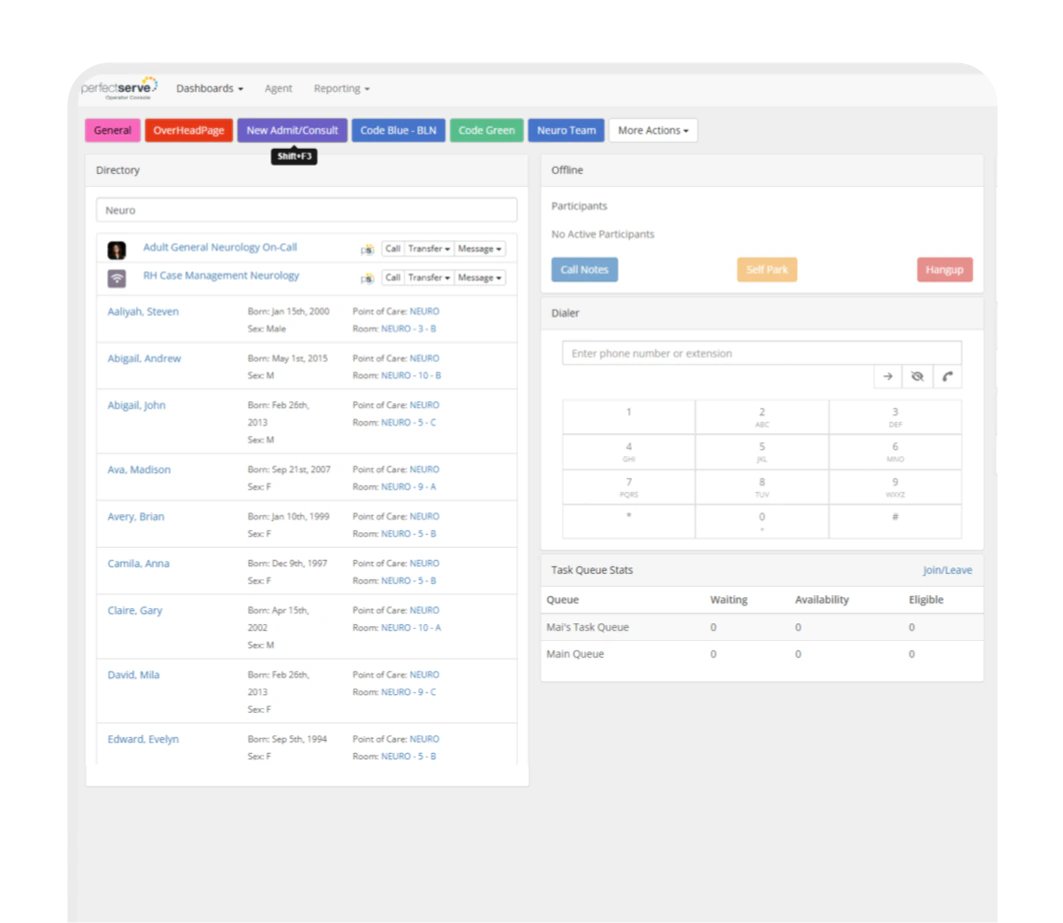
Operator Console
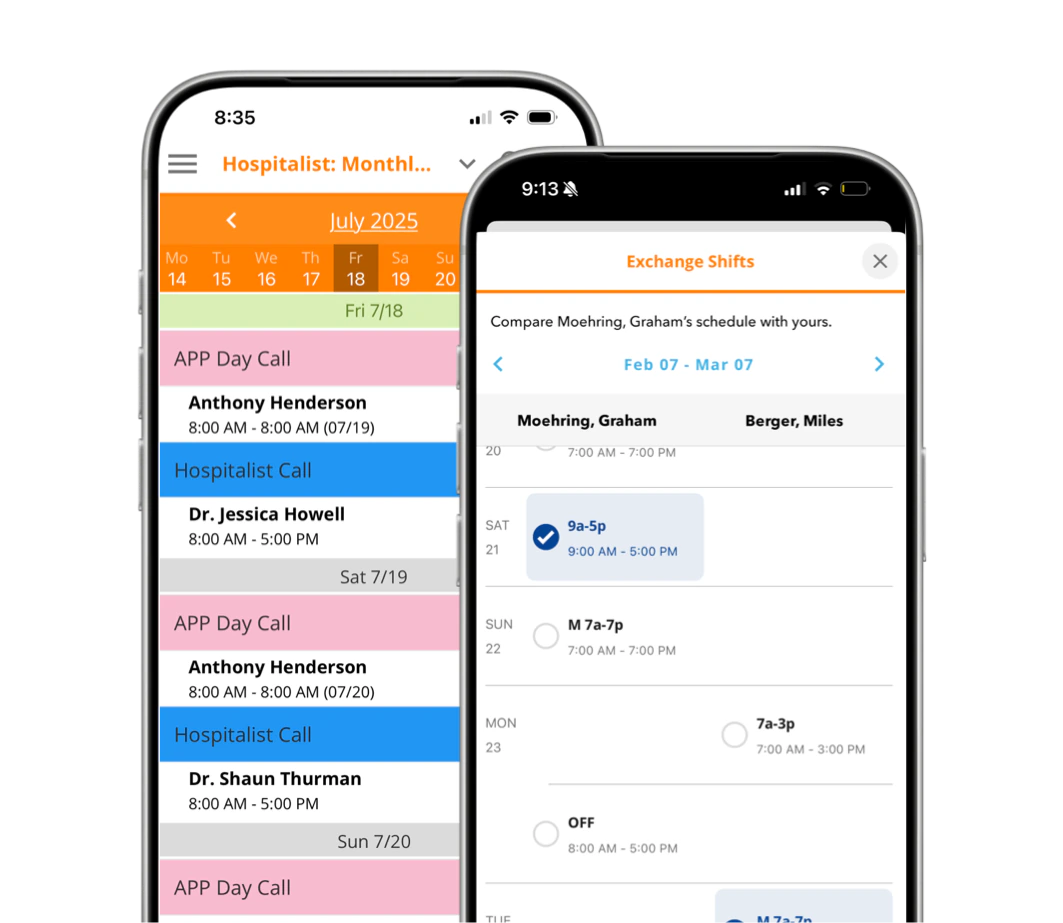
Lightning Bolt Clinical Team Scheduling
It holds up at health systems like yours
We wanted technology that could grow with us. Customer service, compliance, analytics—we needed all of it, and we wanted a partner designed for healthcare, not just a telephone company.


Trust and security

The rollout starts with one department, not the whole hospital

Consultative implementation

A team that stays

Built to expand
What CTOs and IT leaders ask first
What separates PerfectServe from other platforms on the market?
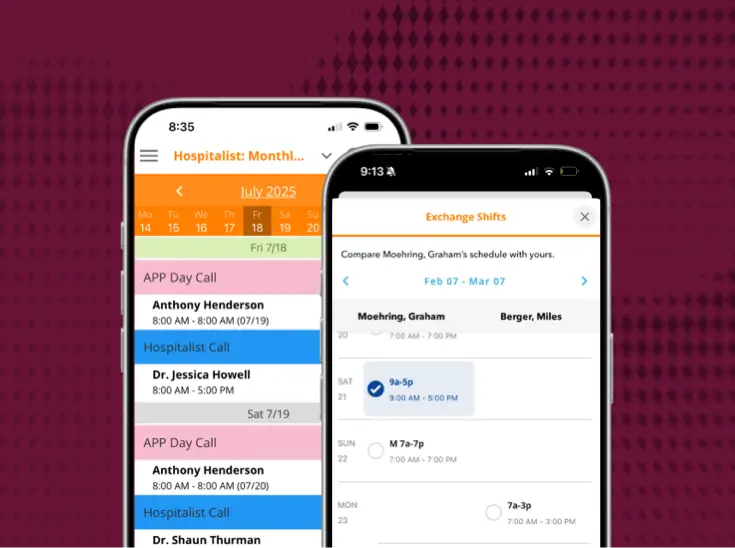
The clearest differentiator is that PerfectServe’s scheduling and communication systems share the same underlying data. When a schedule changes, routing updates automatically. That means no manual intervention, no lag, no staff member chasing down who’s actually on call. Most platforms on the market either scheduling or communication well. PerfectServe is built so the two functions inform each other in real time.
What results have PerfectServe customers seen?
Advocate Good Samaritan Hospital reported a 99% decrease in overhead physician pages, Hospital for Special Surgery cut rapid response times 73% (2:30 → 40 sec), and Munson Healthcare’s 7-hospital system retired 600 pagers (~$120K/yr saved) and cut 56,000 calls over 13 months.
How much does PerfectServe cost?
PerfectServe uses custom pricing based on organization size and the solutions you need, such as clinical communication, scheduling, operator console, or medical answering service. Request a demo for a quote tailored to your environment.
Can PerfectServe replace our pagers?
Yes. PerfectServe runs on the devices teams already use (smartphones, desktops, and VoIP phones) and can work alongside legacy pagers during a transition rather than forcing an overnight switch. Organizations commonly use it to retire pager fleets while keeping critical alerts reliable.
Does PerfectServe integrate with our EHR and existing systems?
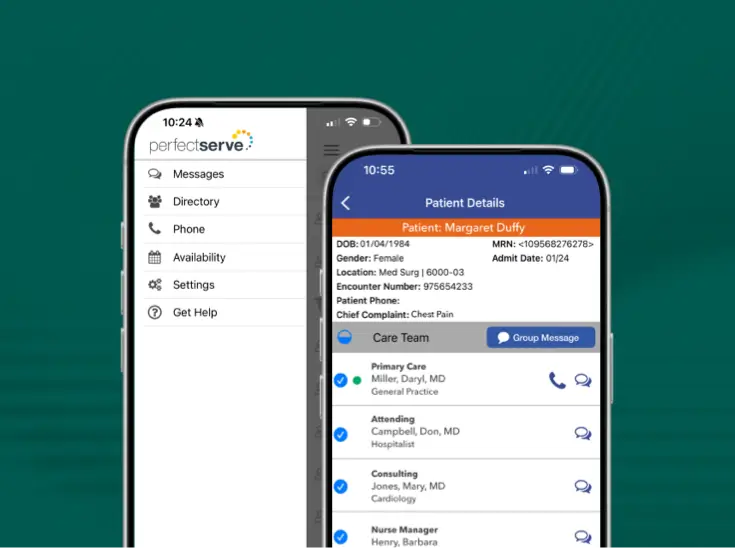
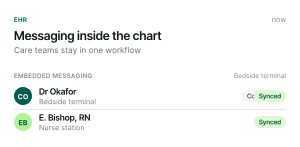
Yes. PerfectServe integrates with Epic, Oracle Health (Cerner), and 270+ clinical systems, including nurse call and alerting platforms, lab and radiology systems, telephony providers, and pager networks. Messaging can be embedded directly in the EHR, so patient context travels with every on-call message and clinicians don’t switch between applications.
Is clinical communication software only for large hospitals?
No. The best platforms can scale from single-specialty clinics to large health systems. PerfectServe serves both 500+ hospitals and 30,000+ medical practices, using the same routing engine for acute and post-acute care settings.
Is PerfectServe HIPAA-compliant and secure?
Yes. PerfectServe is HIPAA compliant and SOC 2 compliant. Messages are encrypted at rest and in flight, every action is captured in a complete audit trail, and every covered entity receives a signed Business Associate Addendum before going live. See how we make trust and security a priority.
What does PerfectServe replace for hospital IT and CTOs?
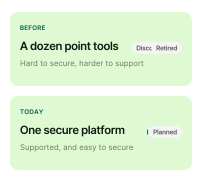
PerfectServe consolidates legacy paging apps, disconnected texting tools, aging on-prem switchboard hardware, and siloed scheduling systems into one platform.
Do we have to do a disruptive, all-at-once rollout?
No. Implementation happens in a phased, controlled sequence, by department, unit, or site, with the model proven at one location before it extends further.
How does PerfectServe integrate with our EHR?
PerfectServe integrates directly with the EHR you already run, so clinical communication works from the same data your care teams use rather than a parallel system IT must reconcile separately.
Is Operator Console compatible with our existing phone system?
Yes. Operator Console is cloud-based and PBX-agnostic, so it preserves your existing telephony investment while retiring the aging on-prem hardware and specialized telecom resources a legacy switchboard requires.
Does Lightning Bolt require custom development to work with Epic or Oracle?
No. Lightning Bolt offers certified Epic and Oracle integration depth confirmed before procurement, so integration scope is known up front rather than discovered mid-project.
Is PerfectServe secure and HIPAA-compliant?
Yes. PerfectServe is HIPAA compliant and SOC 2 compliant, with AES-256 encryption at rest, TLS 1.2+ encryption in flight, full audit trails, and no locally cached PHI.
Is PerfectServe cloud-based?
Yes. PerfectServe is 100% cloud-based, so security patches and platform updates roll out automatically without added on-site IT maintenance work.

Bring this to [your hospital]
One platform integrated with the EHR you already run to replace years of accumulated point tools.