



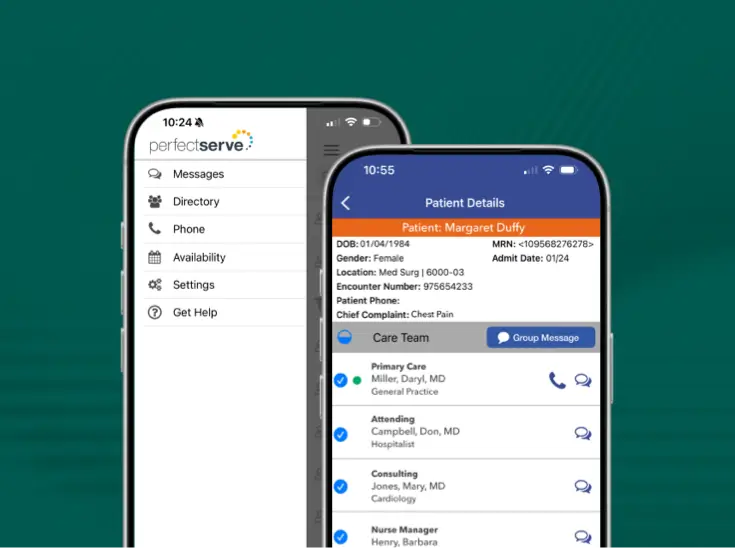
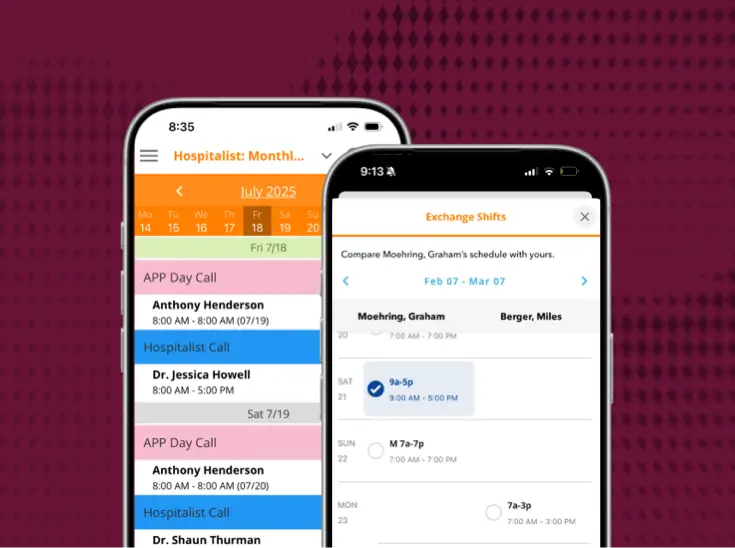
Turn your switchboard into a [patient command center]
Connect patients and care teams to the right person at the right time, with schedules, clinical context, and communication workflows brought together in one operator experience.

Care has changed. The traditional switchboard hasn't.
Care now happens across hospitals, clinics, remote teams, and virtual settings. Operators shouldn't have to piece together directories, schedules, and disconnected systems to make the right connection.
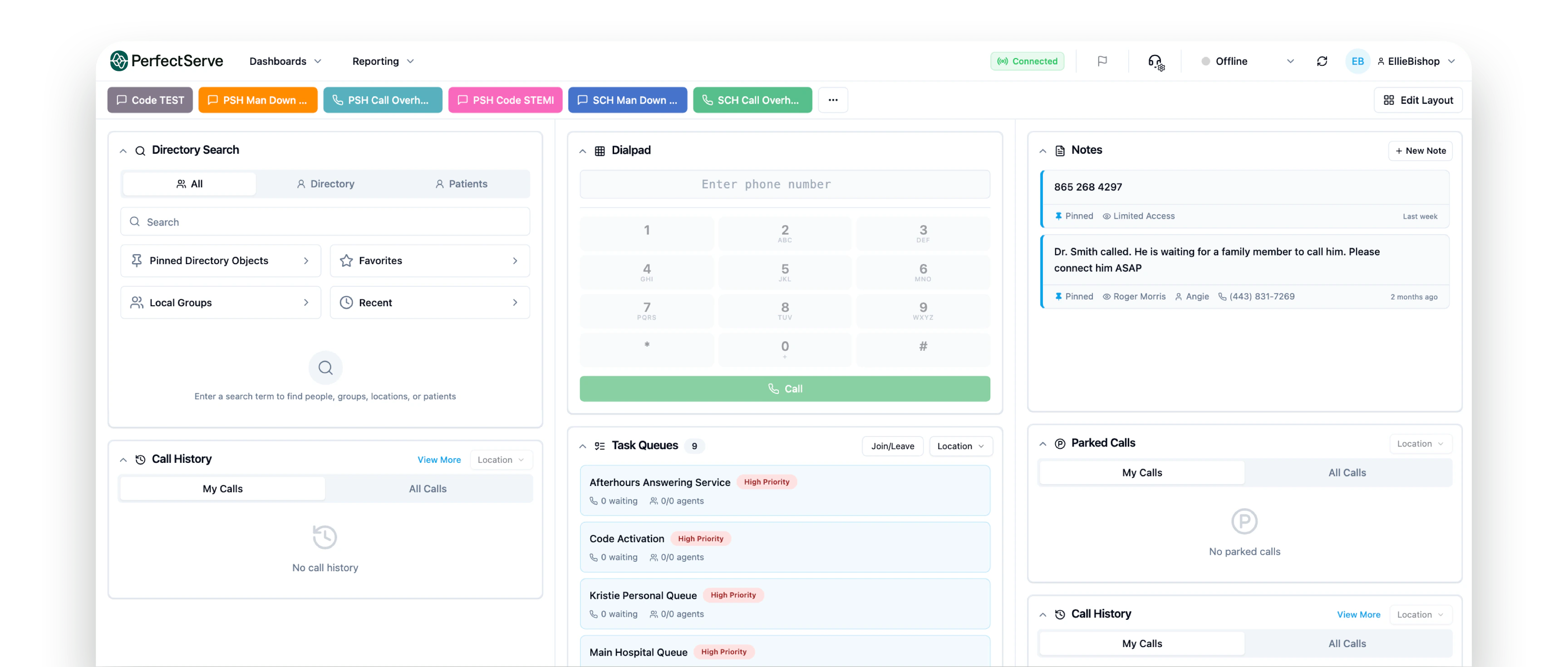
One command center for every connection.
Give operators a single place to see who is available, understand the context of the request, and connect it to the right destination.
Who this is for

IT and operations

The contact center team

Clinicians and care teams
One command center for every connection
Bring the information and communication workflows operators need into one experience, helping them understand who's available, see the context behind the request, and connect patients and care teams to the right destination.
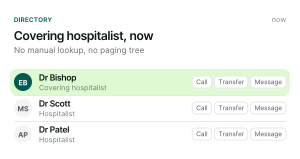
Reach the covering clinician without a lookup



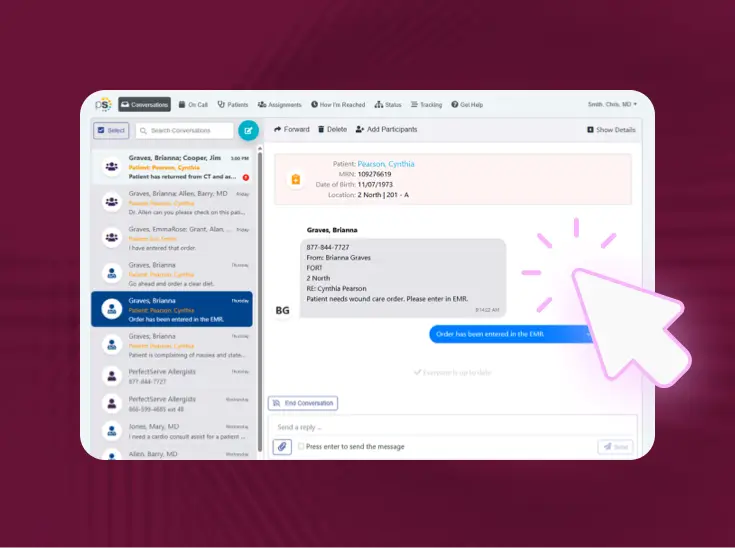
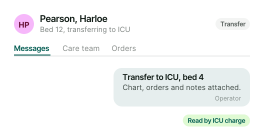
Keep the patient and the message together


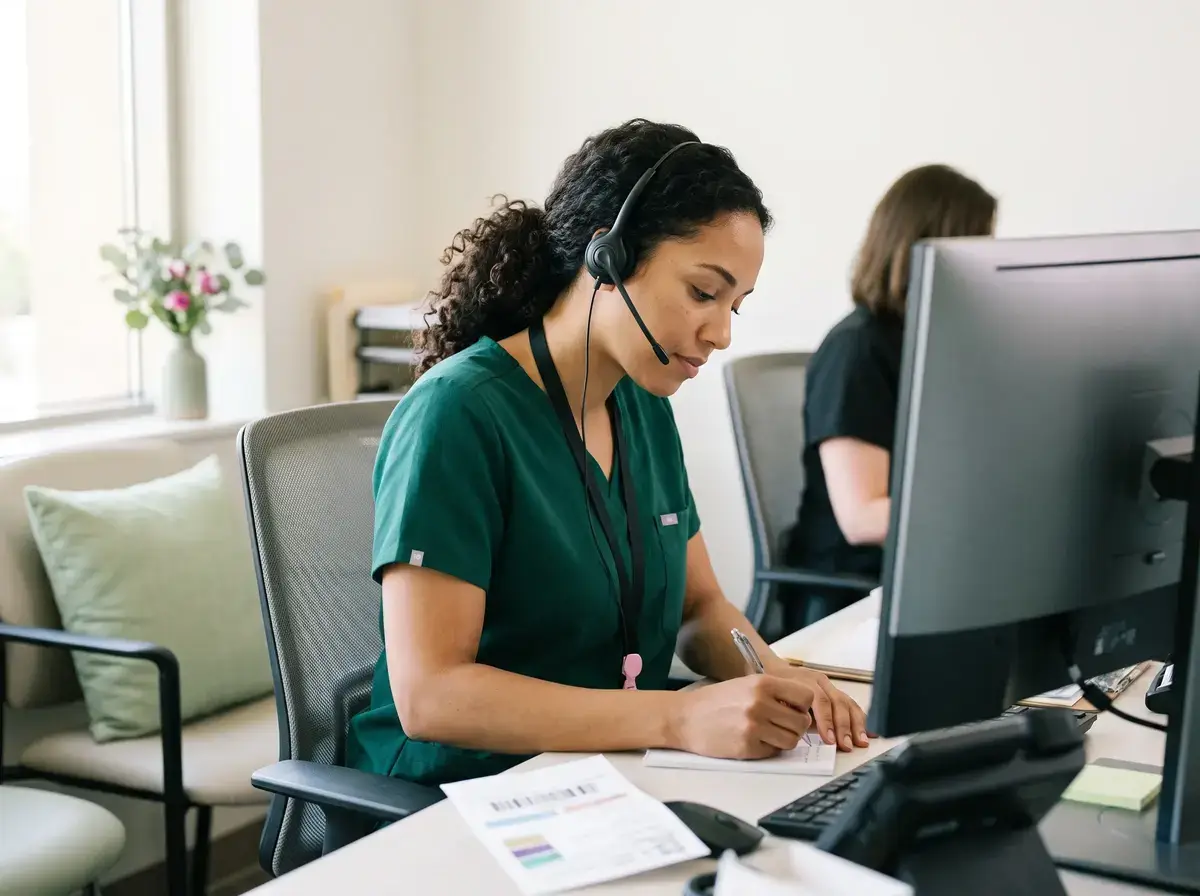
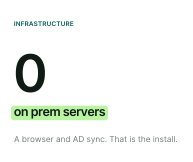
Run it from a browser, not a server room




Built for care without boundaries
Care now happens across hospitals, clinics, remote teams, and virtual settings. Operators shouldn't have to piece together directories, schedules, and disconnected systems to make the right connection.
One command center for every connection.
Give operators a single place to see who is available, understand the context of the request, and connect it to the right destination.
What you get to turn off
On-prem switchboard servers
Physical pagers

Standalone directories

DECT phones and point tools

Overhead paging for routine requests

After-hours answering vendors for internal routing
It connects to what you already run

What implementation looks like
Implementation is consultative with a defined scope agreed before work starts. Every customer gets a dedicated success team that stays past go-live. The project runs in 3 parts:

Map

Connect

Go live
What changed at Munson Healthcare
Munson's 7-hospital system in northern Michigan replaced a legacy on-prem platform with Operator Console, Clinical Collaboration, and Scheduling.



Questions IT and operations leaders ask
What does Lightning Bolt customer support look like?
TPMG has a team of Lightning Bolt consultants and customer success resources dedicated to their success and available to help with schedules, refining rules, establishing integrations. We also offer 24/7/365 support via our Help Desk.
What does implementation look like?
PerfectServe has deployed Lightning Bolt for many groups at TPMG, so implementation is simple. Your dedicated implementation consultant will guide you through data gathering, training and configuration before go-live. Our implementation timeline typically runs 4-6 weeks, but pace can be adjusted based on admin availability.
Does Lightning Bolt integrate with ClinConnect?
Yes, Lightning Bolt integrates seamlessly with ClinConnect to provide on-call schedule visibility across regions and specialties. In addition, Lightning Bolt integrates with Microsoft Outlook. In total, PerfectServe supports over 250 integrations.
Are other groups at TPMG already using Lightning Bolt?
Yes, more than 13,000 staff at TPMG have their schedules on Lightning Bolt. If you’re wondering if a specific group you work with is already using us, shoot us a message and we can chat.
How does TPMG’s partnership with Lightning Bolt work?
TPMG has a regionally supported contract already in place with PerfectServe to facilitate convenient scheduling for physicians and other healthcare providers.
How does PerfectServe Operator Console compare with Spok and Amtelco?
Read our full comparison here.
What do customers say about Operator Console
For 2026, we had a 99% retention rate for Operator Console customers. The same customers gave us a 100% satisfaction score.
Which RHT strategic goals does PerfectServe support?
PerfectServe supports Technology Innovation (cloud-based communication and scheduling infrastructure), Workforce Development (scheduling tools that reduce burnout and improve retention), Sustainable Access (operator console and patient engagement tools that extend care reach), and Innovative Care Models (integrated communication workflows that enable team-based and virtual care).
How does my facility access RHT funds for PerfectServe?
RHT funds flow from CMS to participating states, which then allocate dollars to rural hospitals and health systems. If your state has an approved RHT plan, your facility may be eligible to direct a portion of that allocation toward qualified technology investments like PerfectServe.
Does PerfectServe qualify for Rural Health Transformation funding?
PerfectServe's clinical communication, physician scheduling, operator console, and patient engagement solutions align with the RHT program's technology innovation, workforce development, sustainable access, and innovative care goals. Qualification is determined at the state level based on your facility's approved transformation plan, but PerfectServe's product suite is designed to meet the criteria these plans prioritize.
What is a healthcare operator console?
A healthcare operator console is the software a hospital switchboard or transfer center operator uses to answer, route, and document calls. It combines the clinical directory, on-call schedules, patient location, call queues, and messaging in one interface. It sits on the internal side of the contact center, downstream of the telephony or CCaaS platform that receives the call.
How is this different from a CCaaS platform like Five9, Genesys, or Cisco?
A CCaaS platform handles inbound calls from patients, families, and outside providers. Operator Console handles what happens next inside the building: finding the covering clinician, routing to their preferred device, activating a code team, and completing a transfer with patient context. Many hospitals run both layers. PerfectServe can work with CCaaS vendors so the two hand off to each other, including handoff from an intelligent virtual agent to a human operator.
Does it work with our existing PBX or phone system?
Yes. Operator Console integrates with existing PBX and UCaaS systems, so the phone infrastructure can stay while the operator environment is replaced. PerfectServe supports 270+ integrations across EHR, telephony, scheduling, patient flow, and clinical communication systems.
Does it integrate with the EHR?
Yes. Operator Console integrates with the EHR to surface relevant patient information during a call and to attach patient records to messages. In our 2026 survey of 105 IT and operations leaders, only 39% reported EHR integration in their contact center, which is one reason operators at many hospitals still run the EHR on a second screen.
What is the maintenance burden after go-live?
Cloud delivery removes the on-prem servers, the upgrade weekends, and the version management that a legacy platform requires. Updates apply without a downtime window. Active Directory sync keeps user records current, so clinician onboarding and offboarding follows your existing identity process.
How is access controlled and how is PHI protected?
Access is governed by role-based controls, so an operator, a supervisor, and an administrator each see what their role requires. The platform is HIPAA-compliant, and PerfectServe executes a Business Associate Agreement with every covered entity.
Can the team work remotely?
Yes. The console is cloud-based and hardware-independent, so operators can sign in from a supported device wherever they have a secure connection. Health systems use this to hire outside their local market, keep coverage during weather events or facility disruptions, and offer remote flexibility as a retention tool.
Do we have to replace everything at once?
No. Health systems commonly start with the switchboard and add scheduling, clinical messaging, or emergency alerting later. Munson Healthcare started with the call center and broadened the project scope during evaluation to include integrated provider scheduling.
What does it take to switch vendors?
Among the 105 leaders in our 2026 survey, 51% expected switching to be somewhat or very difficult, and 25% named vendor lock-in as a barrier. Implementation begins with a mapping phase precisely because most of that difficulty lives in undocumented call flows and escalation paths rather than in the technology.

Three ways to [take this further]
Thirty minutes to discuss your call flows and your integrations. We'll show you how Operator Console can help.