


Connect every call to [the right cardiologist]
Chest pain at 2 AM, an INR question at noon, 5 physicians across 9 subspecialties, and 1 physician on call. Every call needs a destination, but routine questions shouldn't interrupt patient care.
Urgent reaches a cardiologist in seconds. Routine never has to.


The whole call workflow, not another point tool
Medical Answering Service
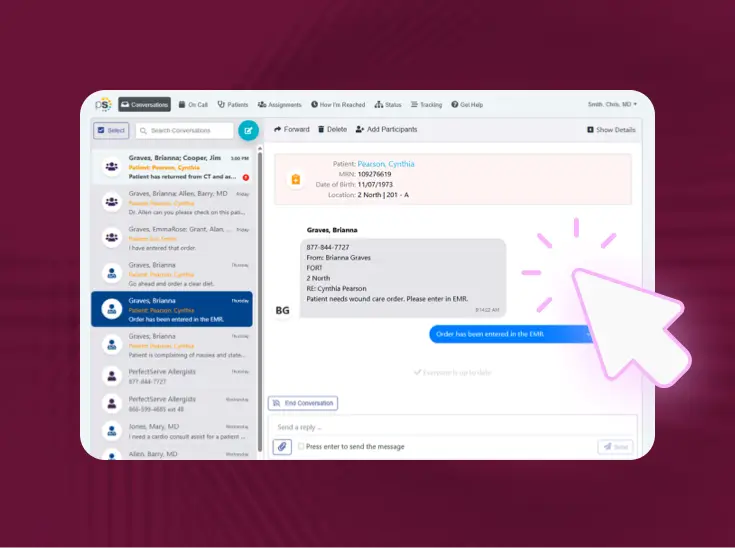
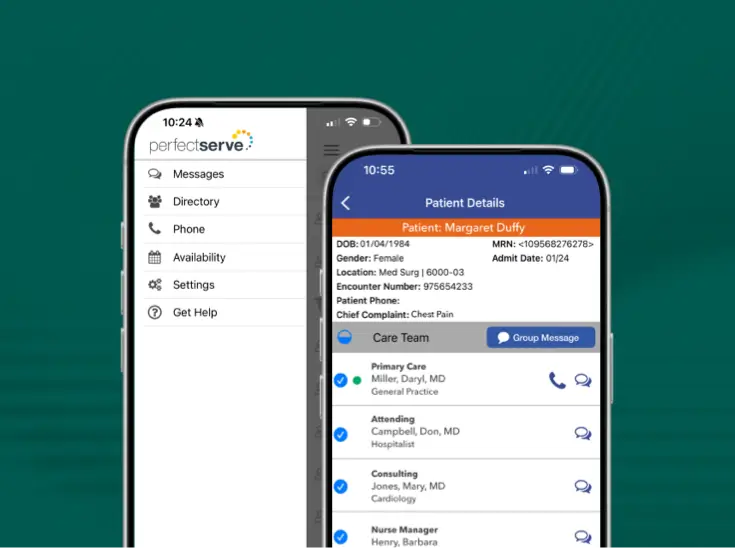
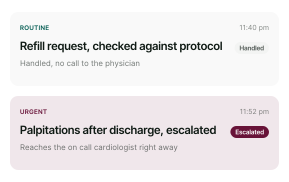
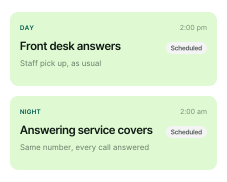
Calls are checked against your practice's own protocols. Routine calls are handled without waking a physician, urgent calls reach the correct on-call provider, and every call is documented automatically.
Lightning Bolt Clinical Team Scheduling
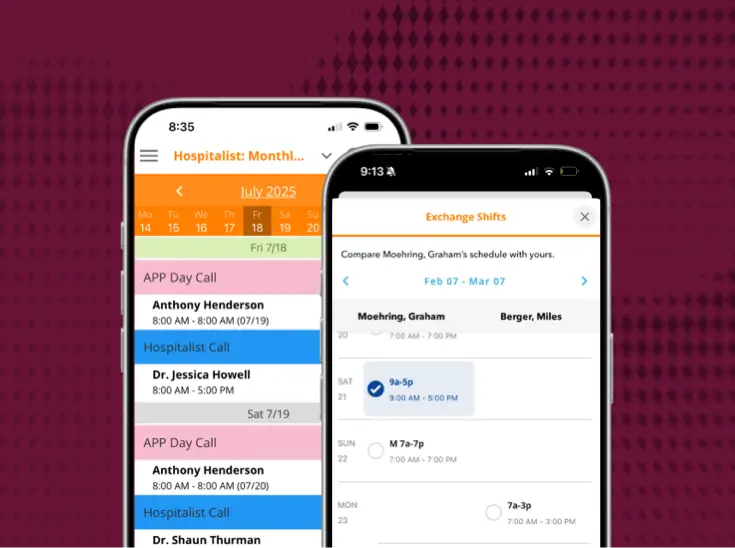
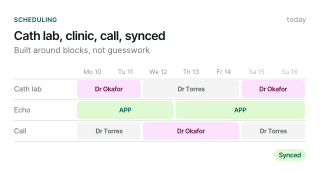
Lightning Bolt builds the schedule for your cardiologists and APPs, applying rules that account for clinic days, cath lab, echo blocks, subspecialty call rotation, and case load, so coverage reflects how the practice actually runs.
AI call handling to remove even more of the burden
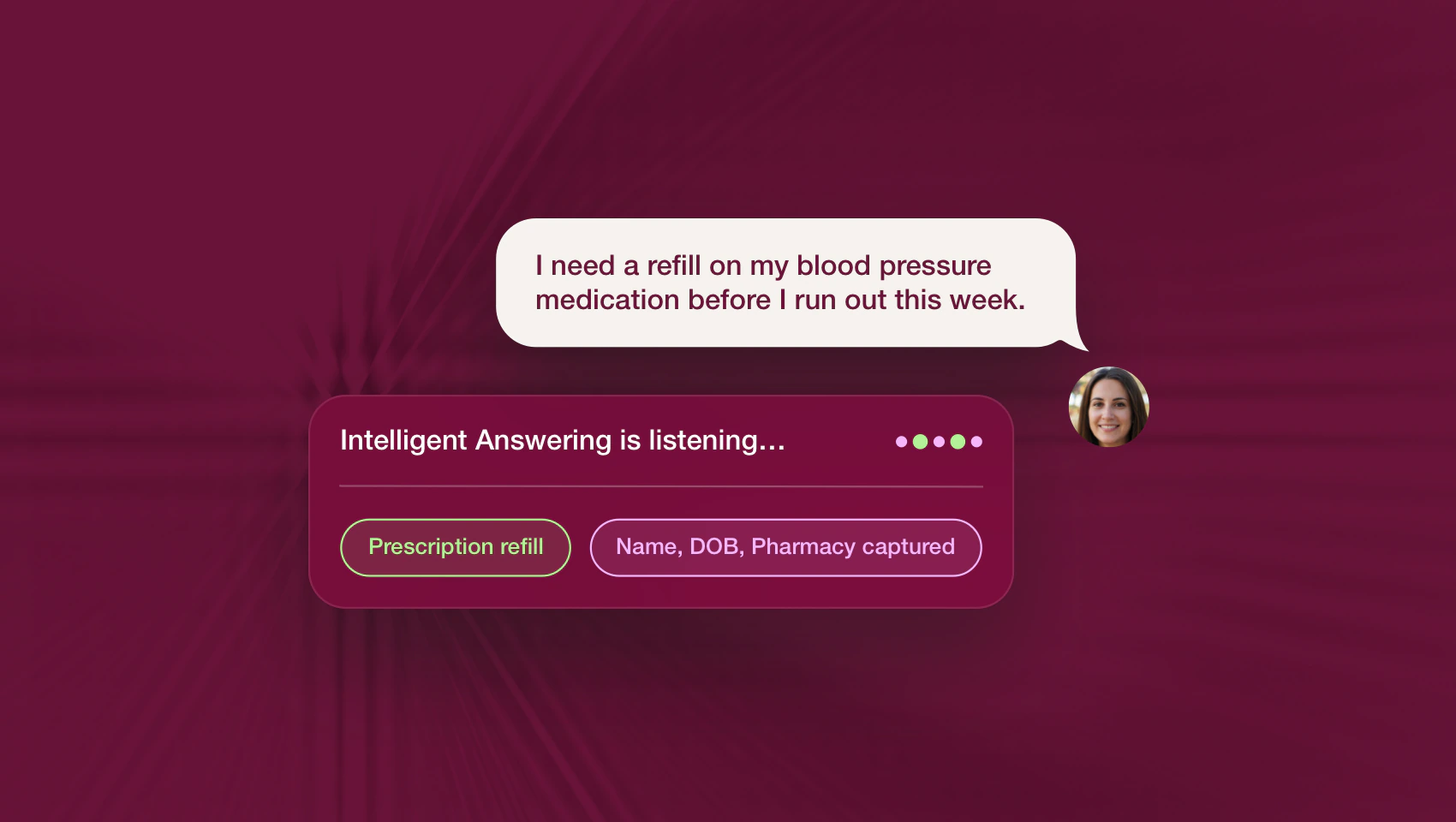
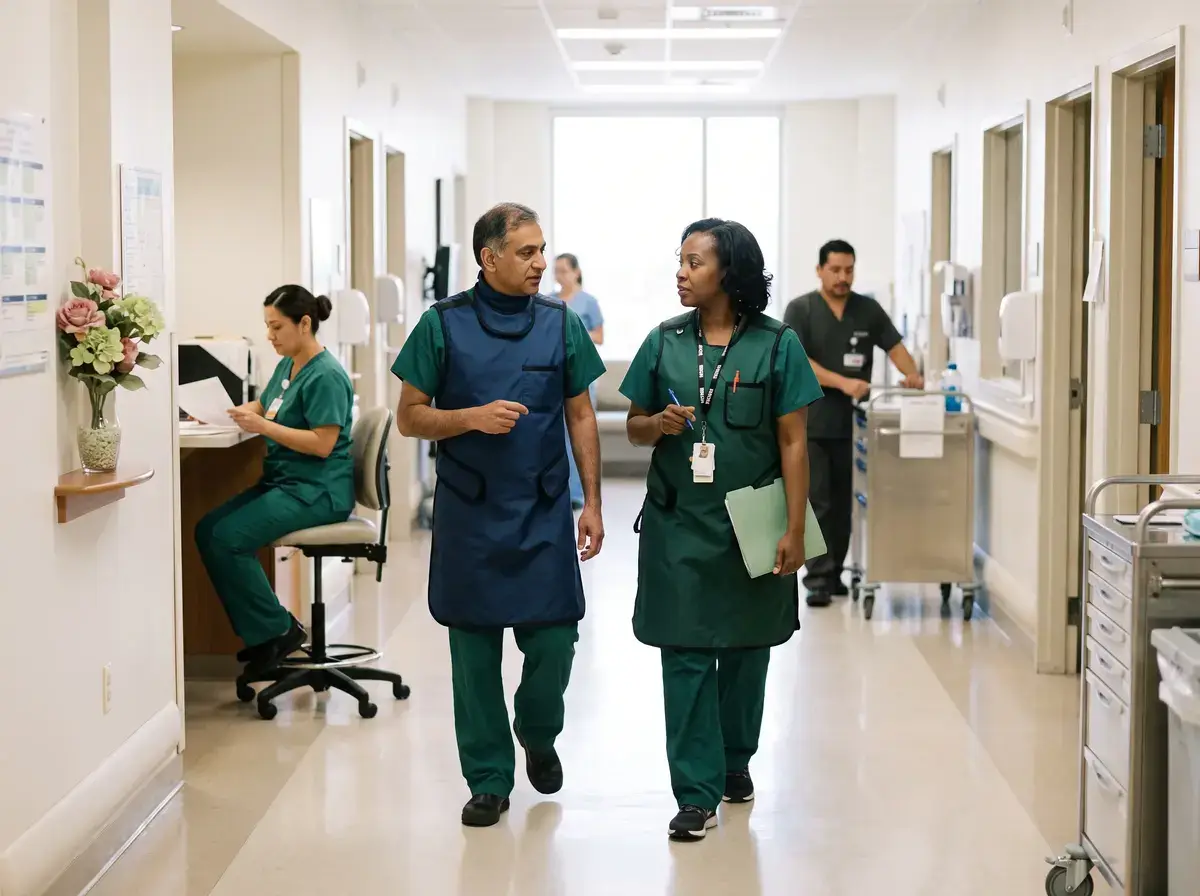
For practices with additional complexity or staff who feel stretched thin, PerfectServe also offers AI call handling with Intelligent Answering powered by ConnectiveIQ. Using AI agent Sloane, Intelligent Answering can facilitate natural conversations with patients while handling 70% of routine calls with no staff involvement. Sloane is trained on your practice's specific workflows right from the start.

2 AM chest pain call
The call comes in
The process
The right cardiologist answers
Find a clean record
Built for the practice side of cardiology

Independent practices

System-owned clinics

Hospital cardiology teams
A cardiology practice that stopped losing messages
The accessibility to messages for our practice and the use of the phone app—where our office number, not the physician’s, comes up—made a big difference.
Configured with your protocols and coverage rules



What cardiology practices ask first
What separates PerfectServe from other platforms on the market?
The clearest differentiator is that PerfectServe’s scheduling and communication systems share the same underlying data. When a schedule changes, routing updates automatically. That means no manual intervention, no lag, no staff member chasing down who’s actually on call. Most platforms on the market either scheduling or communication well. PerfectServe is built so the two functions inform each other in real time.
What results have PerfectServe customers seen?
Advocate Good Samaritan Hospital reported a 99% decrease in overhead physician pages, Hospital for Special Surgery cut rapid response times 73% (2:30 → 40 sec), and Munson Healthcare’s 7-hospital system retired 600 pagers (~$120K/yr saved) and cut 56,000 calls over 13 months.
How much does PerfectServe cost?
PerfectServe uses custom pricing based on organization size and the solutions you need, such as clinical communication, scheduling, operator console, or medical answering service. Request a demo for a quote tailored to your environment.
Can PerfectServe replace our pagers?
Yes. PerfectServe runs on the devices teams already use (smartphones, desktops, and VoIP phones) and can work alongside legacy pagers during a transition rather than forcing an overnight switch. Organizations commonly use it to retire pager fleets while keeping critical alerts reliable.
Does PerfectServe integrate with our EHR and existing systems?
Yes. PerfectServe integrates with Epic, Oracle Health (Cerner), and 270+ clinical systems, including nurse call and alerting platforms, lab and radiology systems, telephony providers, and pager networks. Messaging can be embedded directly in the EHR, so patient context travels with every on-call message and clinicians don’t switch between applications.
Is clinical communication software only for large hospitals?
No. The best platforms can scale from single-specialty clinics to large health systems. PerfectServe serves both 500+ hospitals and 30,000+ medical practices, using the same routing engine for acute and post-acute care settings.
Is PerfectServe HIPAA-compliant and secure?
Yes. PerfectServe is HIPAA compliant and SOC 2 compliant. Messages are encrypted at rest and in flight, every action is captured in a complete audit trail, and every covered entity receives a signed Business Associate Addendum before going live. See how we make trust and security a priority.
How long does a demo take?
A demo with PerfectServe typically lasts about 20-30 minutes. Schedule one now to see how our solutions can benefit your organization.
Don’t have time? Take a product tour of our solutions.
Do I need a special device to use PerfectServe?
No. PerfectServe works on your legacy devices, smartphones (including both BYOD and shared device models), VoIP and landline phones, desktops, and even pagers. No proprietary devices are required.
What is PerfectServe?
PerfectServe is a leading provider of technology that helps healthcare organizations communicate, coordinate real-time care delivery, and schedule their most valuable assets, including people, rooms, and even equipment. With our clinical communication, physician scheduling, operator console, and medical answering service solutions, we help our customers accelerate speed to care by ensuring the right people are in place at the right time to take action on important information related to patient care.
Can it follow our protocols?
Yes. Call handling runs on the practice's own protocols, including what counts as urgent for your patient population and who covers.
What happens when the call schedule changes?
The answering workflow reads the live schedule, so a swap is reflected the moment it’s made. You can forget about the days of faxing and waking up the wrong physician.
Do patients talk to a machine?
Patients follow a short, guided workflow to get them to the right place. Urgent needs to reach a covering clinician fast. How the flow sounds is configured with you.
Is every call documented?
Every call is logged automatically, including caller name, date of birth, and callback number, with a full audit trail.
Does AI call handling make clinical decisions?
No. It routes calls. It doesn't diagnose, triage, or give medical advice. Your clinical team defines every urgency rule. The AI applies them.
How does the AI layer handle emergencies and 911?
It detects potential emergency situations and immediately directs callers to call 911. It does not perform clinical triage.