





How To Streamline Patient Transfers with a Cloud-Based Operator Console
This health system serves communities across several states in the Southeast. They have 13,000 associates supporting six hospitals and more than 100 non-acute sites of care, including ambulatory surgery centers, outpatient facilities, a hospice residence and physician and specialty practices.

Background
This health system serves communities across several states in the Southeast. They have 13,000 associates supporting six hospitals and more than 100 non-acute sites of care, including ambulatory surgery centers, outpatient facilities, a hospice residence and physician and specialty practices.
Challenges
Though they’re quite common, patient transfers can be complex and difficult to execute quickly. This southern health system was feeling the pain, largely because the process of transferring a patient into their system was completely decentralized. Outside organizations were not always sure how or where to initiate contact, which led to undesirable delays.
This setup meant, for example, that it wasn’t unusual for hospitalists and specialists within the system to receive calls about transfer requests even if they weren’t on call. Why? Because, in the absence of a more centrally managed process, once an outside hospital had a successful transfer experience with a given provider, they would often file their number away as a go-to point of contact for any transfer moving forward. The decentralized process also left the organization without helpful data about which transfers got accepted or declined and how those decisions were made.
System leadership identified patient transfer operations as an opportunity for improvement to match the high standards of care for which the organization had become known throughout its 100+ years of service to their community.
Solution
In 2020, they began work on a integrated operations center (IOC) project. The intent for the IOC was to help the organization operate less as a set of individual hospitals and more as an interconnected health system. The project team established three specific goals for the IOC:
- Improve patient flow
- Reduce patient wait times
- Create a one-call experience for any organization seeking access to physicians and services
As part of this project, the health system partnered with PerfectServe to make its Operator Console solution the communication backbone of the IOC. With this platform in place, the IOC now uses 2 to 4 agents per shift to support 10 separate call queues, with each agent handling multiple queues. All agents are assigned to a fallback queue that allows them to triage calls if they’ve been on hold for too long.
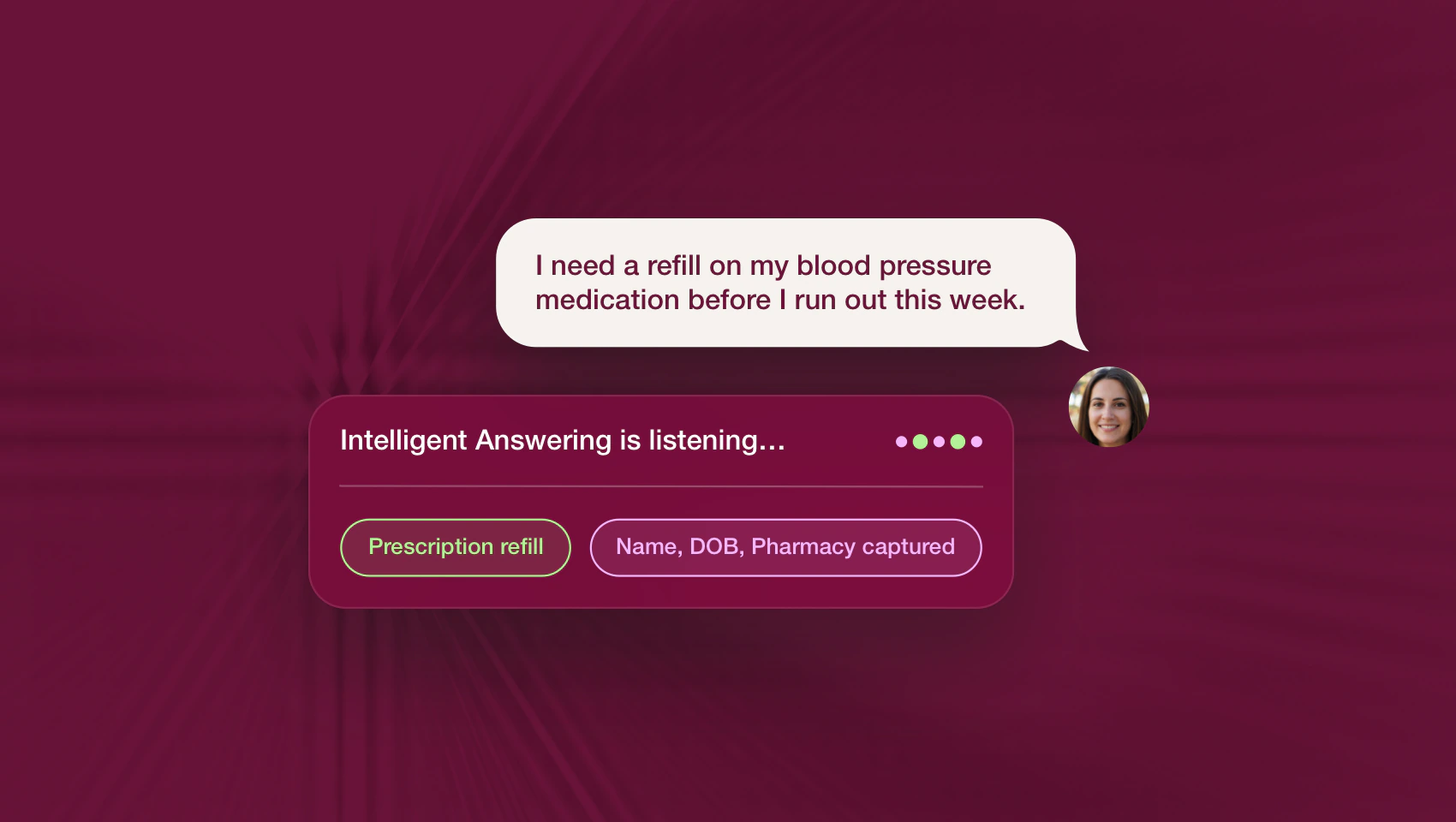
To initiate a transfer, outside hospitals simply call the IOC and select a few options to categorize the nature of their call using an interactive voice response system, after which they’re connected to an IOC agent who is best equipped to handle their request. If the organization is looking to transfer a patient to a specific hospital, they’re directed to the agent handling transfers for that hospital.
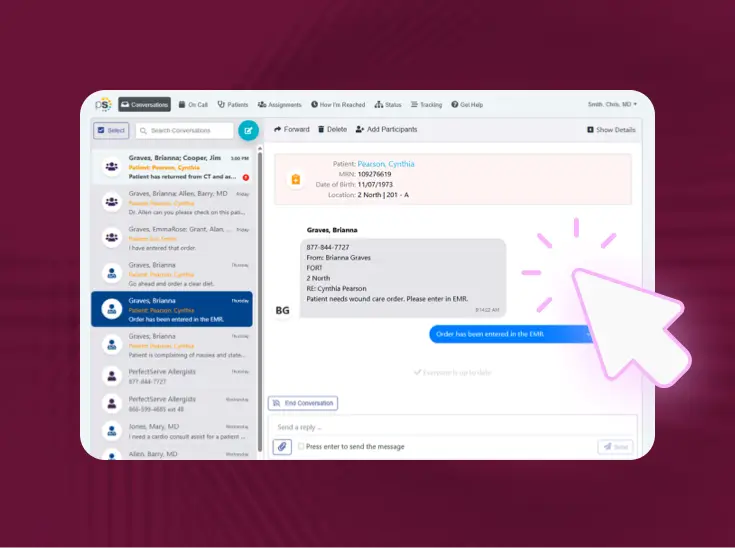
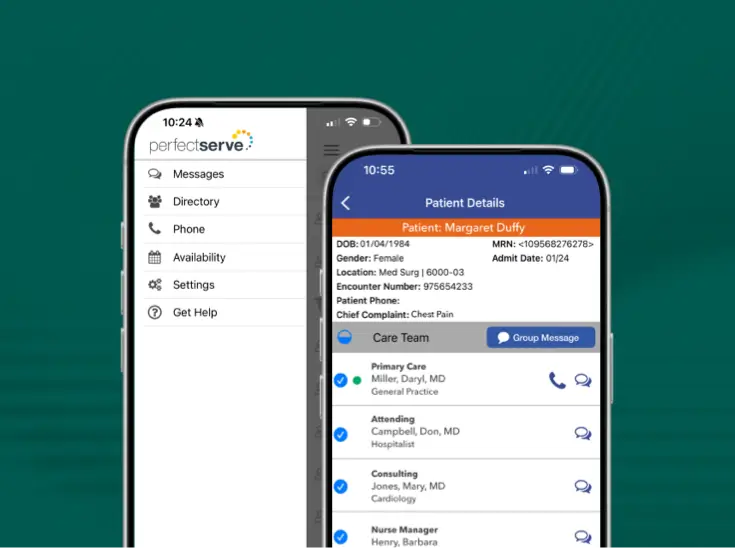
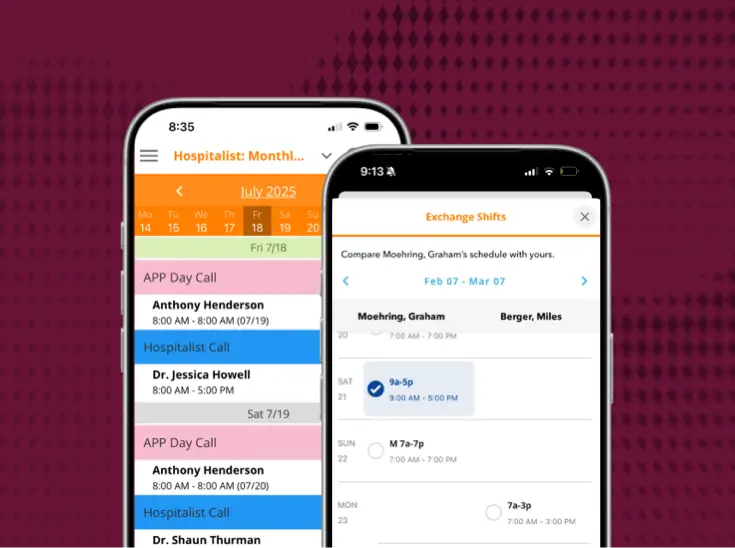
To make this work, the IOC leverages PerfectServe’s assignable roles function, which allows agents to log in and select the groups and associated messaging queues they’ll be covering for the day. With a caller on the line, agents can leverage call schedules and patient directories via PerfectServe to instantly access any resources necessary to action incoming requests. They also have a persistent wall board in place showing call queues for five hospitals, which allows IOC staff to monitor call load in real time and shift agent resources as needed.
Results
The IOC, along with other initiatives, has been a major success, allowing the health system to streamline critical operations to the benefit of patients, providers, and everyone in between.
- The organization’s “reservation to complete” time—the time it takes to place an accepted transfer patient into a clean bed—has dropped by nearly 40%.
- Discharge to departure times have also seen significant improvements. Their largest hospital has dropped its average to an optimal two-hour time frame in recent months, and the system is working to replicate this success at other facilities.
- Time required to bring beds back online has also dropped, which greatly benefits patient flow.
- The PerfectServe setup allows for real-time monitoring of call volume, which means the IOC can flex agents from queue to queue to keep wait times down and prevent any one agent from being overwhelmed.
- Where communication capability was a source of frustration in the past, staff have peace of mind that communications are now rarely the ratelimiting factor when issues arise in the patient transfer process. PerfectServe’s intelligent routing, repeatable workflows, and ease of use ensure that communication is now a strength.
- Seamless communication allows the organization to take a more holistic approach to resource planning and evaluation of system capacity.
Conclusion
For a health system as large as this one, patient transfers are bound to be a common occurrence. But because of the size and scope of their system, and because transfers can originate from so many different places—an outside hospital, a physician’s office, or an inpatient floor, just to name a few—the process can be quite complicated.
Before it launched the IOC, the organization didn’t have an ideal communication ecosystem to manage all of this complexity in an efficient way. By building the IOC with PerfectServe’s healthcare call center software at the core, they established a single point of contact for referring entities and equipped agents with a powerful, flexible, and unified platform for system-wide communication and collaboration.
Discover the latest from PerfectServe





.jpg)



.png)






Bring us the workflow that [hurts most]
We'll show you how it runs on PerfectServe, with your teams, your sites and your EHR.