




How to Choose a HIPAA-Compliant Medical Answering Service

HIPAA-compliant medical answering service for doctors
No matter the specialty, practices of all sizes share inbound and outbound protected health information (PHI) every day. Answering services of all kinds help healthcare organizations handle these calls and messages, but not all of these platforms or services are created equal.
Your organization deserves to feel confident that PHI is handled securely and that all calls are routed appropriately, meaning they always reach the right person or place at the right time. That only comes from a HIPAA-compliant medical answering service designed specifically for doctors and healthcare organizations.
We’ll cover what makes an answering service HIPAA compliant, what to look for when evaluating vendors, and the risks involved when you choose the wrong solution.
What's a HIPAA-compliant medical answering service?
There are all kinds of answering services available, but few are purpose-built for healthcare and designed specifically to assist practices in managing patient calls. The exchange of PHI is the reason HIPAA compliance is so essential to the answering service, because protections need to be in place to ensure patient information is shared securely. No exceptions.
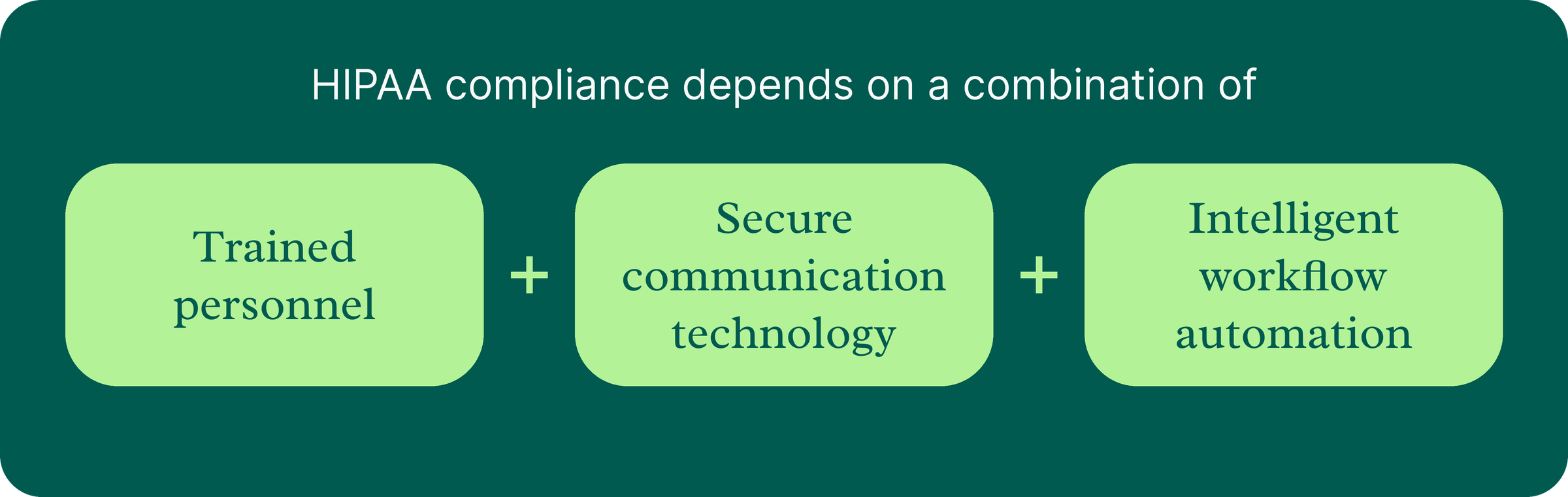
What makes an answering service HIPAA compliant is its design; it’s not a standalone feature. Compliance depends on a combination of trained personnel, secure communication technology, and intelligent workflow automation that work together to protect PHI through encrypted communications, controlled access, auditable workflows, and secure routing to the appropriate provider, staff member, or care team.
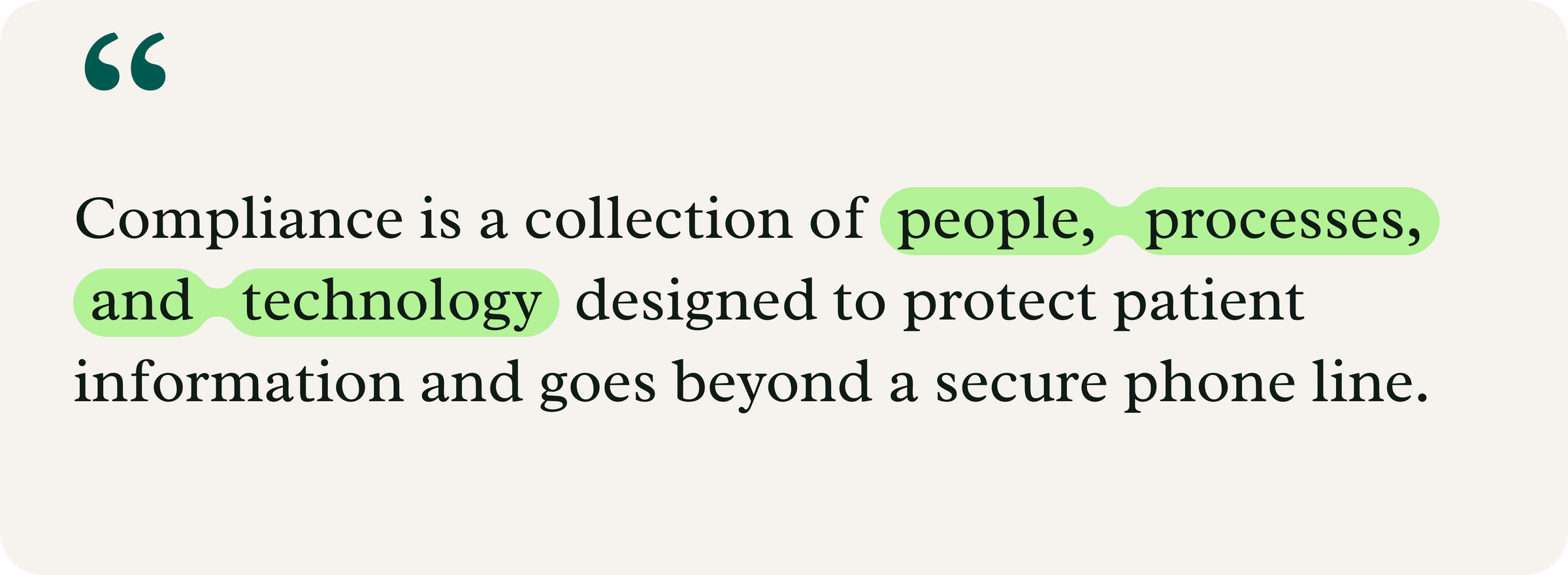
In short, compliance is a collection of people, processes, and technology designed to protect patient information and goes beyond just having a secure phone line.
Essential features of a HIPAA-compliant medical answering service
It’s worth reviewing your current answering service to understand if your workflows are secure. Even organizations that believe they have secure processes may discover gaps as communications move between answering services, schedulers, nurses, physicians, and on-call providers.
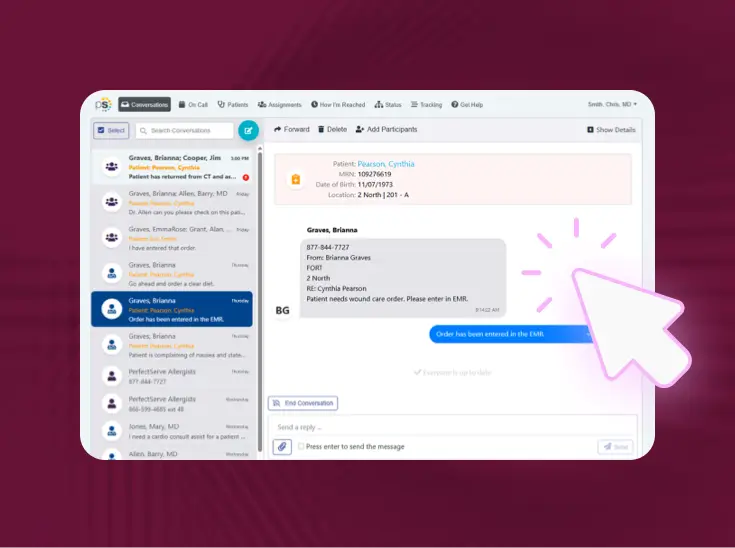
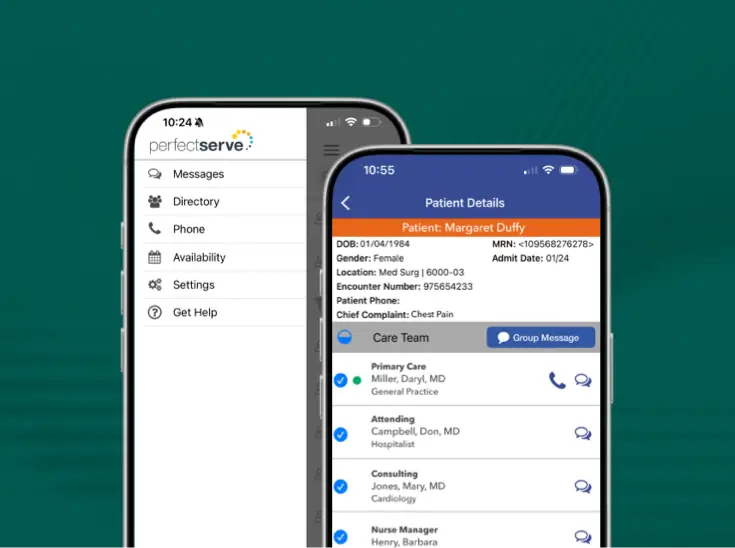
Purpose-built healthcare communication platforms help close those gaps by combining secure message handling, comprehensive audit trails, role-based access controls, and intelligent routing workflows in a single process.
A HIPAA-compliant answering service should include these capabilities:
Secure message capture and delivery
Patient information should remain protected from the moment a call is answered until the message reaches the intended recipient by having:
- Encryption for data in transit and at rest
- Secure messaging instead of unsecured email or text messages
- Protection of PHI throughout the communication workflow
- Secure storage and retrieval of message records
Intelligent routing based on schedules and rules
Getting information to the right person in a timely manner is just as important as keeping it secure:
- Route messages based on on-call schedules, provider roles, and coverage assignments
- Reduce the risk of misrouted messages and communication delays
- Support complex after-hours, holiday, and escalation workflows
- Ensure urgent patient issues reach the appropriate clinician quickly
Complete audit trails and communication records
Organizations should be able to track every communication event from beginning to end with:
- Visibility into message creation, routing, delivery, and resolution
- Documentation of who received and responded to messages
- Reporting for compliance reviews and operational improvement
- Historical records that support investigations and audits
Medical answering service BAA
Any vendor handling PHI should be willing to accept its responsibilities under HIPAA by:
- Providing a signed Business Associate Agreement (BAA) before services begin
- Clearly defining how PHI is handled and protected
- Establishing responsibilities in the event of a security incident or breach
- Demonstrating a commitment to healthcare-specific compliance requirements
Compliance documentation and call handling safeguards
Any answering service can claim to be HIPAA-compliant, but be prepared to verify those claims. Compliance is about how patient information is documented, stored, accessed, and routed, not just how calls are answered.
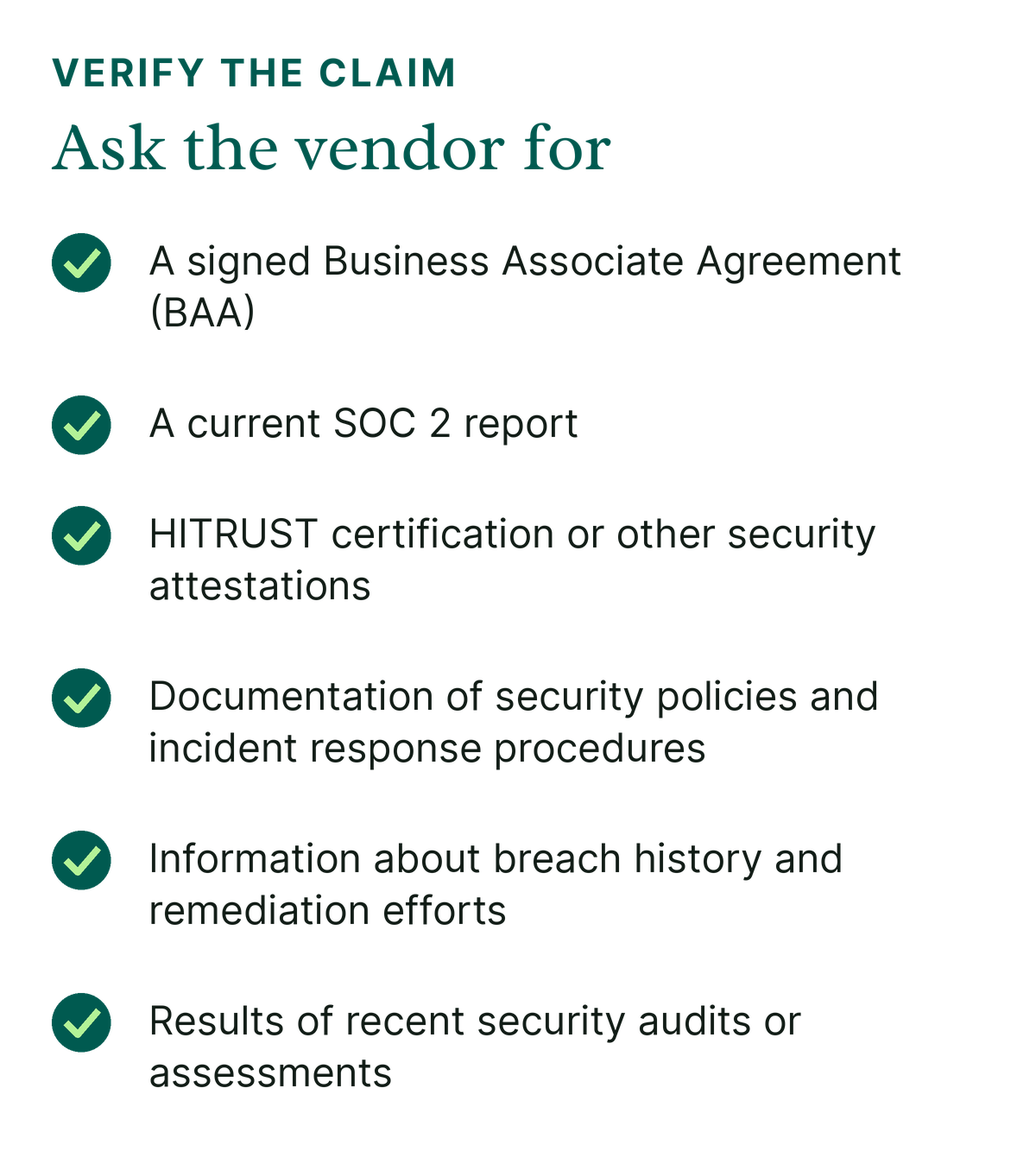
A truly HIPAA-compliant service will have documentation that can demonstrate how the vendor has established security controls and compliance processes in place. Ask the vendor for:
- A signed BAA
- A current SOC 2 report
- SOC 2 certification or other security attestations
- Documentation of security policies and incident response procedures
- Information about breach history and remediation efforts
- Results of recent security audits or assessments
Strong documentation should be supported by equally strong operational safeguards. Every patient call, message, and escalation should be handled through secure workflows with a full audit trail available. Retrievable information should include all calls that came in, how each call was routed, and how the call was handled or resolved. No dead ends.The consequences of non-compliance
Without these protections, organizations face liability and compliance risks. These risks can range from loss of patient trust and confidence (which can increase patient leakage) to security incidents, regulatory penalties, and leaked PHI.
But the consequences of non-compliant call handling can extend beyond a HIPAA violation. Misrouted messages, communication delays, and unauthorized access to PHI can disrupt patient care, create operational challenges, and expose organizations to regulatory and financial risk.
Importantly, healthcare organizations must be able to demonstrate how communications were handled. Detailed documentation and reporting provide visibility into every step of the process, supporting compliance efforts and helping teams quickly investigate potential issues if or when they occur.
Secure workflows, audit trails, and intelligent routing help reduce risk while ensuring critical information reaches the right person at the right time.
Finding the right medical answering service for your organization
Choosing a HIPAA-compliant medical answering service is about much more than just meeting basic regulatory requirements.
Healthcare organizations need solutions that protect patient information while ensuring every patient message gets to the right place at the right time. The right solution can help reduce administrative burden, improve responsiveness, and create a better experience for everyone involved in the care journey, from patients to staff to providers.
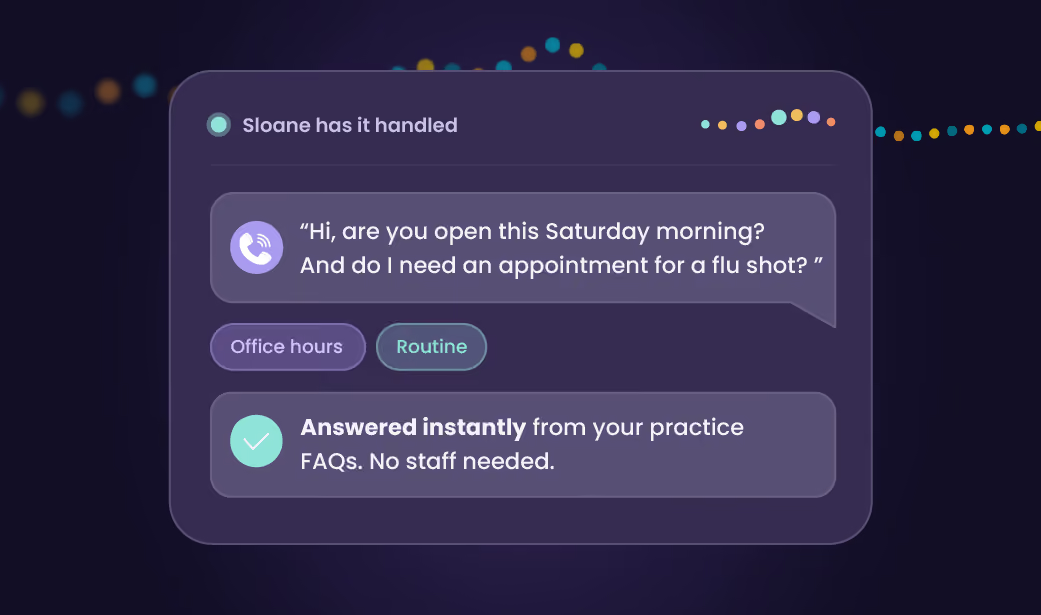
Learn how PerfectServe's Medical Answering Service and Intelligent Answering solutions help healthcare organizations deliver secure, intelligent call handling and communication workflows. Get a free demo today.
See it working for real teams
















Bring us the workflow that [hurts most]
We'll show you how it runs on PerfectServe, with your teams, your sites and your EHR.