






How to Keep Patient Turnover from Ruining Cold and Flu Season
Healthcare teams know cold and flu season is coming, and seasonal surges can expose operational weaknesses that are typically manageable during quieter periods. So what do you need to know now? Start with these 5 priorities.

Healthcare teams know cold and flu season is coming, but knowing when demand will peak is the real challenge. COVID-19, RSV, and influenza can surge at different times, putting hospitals under pressure for more than just one week of peak activity.1
The strain takes a toll on health systems. The CDC estimates that the 2024–25 flu season resulted in approximately 710,000 hospitalizations and 23 million medical visits in the US.2
Seasonal surges can expose operational weaknesses that are typically manageable during quieter periods. The challenges become more significant when patient volume rises, meaning you need to prep now. The first step is to look beyond bed capacity to examine the everyday coordination activities that keep patients moving through their care journey.
Preparing means examining how quickly patients can receive care, move through the hospital, and return home safely, as well as planning for sustained demand rather than a single busy week.
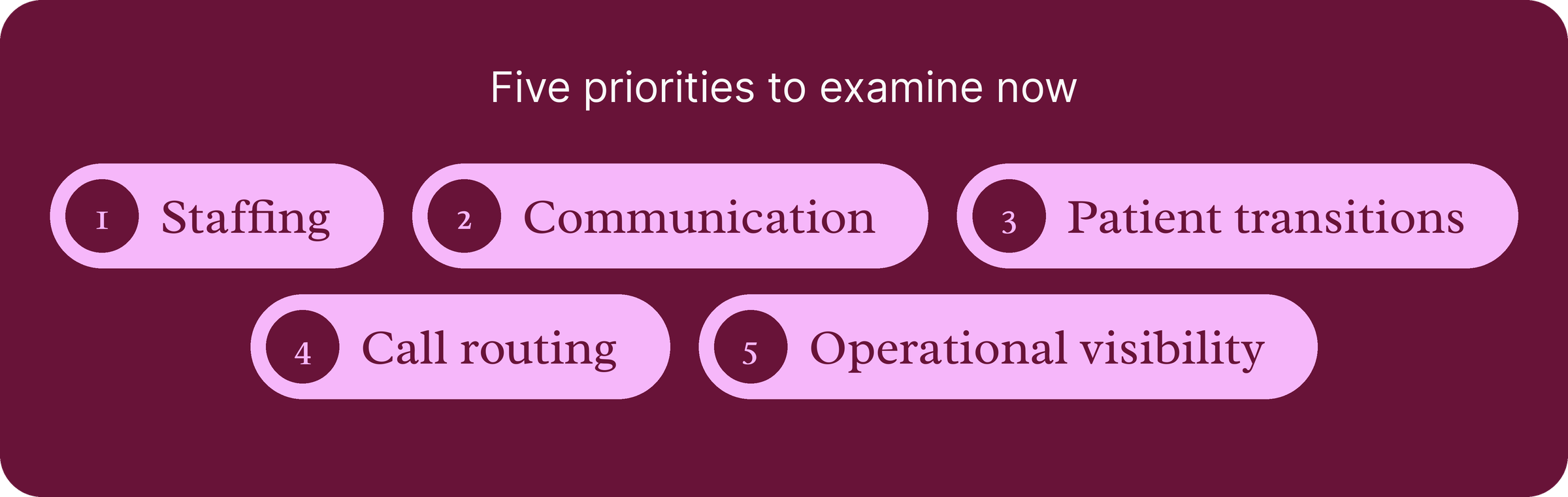
So what do you need to know now? Start by examining these five priorities:
- Staffing
- Communication
- Patient transitions
- Call routing
- Operational visibility
Align clinical staffing with peak demand
Peak respiratory illness season can affect staff availability right as patient demand rises. When a staff member calls out during a busy shift, fewer colleagues are available to cover their patients. The 2026 NSI report puts the national RN vacancy rate at 8.6% and emergency RN turnover at 20.7%, underscoring the need for a coverage plan before demand spikes.3
Effective surge management doesn’t mean simply hiring more providers. It requires having the right clinical resources available at the right time and a clear process for adjusting coverage when plans change.
To address staffing concerns, start with these actions:
- Review your historical patient volumes by department, specialty, day, and shift to identify patterns in seasonal demand.
- Evaluate your staffing schedules and see if they align with anticipated patient volumes.
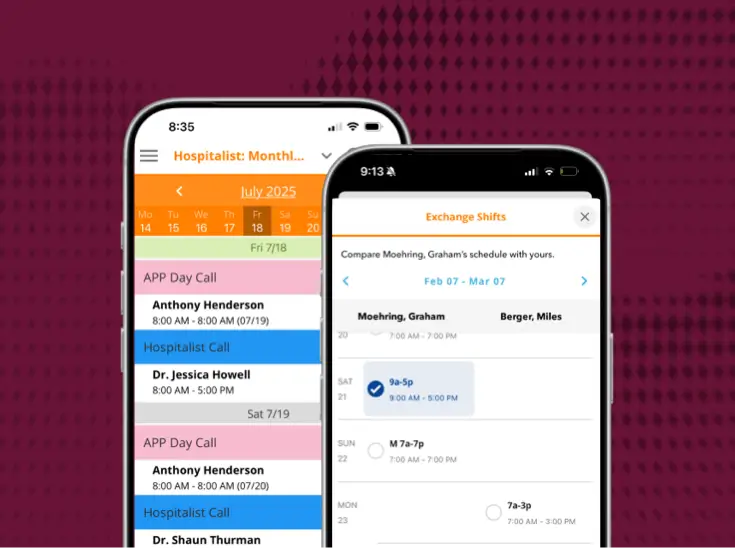
- Define a flex pool, approval rules, and a visible open-shift process to address illness-related absences, unexpected admissions, and changes in demand.
- Establish backup coverage and escalation plans before the surge starts. Test the process: if three providers call out on Monday morning, who gets notified, who approves coverage, and how quickly can the gaps be filled?
- Make current on-call coverage easy to find, including last-minute changes, and check how coverage decisions affect other departments.
Shorten the path from question to clinician
When clinicians are stretched thin and the hospital is full, unanswered questions can delay orders, consults, and discharges.
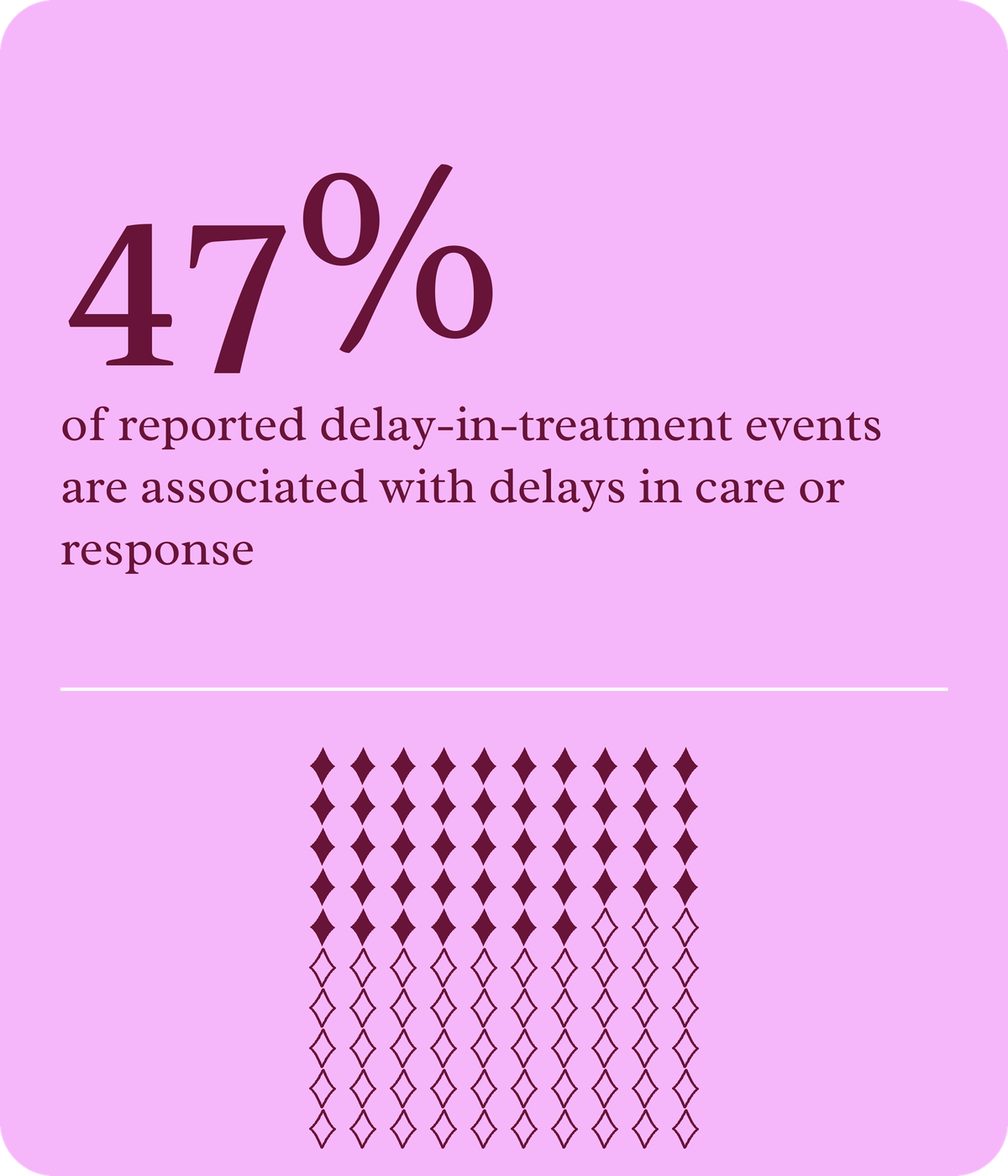
Delays aren’t just frustrating for staff and patients. 47% of reported delay-in-treatment events are associated with delays in care or response, including failure to recognize or respond to changes in patient condition and delayed rapid response.4
To speed up response times, start with these actions:
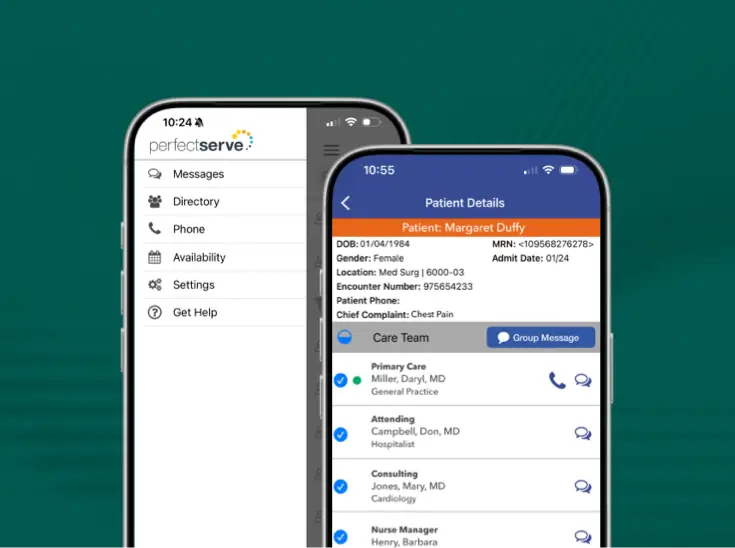
- Keep directories aligned with current schedules, roles, and coverage. Assign responsibility for updates when plans change.
- If your communication system allows for it, set escalation timeouts and backup contacts so unanswered urgent requests move to the next appropriate clinician.
- Review workflows where staff struggle to reach colleagues or obtain consultations. Reduce manual lookups and disconnected communication channels.
- Separate urgent requests from routine coordination. Agree on what warrants an interruption, expected response times, and escalation steps.
- Check whether communication fits into clinicians’ existing systems or requires unnecessary switching between applications. If it's the latter, consider consolidating communication channels.
Remove friction from admissions, transfers, and discharges
Discharging a patient involves a chain of handoffs across ordering clinicians, pharmacy, case management, transport, and environmental services. That’s why a delay at one link can hold up the next.
Facilitating earlier discharges can help make beds available for incoming patients. In one pediatric-unit quality improvement project, discharges before noon rose from 15% to 21%, and unit bed availability increased by 16%.5
To understand your discharge workflows, start by mapping the handoff chain and the time each step takes over the course of a week. Look for the slowest link, a missing owner, or a missing confirmation. You can then address dependencies across departments rather than simply moving the bottleneck elsewhere.
To address handoff friction, start with these actions:
- Identify delays associated with admissions, bed assignments, specialist consultations, patient transfers, and discharges.
- Assign clear responsibility for initiating, completing, and confirming each patient transition.
- Identify discharge barriers early through proactive communication among hospitalists, nursing, case management, bed management, and other stakeholders.
- Standardize handoffs so the receiving team gets the information needed to act and confirms the next step.
- Use multidisciplinary huddles to resolve stalled transitions and clarify who owns the next action.
Treat the front door as clinical infrastructure
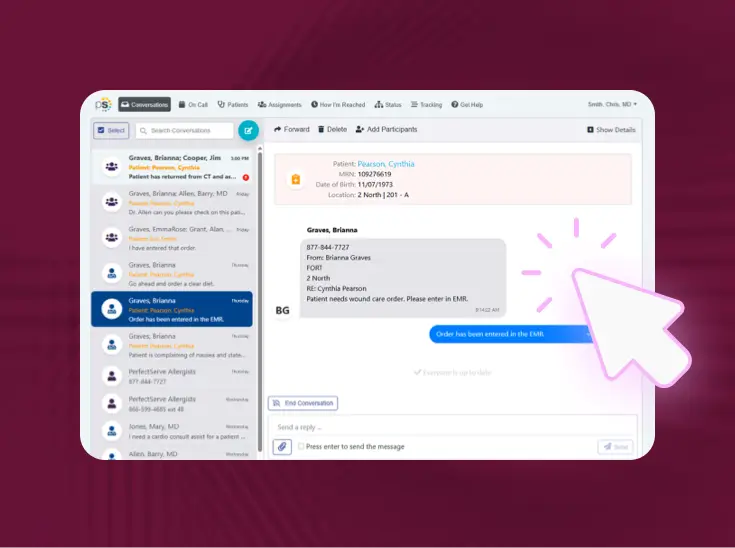
Hospital operators and contact centers are an essential part of the patient care journey. They connect outside facilities, care teams, patients, and families. For many hospitals, operators are also a key resource for locating the on-call clinician, navigating coverage changes, and even calling codes.
When patient volumes rise, the switchboard faces its own coordination demands: transfer requests, consultation calls, patient and family questions, and code and alert activations. Operators need more than a directory to be efficient. They need current coverage information, clear routing authority, connectivity with clinicians, and a plan for urgent requests that go unanswered.
Prepare the contact center as you would a clinical unit. Include operators in surge planning, anticipate shift-change spikes, and define which calls need immediate escalation versus routine routing. The goal is to reduce unnecessary transfers while preserving human support for complex situations.
To improve operator workflows, start with these actions:
- Review incoming call patterns alongside patient volumes. Plan operator coverage for busy periods, including shift changes, after-hours demand, and weekends.
- Give operators immediate access to accurate directories and current on-call schedules. Define who updates coverage changes and how operators are notified.
- Provide routing scripts and clear authority to connect callers with the appropriate role or service. Identify manual lookups and repeated transfers that slow the process.
- Define how to prioritize urgent calls, handle code and alert activations, and escalate unanswered requests. Make the backup route clear.
- Identify routine calls that could be automated while retaining operator support for complex or urgent situations.
- Test readiness with a scenario: an outside facility requests a transfer during a shift change, and the listed clinician does not answer. Can the operator identify current coverage, follow the escalation path, and confirm that the request reached the right team?
Monitor the metrics that reveal where care is slowing down
Improvement can’t start without a baseline. There is an abundance of data you may or may not be collecting that can assist with improving turnover.
One is wait time and the coordination behind those times. Compare wait times by department and shifts against patient volume so you can visualize where delays are happening most frequently. ED boarding time, for example, helps show where patients are waiting between an admission decision and inpatient placement.
Use these measures to identify where to investigate:
You can make the results visible to your team and review them weekly during respiratory illness season. A top tip is to assign an owner to each recurring bottleneck and check whether changes improve during the next review’s results.
Prepare before the season hits
Hospitals cannot always add staff or beds when demand rises. But they can clarify coverage, shorten the path to the right clinician, strengthen handoffs, prepare operators, and act on the delays their data reveals.
Start before the next surge, then use regular reviews to keep those workflows working under pressure. The workflows strengthened for cold and flu season can support better operational performance year-round.
PerfectServe can review your current workflows and help you identify where coverage and communication gaps might hurt you during flu season. Talk with our team today!
See it working for real teams


















Bring us the workflow that [hurts most]
We'll show you how it runs on PerfectServe, with your teams, your sites and your EHR.