





Missed Call Answering Service: Stop Losing Patients to Voicemail
Every missed call at a medical practice carries a cost. Use this guide to examine drawbacks for patients and providers when calls are missed and the tools practices use to reduce them.

Every missed call at a medical practice carries a cost. For patients, callbacks are delayed, symptoms may go untreated, and they may even lose trust in their provider. Physicians and staff have to deal with broken communication workflows, longer shifts, and after-hours interruptions.
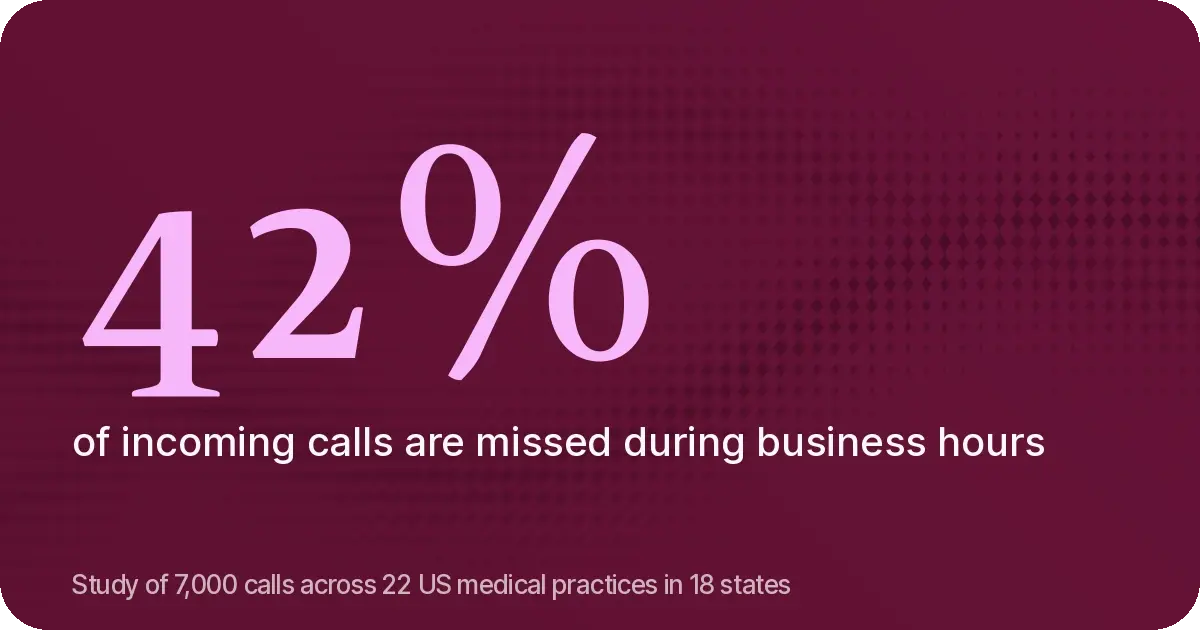
One study looked at 7,000 calls across 22 US medical practices in 18 states and found that practices miss 42% of incoming calls during business hours.¹ Another industry report found that missed and open appointments cost the US healthcare industry $150 billion annually and that 88% of appointments are still made over the phone.²
An answering service designed to reduce missed calls closes this gap. The right service will capture every inbound call, filter urgent messages from routine ones, and route each call to the right place.
Use this guide to examine the drawbacks patients and face when calls are missed and the tools practices use to reduce them.
The Real Drawbacks of Missed or Misrouted Calls
Missed calls in medical practices affect three groups at once:
- Patients: Missed calls leave patients looking for answers that never come.
- Providers: Care team staff can become frustrated that their patients aren’t receiving the information they need.
- Admin and staff: When calls are missed, staff have to manage the chaos of trying to call patients back and close any care gaps.
All of these problems compound over time, and they’re costly. Outside of diluting time and trust, the average patient generates roughly $560-$1,600 dollars per year in a primary care practice depending on the service model.3
If just one patient can’t get through about an appointment or care question and chooses to go elsewhere for care, that’s not a huge financial hit. But the average practice misses 23% of inbound calls4 and receives an average of 200 calls a day.5 At that miss rate, a typical five-physician practice has about 46 missed calls a day, representing $25,760–$73,600 in annual patient value for each day's worth of missed calls.
How Missed Calls Impact Patients
A missed call can become a delayed answer about medication, a test result stuck in limbo, or a symptom growing worse overnight. For patients, this creates a ripple effect of frustration, delayed care, and lost loyalty.
Frustration: Patients give up on the phone
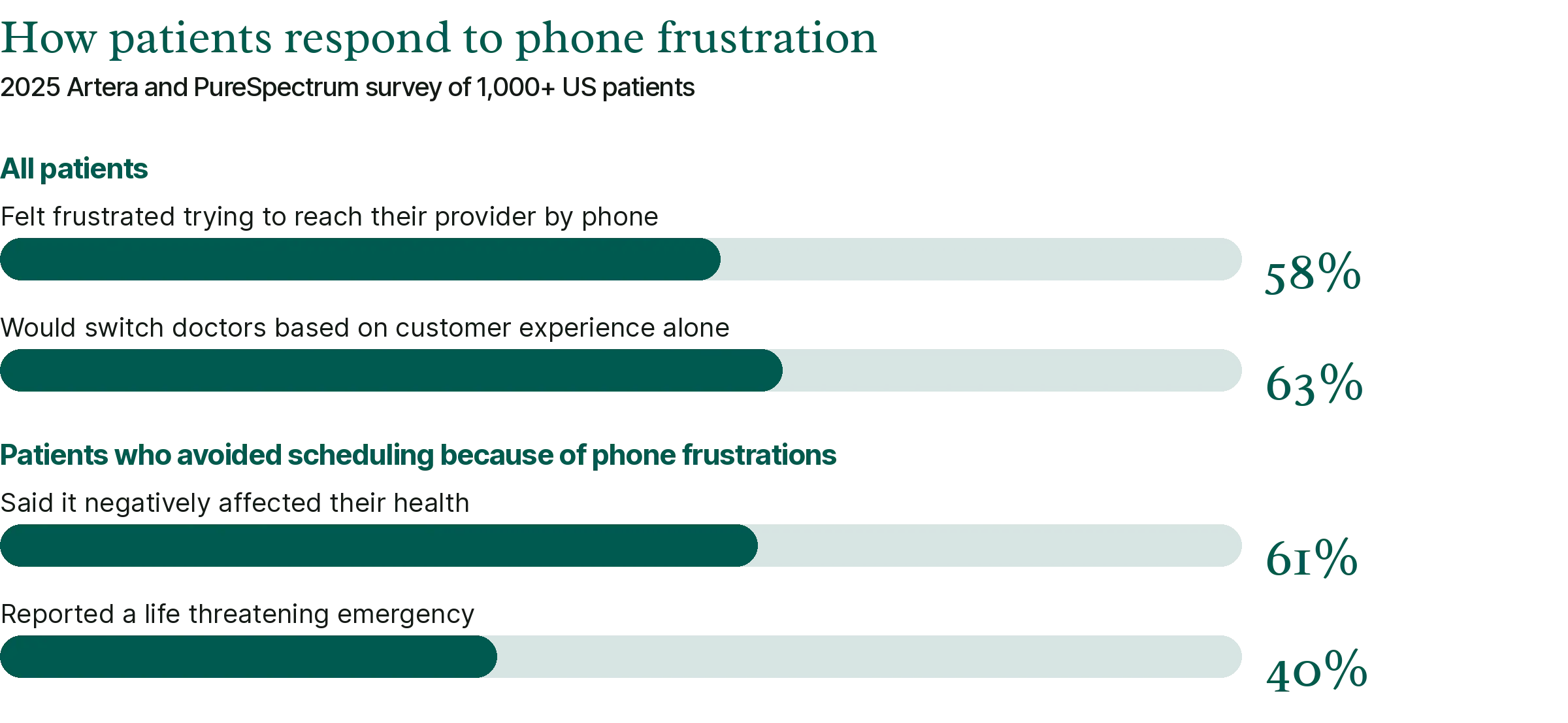
In a 2025 Artera/PureSpectrum survey of 1,000+ US patients:6
- 58% of patients said they felt frustrated trying to reach their provider by phone. Long hold times and dropped calls were among the list of complaints.
- Over 1 in 3 patients no-showed "specifically to avoid the hassle of calling.”
- Nearly half avoided scheduling altogether because phone contact alone felt like too much of a hassle.
Care delays: Avoidance affects health outcomes
Among patients who avoided scheduling because of phone frustrations:6
- 61% said it negatively affected their health
- 40% reported a life-threatening emergency
Loyalty: Hard-to-reach practices lose patients
Patients rarely complain about a missed call. Instead of giving you a chance to fix the problem, they're likely to just stop calling:
- 63% of patients would switch doctors based on customer experience alone.6
- About 1 in 5 US consumers switched providers in the past year, and nearly 90% blamed the organization for being too hard to do business with.7
- Patients with poor front-desk or digital experiences are twice as likely to leave their provider as those with poor clinical experiences alone.7
TL;DR: Each missed call wears away at a patient’s patience, health, and provider loyalty.
How Missed Calls Impact Providers and Staff
Every missed call creates work that has to happen later. If patients don’t call back, staff have to return their calls, and if they leave a message, staff still need to ensure they follow up. Staff often have to spend time tracking down the correct patient info, while providers worry about whether patients are getting the answers and care they need.
Provider Frustration: Missed Calls Create Care Gaps
Providers want patients to get answers quickly, but when calls go unanswered, physicians and nurses often don't know a patient tried to reach them until hours later. What starts as a missed call becomes:
- A delayed response to a medication question
- An unresolved concern that leads to an unnecessary visit
- A patient who loses confidence in the practice's ability to support their care
On top of care delay frustrations, physicians already work an average of 57.8 hours per week, with approximately 13 hours spent on documentation, order entry, and follow-up tasks.8 Every unanswered patient call adds another item that must be tracked down and resolved later.
Staff Workload: Every Missed Call Creates More Work Later
Front-desk and administrative teams often absorb the consequences of missed calls. Instead of resolving a question during the initial conversation, staff have to return calls and leave voicemails, track down providers for answers they don’t know, and manage frustrated patients:
- Work overload can increase the risk of burnout by up to 2.9 times among healthcare workers.9
- In practices where turnover held steady year-over-year, MAs and front-office roles continued to experience the highest churn.10
TL;DR: Patients experience the frustration first, but providers and staff deal with the operational impact. Missed calls can create care gaps, increase administrative workload, and make it harder for practices to deliver a positive patient experience.
How To Reduce Missed Calls and Keep Patients Happy
Missed calls can be avoided by implementing the right medical answering service for your practice. There are a range of tools available, including a medical answering service with repeatable, guided workflows or an AI agent that can handle calls during and after hours.
Medical answering service for any practice
Today's solutions help practices manage calls during and after business hours. The right solution will route patients to the right person based on your own provider schedules, unique coverage rules, each call’s clinical urgency, and even the contact preferences of individual providers.
AI call handling for medical practices
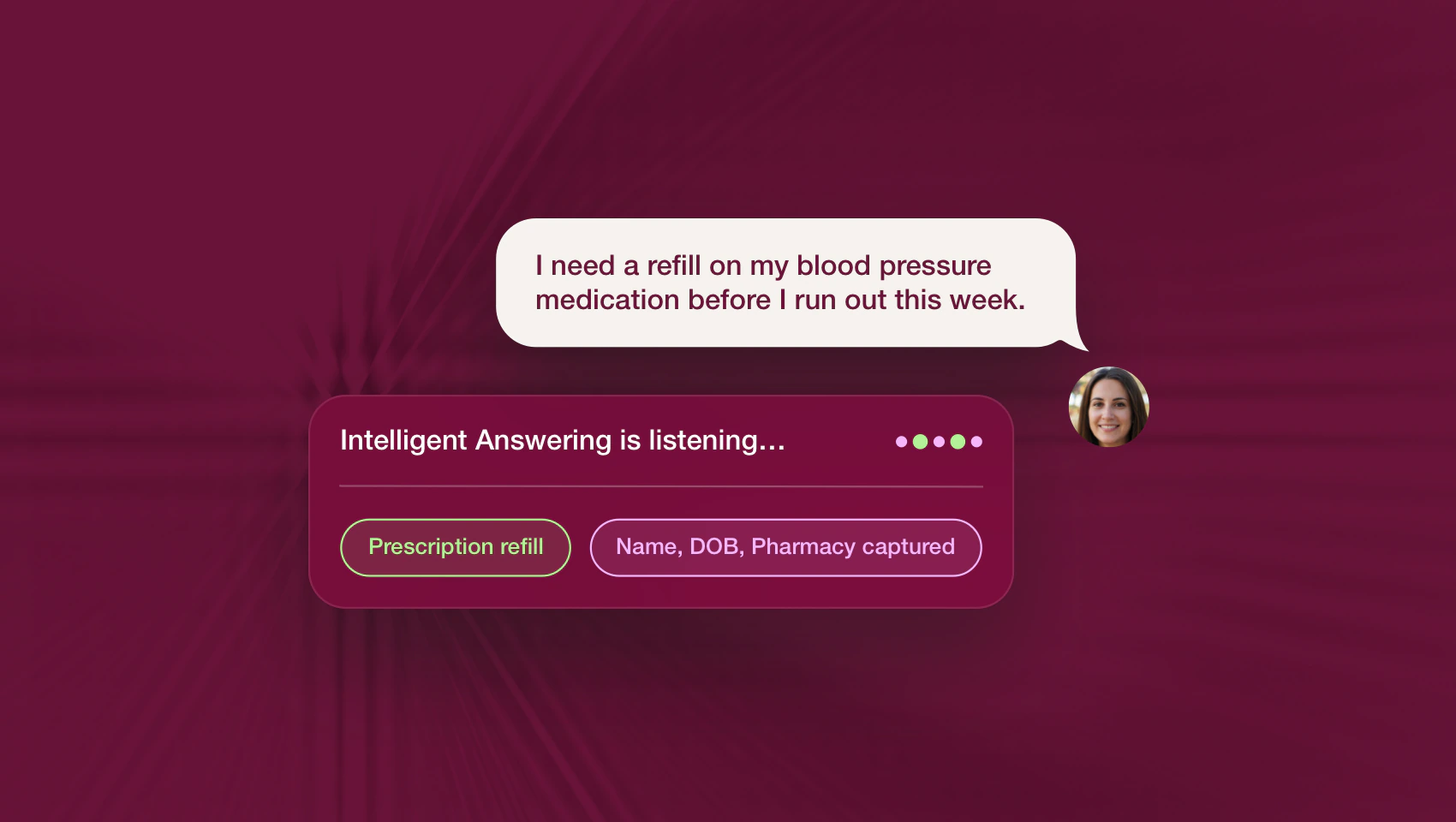
Medical AI agents help practices manage high call volumes by automatically capturing caller info, identifying the purpose of the call, and routing calls through urgent and non-urgent paths without the need for human intervention. A properly trained agent ensures all calls are managed and captured and takes some of the clinical burden off office staff and providers, especially overnight. Customers using PerfectServe's Intelligent Answering powered by ConnectiveIQ™ have reported as much as 70% of routine call traffic being handled by our AI agent, Sloane.
Stop Losing Calls to Voicemail
Every missed call at a medical practice costs money, time, and trust. The right platform closes gaps from missed calls and provides a better service experience for your patients, your providers, and your staff.
Have questions before you decide? Talk to our team and get answers tailored to your practice.
See it working for real teams





.jpg)



.png)





Bring us the workflow that [hurts most]
We'll show you how it runs on PerfectServe, with your teams, your sites and your EHR.