





What It Takes to Improve Healthcare ROI
As regulations evolve and industry pressures tighten budgets even further, every technology investment has to answer the same question: What value are we getting in return?

For healthcare organizations, every technology investment has to answer the same question: What value are we getting in return?
As regulations evolve and industry pressures tighten budgets even further, organizations can’t afford to invest in tools that simply add another line item to the budget. Every solution needs to deliver measurable value.
But healthcare ROI isn’t just about reducing costs or increasing revenue. What matters most is creating the capacity to deliver better care. That means looking beyond individual features and evaluating how technology impacts the people, workflows, and processes that keep care moving. When care teams can work more efficiently, organizations can care for more patients, reduce operational waste, and create a better experience for both patients and providers.
That’s where true ROI starts.
Shift Your ROI Perspective
Before getting into the specifics, we'd like to offer a reframe on how you evaluate ROI. Traditionally, ROI has been measured in simple terms: dollars spent to dollars gained. But the full value of an investment can’t be captured by financial metrics alone.
True ROI isn’t achieved through a single metric or feature. CEO Guillaume Castel says it’s the result of three specific outcomes working together:
- Increased revenue
- Increased care team satisfaction
- Decreased operational costs
Why? Because these outcomes aren’t independent of one another. All three lead to better patient care, which is where the true value of a solution should be measured.
Better patient care means faster care delivery and a happier overall experience. And while healthcare is mission-driven, hospitals are also businesses: the more patients you can safely and efficiently care for, the more sustainable your organization becomes.
Speed Without Burnout
A 2023 study found that “better patient experience is associated with a higher proportion of elective patients, greater revenue, and lower costs.1 ” So it’s simple then, right? To increase revenue, you need to see more patients.
Not so fast. Seeing more patients introduces a new challenge: more patients means asking staff to balance a higher burden at a faster rate.
Asking staff to “work harder and faster” just isn't feasible. Not because they don’t care, but because they’re up against old-school care workflows and outdated tech that no longer keep up with patient demand.
Having the capacity to see more patients is really about enabling a patient to move through their care journey more efficiently. That efficiency doesn’t come from chasing the newest technology trend, adding AI without clear workflow alignment, or layering on a new secure chat feature tool for convenience
Instead, it comes from supporting the people delivering care. That’s done by investing in purpose-built healthcare technology that supports care teams in delivering high-quality patient care.
Why Care Team Satisfaction Is the Linchpin
To deliver faster, high-quality care at scale, care teams need tools that work with them. Studies reveal that up to 87% of clinicians cited at least 1 point of friction that routinely complicates communication during their shift .2
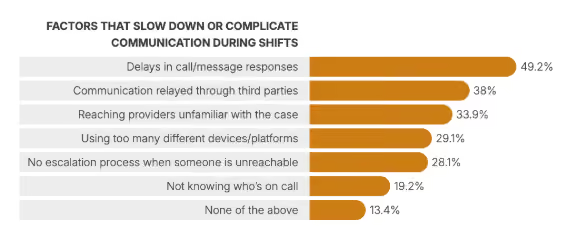
Of those factors that slow down or complicate communication, 49.2% cite delays in call and message responses and 29.1% cite using too many different devices or platforms. Those are real workflow interruptions that not only delay care but cause intense levels of frustration for providers.
Workflow frustration isn’t a healthcare-specific issue, but it is a dangerous driver of burnout. Doctors who feel burned out are 70% more likely to leave medicine,3 and 38% of providers express frustration over workload imbalances and exhaustion that accumulates across shifts.2
Yet, improving communication workflows and building better schedules are changes requested by providers that would make their work easier. A study in the National Library of Medicine found that “adequate staffing levels and flexible work schedules will be essential in reducing workload (cite here).”
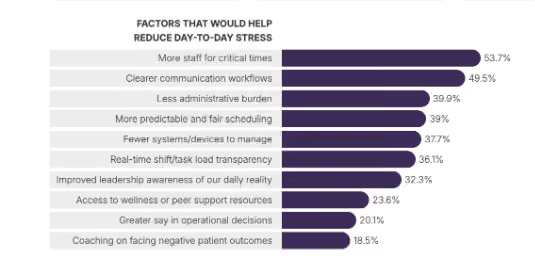
In our study, of those factors that would help day to day stress levels, 49.5% cite clearer communication workflows, and 39% cite more predictable and fair scheduling.
Most healthcare organizations already have communication in place. The real question is: how effective is it?
Consider your current workflows. If any member of the care team is losing seconds, minutes, or even hours trying to connect with the right person at the right time, those delays add up quickly. Those delays:
- Slow patient throughput
- Increase length of stay
- Limit how many patients your organization can treat
Over time, they can quietly erode ROI.
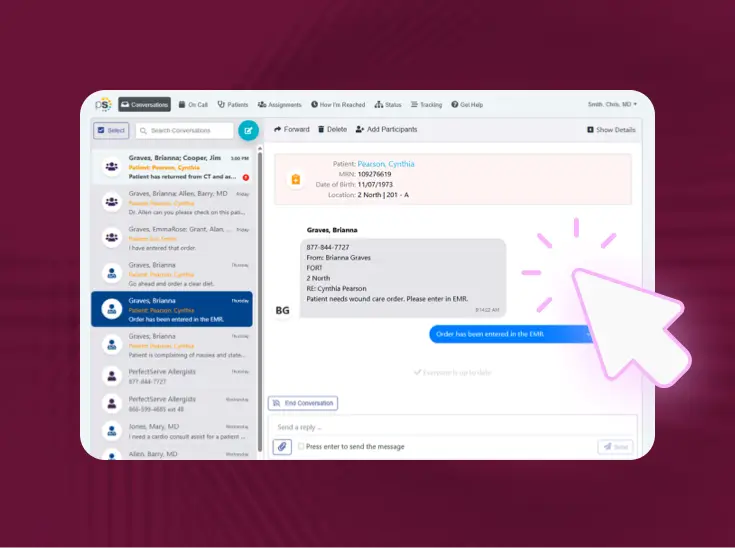
But, when clinicians and administrators can communicate clearly, quickly, and accurately, friction disappears from daily workflows. Teams spend less time tracking people down, clarifying messages, or working around inefficient systems.
This gives them time back to focus on patient care. Satisfied care teams:
- Make fewer errors
- Experience less burnout
- Move patients through the care continuum more efficiently
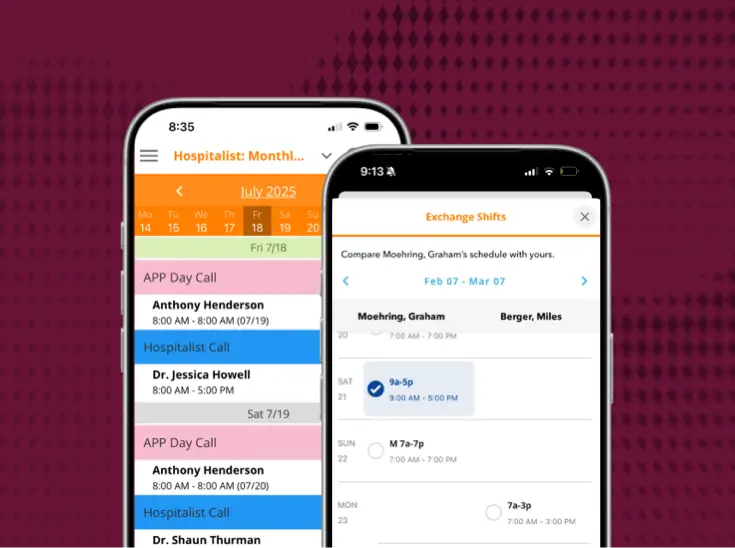
So how do you ensure your care teams are satisfied? Be implementing modern healthcare technology designed to support real-time scheduling and faster, clearer clinical communication.
Where Healthcare ROI Actually Comes From
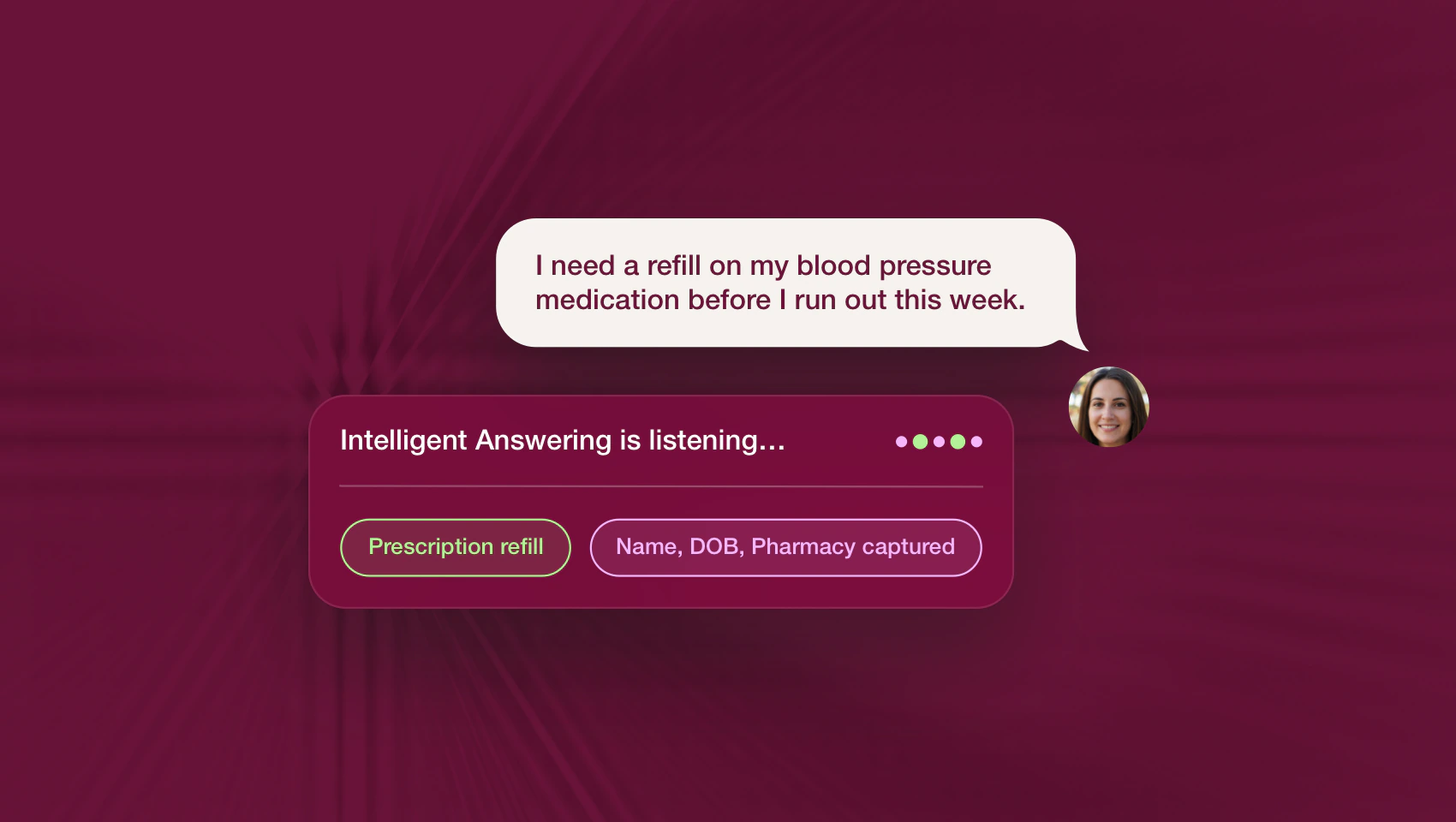
When healthcare organizations invest in technology that enable accurate, intelligent communication and optimized real-time schedules, the impact is clear:
- Care teams communicate more effectively
- Daily work becomes easier and less disruptive
- Patient care moves faster and more predictably
Faster, smoother care allows patients to move through the system efficiently, supporting higher throughput, improved reimbursement, and stronger financial performance.
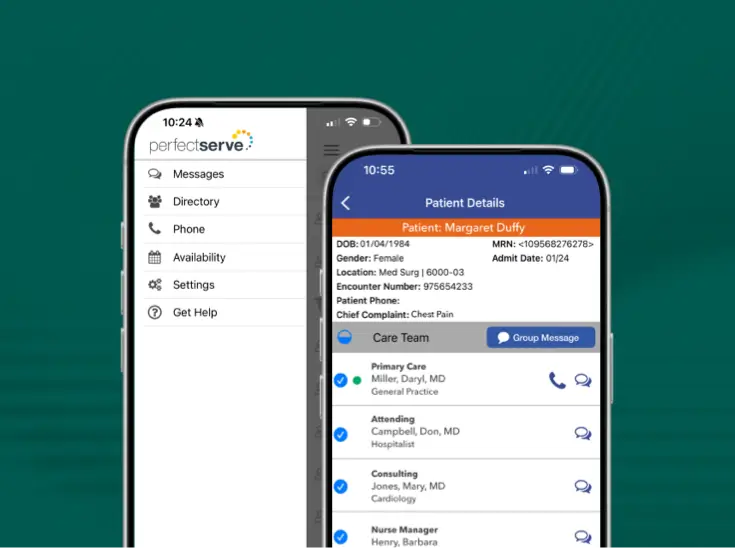
Cost reduction follows naturally through the process itself: eliminating redundant or ineffective tools, reducing inefficiencies, and integrating communication into existing workflows instead of layering it on top.
By investing in better tech, you eliminate waste in your tech stack by dropping tools that no longer support your care teams. Those improved tools allow providers to work smarter and faster, moving patients through their care journey more quickly and with a better experience. In turn, you see happier providers who see more patients at a faster rate.
That’s your ticket to better ROI: solutions that work for your teams, not against them.
If you’re ready to analyze your current tech stack and see where modern tools could lead to better ROI, schedule a call today. We’ll walk through your current workflows together and see what PerfectServe can do for you.
See it working for real teams





.jpg)





.png)





Bring us the workflow that [hurts most]
We'll show you how it runs on PerfectServe, with your teams, your sites and your EHR.