



Selling a Medical Answering Service?
What today's buyers look for, how the market is changing, and what owners should do before a sale.
If you own a medical answering service and are thinking about selling the business, you’re wondering what buyers are looking for and how to prepare for a sale. Recurring revenue, client retention, compliance, and documented workflows matter, but buyers are also considering how well an answering service can adapt to the changing market, AI advances, and automation.
That doesn’t mean traditional answering services or legacy software has lost its value. Medical practices still need reliable human-centered answering, after-hours coverage, appointment support, and loyal staff. But expectations around speed, integration, consistency, and cost are evolving.
It’s a good time to evaluate the future of your business. We’ll break down what buyers are looking for, what you should prepare for a sale, and how partnering with or selling to a company with modern AI-powered capabilities could fit into the future of your business.
What’s changing in the medical answering service market?
The medical answering service market is shifting from labor-only call coverage to intelligent, tech-enabled patient communication. Healthcare organizations increasingly expect 24/7 accessibility, HIPAA-conscious processes, faster response times, documented escalation paths, omnichannel communication, and integrations with scheduling or practice management systems.
That shift is putting pressure on traditional answering service operators. A business that used to be valued mainly on revenue, operator quality, and account stability may now be evaluated on criteria like technology readiness, automation strategy, compliance documentation, and the ability to scale without adding headcount at the same rate.
Why many medical answering service owners are considering a sale
You’re likely looking to sell because the operating environment is becoming more complex. Staffing costs are difficult to manage, healthcare clients expect tighter service-level performance, compliance documentation is under greater scrutiny, and AI-enabled competitors have already reshaped buyer expectations.
You’ve spent years building trust with your client base, and that’s essential to healthcare operations. A strong answering service with loyal clients, recurring revenue, trained staff, clean contracts, and solid processes is attractive to strategic buyers, as the right buyer will take what you’ve build an update the platform to enhance the value proposition for your clients.
How do I prepare to sell my medical answering service?
Put together all the financial, operational, compliance, and client-retention evidence a buyer is likely to request. The more clearly you can show predictable revenue, low churn, healthcare-specific expertise, and repeatable operations, the easier it is for a buyer to see the value of your company.
Here’s a quick checklist of what you’ll want to document beforehand:
- Recurring revenue: monthly revenue by client, contract terms, pricing model, and revenue concentration.
- Profitability: normalized financials, discretionary earnings or EBITDA, staffing costs, and margin trends.
- Client stability: medical client count, tenure, churn rate, specialties served, and referral sources.
- Compliance readiness: HIPAA policies, Business Associate Agreements, training records, access controls, incident response procedures, and secure message workflows.
- Operational documentation: call scripts, escalation rules, on-call procedures, quality assurance processes, scheduling workflows, and employee training materials.
- Tech stack: phone systems, reporting tools, call recording practices, CRM or practice-management integrations, as well as opportunities.
What do buyers look for in a medical answering service?
Buyers are looking for durable revenue, transferable customer relationships, well-documented operations, compliance discipline, and a credible path to growth. They also want to understand if the business can transition from a traditional operator-heavy model to a more optimized, workflow-driven model.
A medical answering service that already serves healthcare clients has something valuable: specific domain experience. But even then, the question is whether that experience is paired with the systems modern practices now expect.
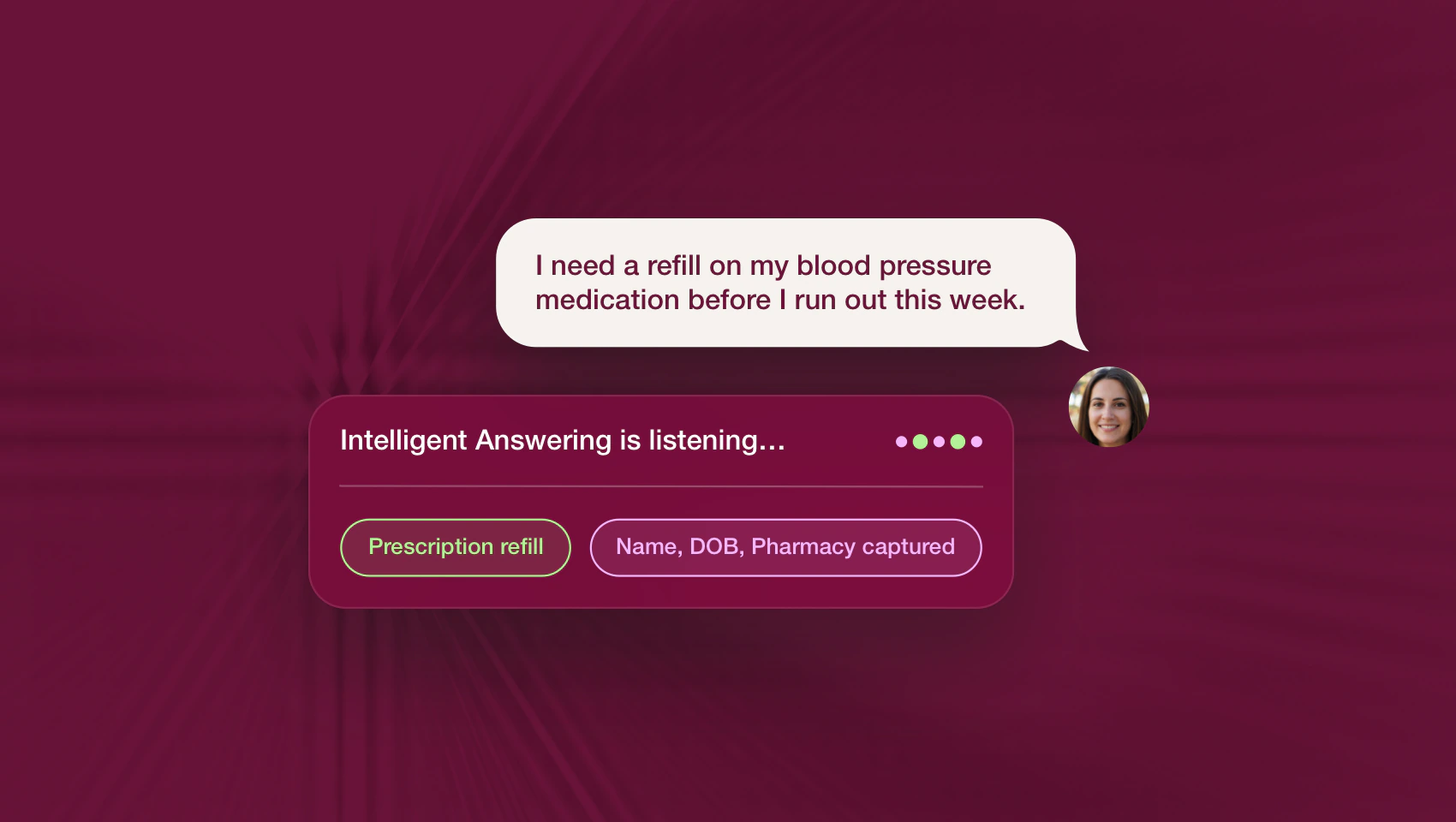
For example, consider Intelligent Answering powered by ConnectiveIQ. The AI medical answering service uses a conversational AI agent, Sloane, who can handle up to 70% of routine calls with zero staff involvement. This technology gives practices a way to improve responsiveness, reduce administrative friction, and create a more consistent patient communication experience without relying only on legacy call center capacity.
Why an AI medical answering service is the right move for your business
Intelligent Answering is designed for the next phase of healthcare communications. It combines the reliability practices expect from a medical answering service with AI-assisted workflows that help route calls, capture essential information, support consistent patient experiences, and improve operational efficiency.
For medical answering service owners exploring a sale, this matters because the market isn’t just asking how many calls you can answer. It’s asking how intelligently you can manage patient communication at scale. Owners who recognize that shift can position their business more strategically, whether they plan to sell soon, partner with a modern platform, or modernize before going to market.
Ready to see what your medical answering service is worth in the AI era?
If you’re considering selling your medical answering service, use our checklist to start assessing your readiness from a buyer’s perspective. Put together your revenue records, review your compliance documentation, map your workflows, identify operational bottlenecks, and evaluate how technology could improve your story.
The market is changing fast, and your healthcare expertise is highly valuable to the right partner. Contact our acquisitions team today for a confidential discussion about your business, its valuation, and how we can help your clients transition into the future of intelligent patient communication.
Questions medical answering service owners frequently ask
How do I sell my medical answering service?
To sell your medical answering service, start by organizing recurring revenue records, financial statements, client contracts, HIPAA compliance documentation, operational procedures, and staffing information. Then determine valuation expectations, identify strategic or financial buyers, prepare a confidential business summary, and manage due diligence carefully.
What makes a medical answering service more valuable to buyers?
A medical answering service is typically more valuable when it has predictable recurring revenue, low client churn, a diversified customer base, trained healthcare-aware agents, documented workflows, strong compliance practices, modern technology, and clear growth opportunities.
Is AI reducing the value of traditional medical answering services?
AI isn’t automatically reducing the value of traditional medical answering services, but it’s changing how buyers evaluate them. Businesses with strong client relationships and healthcare expertise may remain attractive, especially when there’s a clear path to improve scalability, automation, reporting, and patient experience with intelligent tools.
Should I modernize my answering service before selling it?
Modernizing before a sale can help if it improves margins, reduces operational risk, strengthens reporting, or makes the business easier to transition. Owners should weigh the cost and timeline of modernization against the potential benefit. In some cases, partnering with or selling to a buyer that already has modern call handling capabilities may be more the more efficient path.
See it working for real teams






.jpg)





.png)





Bring us the workflow that [hurts most]
We'll show you how it runs on PerfectServe, with your teams, your sites and your EHR.