





A Scheduling Tool Built for Healthcare Schedulers
A health system has a scheduling team and a governance committee, but a practice scheduler is often a team of one. So why aren't tools built specifically for them?

Who is your scheduling tool built for?
You know the file. It lives on a shared drive, carries a name like Call_Schedule_FINAL_v7, and exactly one person understands how every tab connects.
They know which provider can't work Thursdays after March. They remember last year’s holiday swaps and which physician is still owed one. Ask which clinic day falls apart when two providers are out together, and the answer comes back before you finish the question.
That historical knowledge takes years to build, but it's a problem when the schedule can't exist without that one person. When your scheduler goes on leave or moves on, the rules go with them. Whoever steps in inherits a spreadsheet full of formulas and a list of promises nobody wrote down.
Meanwhile, provider requests arrive by email, hallway conversations, and last-minute texts. Vacations clash with clinic templates. Call coverage still has to stay fair. And just when the schedule is finished, Dr. Jones needs to swap Sunday to attend his niece’s dance recital.
The question is, why do so many scheduling tools leave a scheduler stuck manually managing all of these challenges? It’s the question that led us to build Lighting Bolt Scheduling differently.
Practice Schedulers Often Bear the Schedule’s Weight
A health system has a scheduling team and a governance committee, but a practice scheduler is often a team of one. The schedule they build must account for provider preferences, clinic templates, call equity, time away, and coverage needs. It has to be right before publishing or it could open the door for gaps in care.
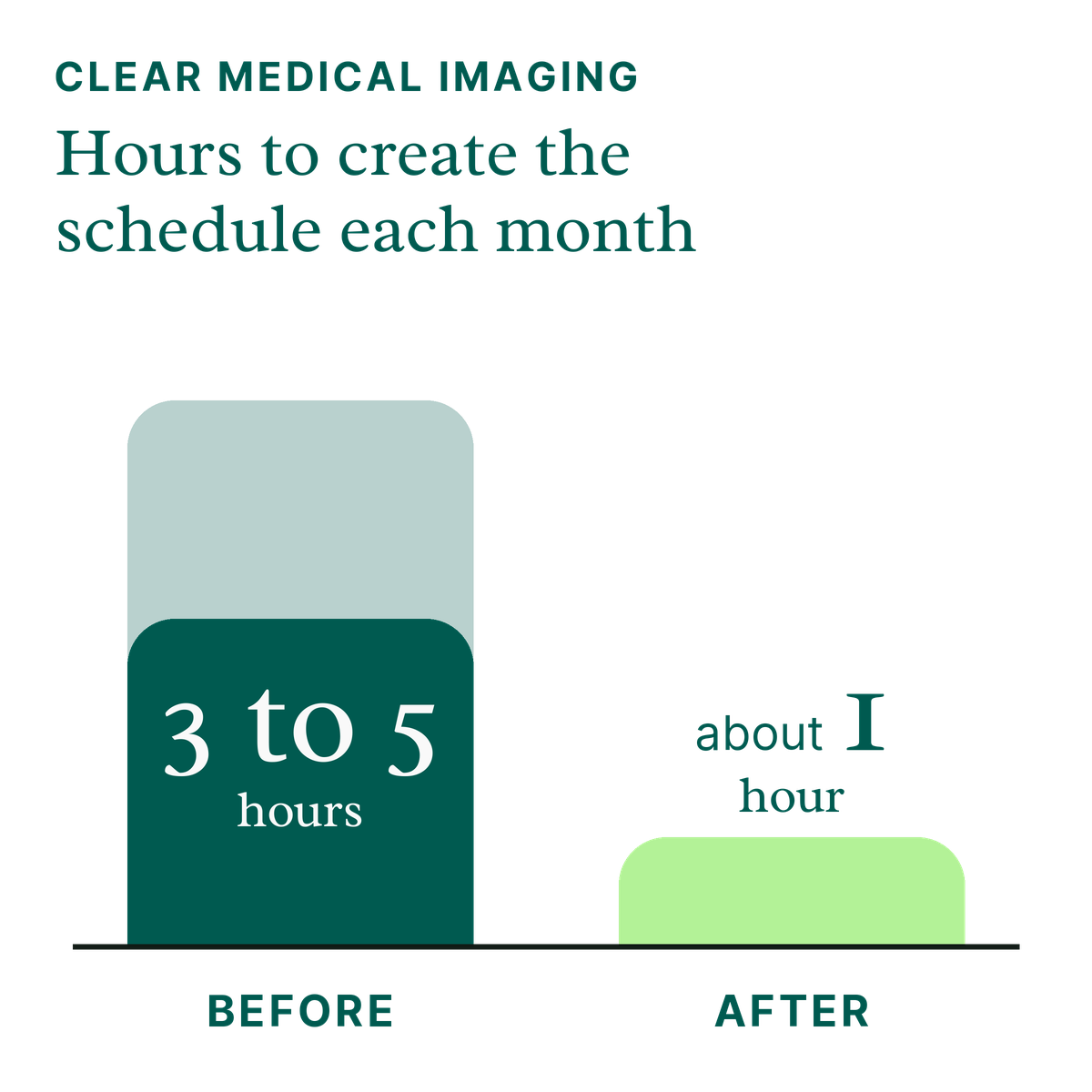
Satisfying all practice requirements, different requests, and provider preferences is next to impossible by hand, which is why schedulers using legacy tools are faced with so many challenges. At Clear Medical Imaging, one nurse was building a 13-facility schedule in Excel. Despite best efforts, manual edits were needed every cycle, and coverage gaps often meant providers couldn’t take the PTO they had requested.
Many of the tools used today were designed for other industries, or for executives who don’t use the solution at all. The person building the schedule at 6 PM on a Thursday doesn’t often get a say in the tool they’re provided.
Why Existing Tools Don’t Do Enough
Spreadsheets and shared calendars require the scheduler to manually apply every rule, resolve every conflict, and maintain institutional knowledge. While other tools exist that offer some automation to assist the scheduler, they still require significant manual oversight.
The reason is scheduling rules: the parameters that allow an automated system to weigh provider availability, locations, assignments, pairing requirements, credentialing, and much more. Existing practice and enterprise platforms may support some rules, but they often introduce complexity or require detailed manual adjustments that can break other rules and still leave coverage gaps.
The challenge becomes even more apparent when the schedule changes. A provider calls out sick. An urgent consult needs coverage. A last-minute request creates an open shift. Many scheduling tools can help build the schedule, but they struggle to adapt in real time without requiring the scheduler to manually rebalance assignments, coverage, and fairness rules.
The result is the same, just faster. The scheduler remains responsible for balancing competing requests, maintaining fairness, and making sure patients have the coverage they need.
Even with more automation, the question isn't whether a scheduling tool has more features or faster capabilities. It's whether the software can take on more of the scheduling work itself before and after the schedule is published.
A Scheduler-First Platform, By Design
A scheduler-first tool asks one question before any other: how much of this schedule can the software build for you?
That's why Lightning Bolt was designed to go beyond basic rule management. The platform doesn't just build schedules faster, it actually accounts for the decisions schedulers would otherwise have to make manually. Lightning Bolt can prioritize certain rules over others, ensuring that only the rules allowed to flex are adjusted while critical coverage requirements remain protected.
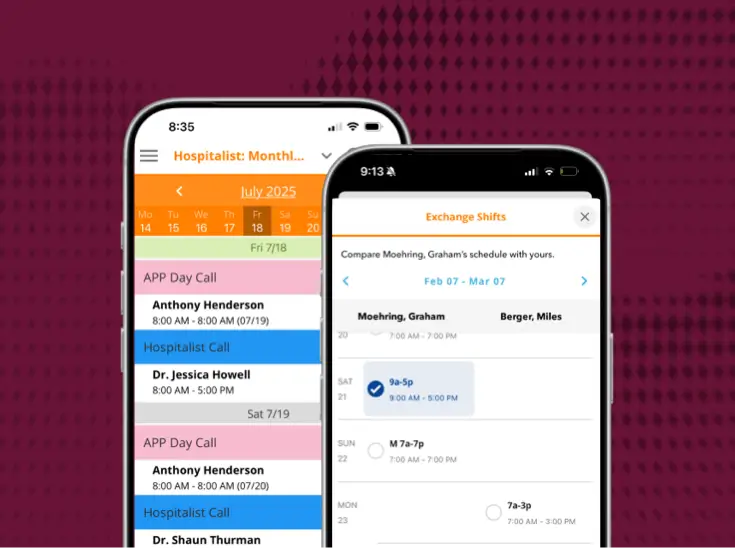
A scheduler should be able to enter provider availability, time away, clinic needs, and fairness rules once, then generate a draft that actually works. They can spend their time on judgment calls instead of checking formulas or explaining why a provider's time-off request couldn't be accommodated.
And scheduling doesn't stop once the schedule is published. When a provider calls out, a consult request changes staffing needs, or coverage requirements shift, the schedule should be able to adapt without forcing the scheduler to rebuild it from scratch.
Because the rules live inside the software, a new scheduler can open the schedule and see the logic behind it. The practice is less exposed when the person who knows the formulas moves on.
From Heroics to a Repeatable Process
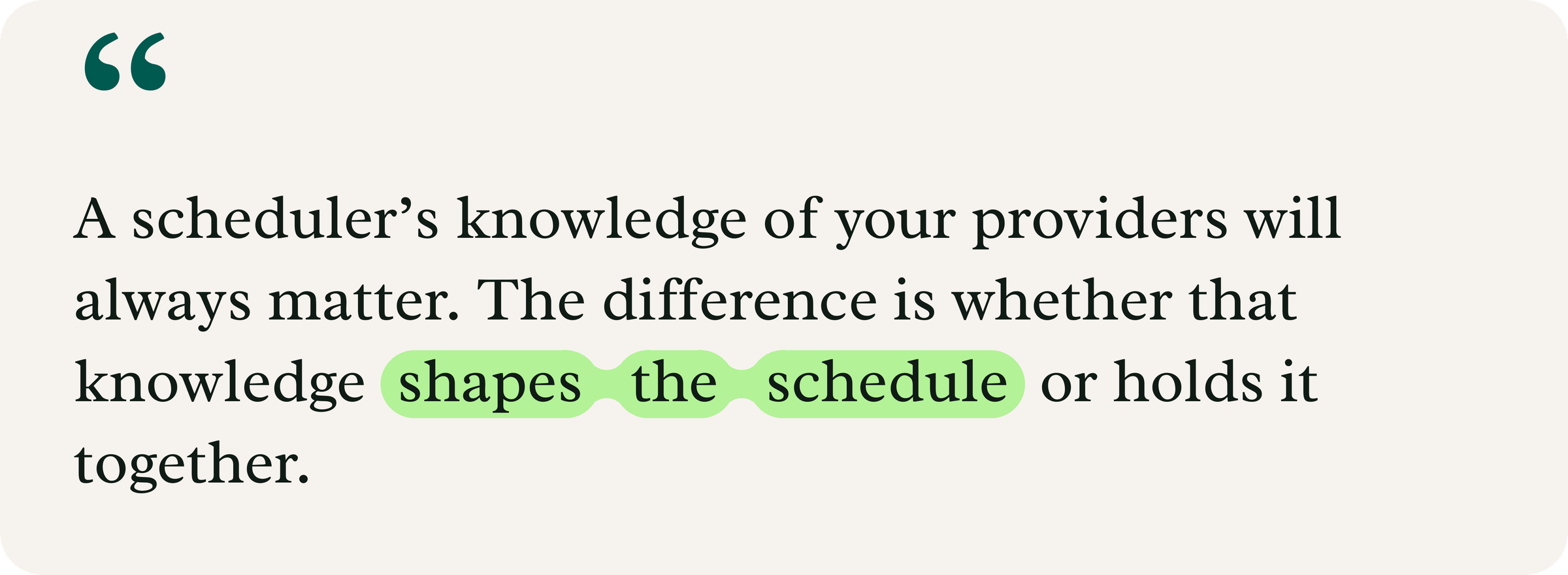
Lightning Bolt was built for schedulers in healthcare organizations of all sizes, designed to support them in building the best possible schedule for the care team. The process is repeatable, so it’s no longer a work of magic when the schedule is correct, fair, and can be adjusted in real time with no issues or gaps left open.
After implementation, Clear Medical Imaging cut schedule creation time from 3 to 5 hours to about 1 hour a month. Midwest Physician Anesthesia Services took 90% of the scheduling work off its Chief CRNA’s plate, and he now builds schedules six months ahead.
The goal is simple: put the brains in the software so the scheduler can put their attention on the practice.
No matter what, a scheduler's knowledge of your providers will always matter. The difference is whether that knowledge shapes the schedule or holds it together. Let PerfectServe show you what scheduling looks like when the scheduler comes first.
See it working for real teams


















Bring us the workflow that [hurts most]
We'll show you how it runs on PerfectServe, with your teams, your sites and your EHR.