



The Real Cost of Your Hospital Switchboard
Your switchboard has a hard cost, and the actual cost goes way above what you’ve budgeted. It’s time to understand why, and what you can do about it.
Your switchboard has a hard cost. At Munson Healthcare’s 7-hospital system, pagers alone were running roughly $20,000 a month,1 and that's before hardware, staffing, and maintenance entered the equation.
The sticker price of your switchboard is just one line item in your budget. The real (and often hidden) cost comes from on-prem hardware refresh cycles, IT and operator staff, maintenance contracts, unplanned downtime, and the ever-evolving threat of cybersecurity exposure.
When you add those up, the actual cost goes way above what you’ve budgeted. It’s time to understand why, and what you can do about it.
The Cost of Clinical Communication Inefficiency
Your hospital needs a communication system to manage inbound and outbound calls. It’s an essential piece of the healthcare tech stack, and in today’s world, most hospitals use a live switchboard or some type of centralized communication contact center.
While all solutions have a price tag, the true cost of a switchboard goes beyond its sticker price. There are layers of hardware and software that are working in tandem to keep your calls in order:
- IT and operator staff: The average cost of a switchboard operator is $30-45,000 per year.2 IT staff range broadly, from $40,000 for entry help desk roles to over $135,000 for specialized managers.3
- Hardware refresh/replacement cycles: This is a periodic spend to replace aging on-prem equipment, like servers and phones. While updates can be budgeted, there’s no guarantee that a surprise replacement fee is just around the corner. That can also include expedited shipping surcharges.4
- Maintenance contracts: On top of the cost of physically managing or replacing on-prem hardware, there are regular maintenance costs to keep them functioning, like an ongoing vendor fee to keep the system supported.
- Unplanned downtime: The cost of outages can be impossible to predict. From lost productivity to emergency repairs to lost transfer opportunities, hospital IT downtime costs an average of $7,500 per minute.5 A switchboard outage means operators can't route a single call until it's resolved.
- Security exposures: Every on-prem system you keep running past its supported lifecycle is a system your IT team can't fully patch. Without upgrades, gaps get wider, leaving a hole in your security system. Because of the nature of interconnected systems today, a single ransomware incident on one unsupported system doesn't stay contained.
The Hidden Hospital Pager Cost Per Year

The cost of keeping a legacy system alive goes beyond contracts, downtime, and IT staff. Pagers can be one of the heaviest line items in your budget: HIMSS Analytics found that the average cost of supporting pagers in healthcare is roughly $200,000 per year.6 They're another aging piece of hardware with ongoing replacement costs, carrier fees, and repair contracts, and they aren’t usually broken out on a budget sheet. Their cost is likely getting bundled into "IT operations" without being reviewed on its own.
Outdated pager costs (and the workflows that come with them) are why Munson moved their on-prem call center infrastructure to a modern, cloud-based console. 1,500 pagers tethered the organization to a monthly service and maintenance cost of $20,000, but after switching, they were able to retire 40% of their pagers and reduce their monthly cost by $10,000. Without understanding the total cost of pagers, it wouldn't have been as clear as to how those savings would have been possible.
The Cost of Training a Switchboard Operator
Pagers aren't the only cost hiding in plain sight. Switchboard staffing can carry its own hidden weight.
A 10-year switchboard veteran knows every workaround that exists in your system: which extension routes to which unit, the name that still needs to be updated in the directory but hasn't changed in a year, which transfers need a manual workaround, which alarms can be ignored. All of this historical data lives in their head, but it doesn't transfer or scale.
That's a real problem, because the moment an operator can't make it into work or decides to retire, you're facing an uphill battle. Training new faces on legacy switchboards is hard enough, but now it's up to you to transfer that historical knowledge to a 29-year-old raised on modern tech. Have they even heard of a pager?
Every week a new operator spends learning workarounds is a week your hospital is paying for partial productivity. HRMA found that 45% of annual turnover is in the call center, and each replacement costs .5x to 2x the departing employee’s annual salary.7 When recruiting, training, lost productivity, and disruption are all factored in, turnover can run as high as 90–200% of annual salary.8
The Patient-Safety Cost of an Aging Switchboard
Misrouted calls, delayed pages, and dropped transfers are frustrating from both a financial and operational point of view. But more importantly, they have real clinical consequences that impact far more than your bottom line.
Time isn’t usually allocated as an expense, but with switchboards, it might as well be. When code teams are activated through pager workflows, switchboard operators typically follow a manual process to look up who’s on call, confirm contact info, and send a page one at a time. One study across multiple hospitals found that delayed activation of rapid response teams was linked to a 23% higher risk of mortality and a 72% higher risk of ICU admission.9
Delayed transfers are another source of lost revenue. The average emergency department transfer costs a hospital over $15,000.10 For specialties like cardiology and neurology, a delayed stroke or cardiac transfer can mean losing $3,000+ per diagnostic test before it's even routed elsewhere.10
Legacy switchboards simply don’t measure up to the speed of modern care communication technology. That’s why a 6-hospital health system in the southeast implemented PerfectServe’s Operator Console in its integrated operations center, which acts as a hub to improve the flow of patient transfers across the system. The system saw its “reservation to complete” time—the time it takes to place an accepted transfer patient into a clean bed—drop by 40%, as well as its discharge to departure times.
Why the Old On-Prem Math No Longer Holds
You likely still have on-prem technology because, for so long, it made sense to. For decades, health systems needed dedicated phone lines and switchboard hardware because they were the only reliable way to guarantee uptime. And for the longest time, it was the latest healthcare tech.
But, times are changing. Phone platforms and voice infrastructure as a whole has moved to the cloud. In 2022, 73% of Americans lived in a home without a landline, and hospitals are making the switch as well. Gartner projects that 90% of organizations will rely on cloud platforms for enterprise telephony by 2028.11
It’s understandable you still use on-prem tech, but it’s worth revisiting your voice infrastructure from a cost and reliability perspective. While moving to the cloud can seem like a huge change, it’s the cheaper and more reliable choice. PerfectServe is here to help you make the switch at your own pace.
Button: See the full results: Munson's pager savings are just one piece of the story. Once the switch was live, internal call volume dropped 34%, and clinician adoption of the new system kept climbing for over a year after launch.
Read the Munson Healthcare case study →
Calculating Clinical Communication ROI for Your Budget Deck
You’re reviewing your Q4 budget and building the case for next year’s budget right now. Somewhere in there is a line for your switchboard. You don't want to undersell that cost.
To truly run the math, add up the pieces we’ve mentioned so far:
- IT and operator staffing costs
- Hardware refresh cycles
- Maintenance contracts
- Downtime exposure
- Security risk of running unsupported systems
- Pager costs
- Training overhead and operator turnover
That number is your true cost of ownership. It’s not just the price listed on your vendor contract, but actually everything else sitting underneath it.
A modernized operator console is built to consolidating the layers you've been paying for separately into one platform. See how the Operator Console fits into that math →
How the Cloud Supports Operators Today
Staffing and training costs don't have to be a huge problem to manage. The cloud has solved these issues for your operators already:
- Work from anywhere: On-prem systems are location-bound, meaning sickness, traffic, storms, and power outages can take an operator offline entirely. Cloud-based agents just need a computer and a headset, so coverage doesn't depend on who can physically get to the building.
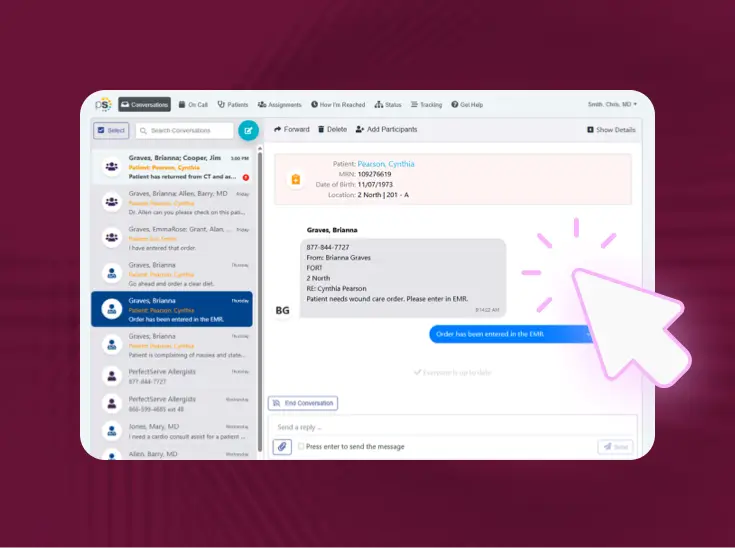
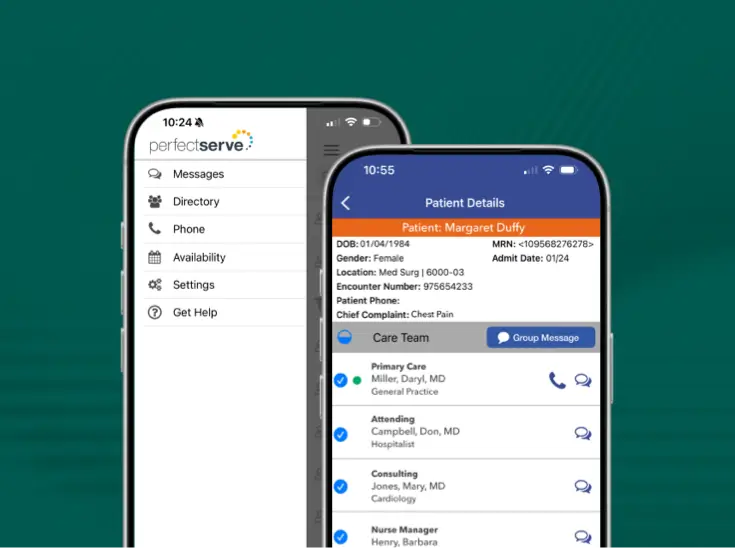
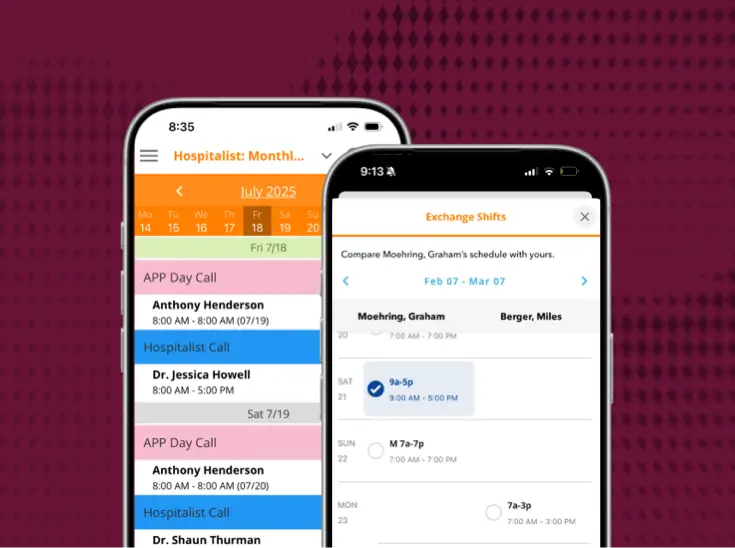
- Integrates with the systems operators already use: A cloud-based console can connect directly to EHRs, secure messaging, clinical directories, scheduling platforms, and phone/pager systems to turn the call center into a communication hub instead of an isolated switchboard.
- Faster to deploy and learn: Cloud platforms scale up or down with a click (for example, add or remove users during peak periods), and their web-based interfaces cut training time since operators aren't learning proprietary hardware.
- Stronger security without the IT burden: Cloud solutions can be updated automatically from anywhere. Updates are HIPAA-compliant and SOC 2-certified with real-time patches delivered over the air. There’s no dedicated IT team required to keep the system current, and updates cause zero downtime.
- Built-in redundancy: Multi-server backup means a cloud call center isn't tied to one building. If a hospital has to evacuate or loses power, functionality can shift to another location. PerfectServe's Operator Console guarantees 99.9% uptime.
- Lower total cost: On-prem systems require IT staff to install, maintain, and periodically replace hardware. Cloud systems remove that entire cost category because there’s no physical team, no scheduled repairs, and no aging servers to refresh.
- Faster setup: On-prem implementations can take months (hardware purchase, installation, compatibility testing). Cloud setup is closer to installing an app, and training can start almost immediately.
Transparency Matters: The Real Cost of Your Switchboard
Every hospital has a switchboard hard cost, but what matters most is whether you can see the entire number or just the line item on your budget. If you’re still using legacy switchboard technology, there’s no reason to feel behind. What's important is you know there is a better, cheaper, and more efficient path forward.
Most decision makers haven’t had the time or equation to fully quantify the cost of their call center tech. The health systems that made the shift didn't do it on faith. They did it once the real math was in front of them.
Let PerfectServe calculate what a cloud-based operator console can save your hospital today.
See it working for real teams




.jpg)


.png)





Bring us the workflow that [hurts most]
We'll show you how it runs on PerfectServe, with your teams, your sites and your EHR.