





What Pagers Actually Cost a Health System
What are healthcare organizations actually spending on pagers? We'll explore what pagers really cost and what replacing them can do for your organization.
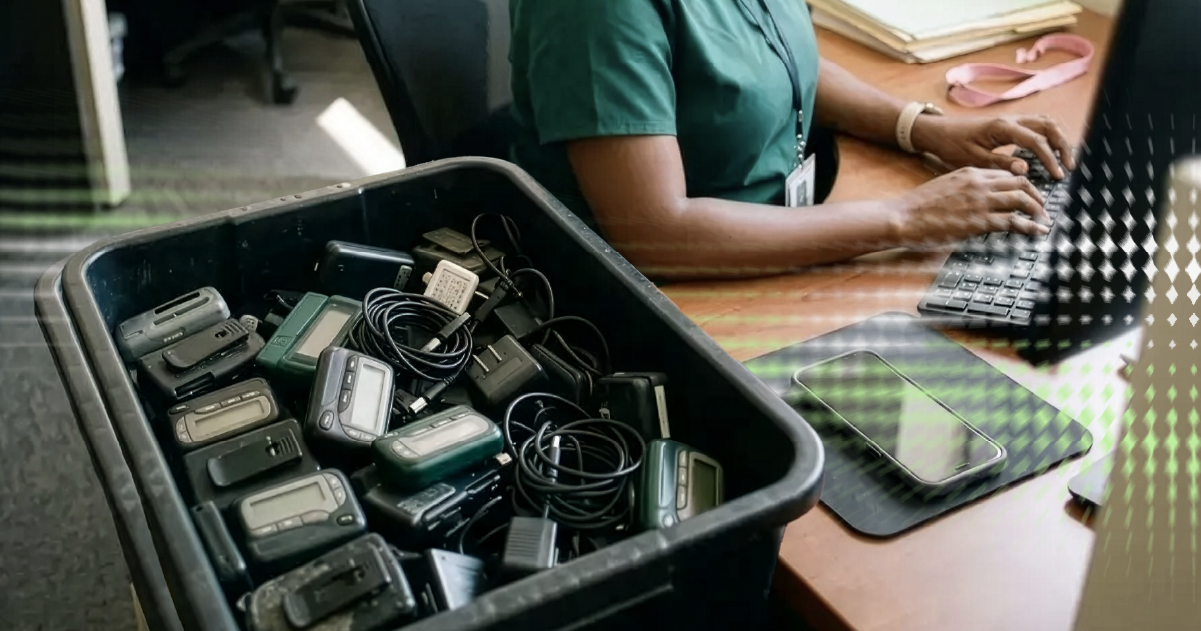
Even a mid-sized hospital system can have thousands of pagers in circulation. That’s a lot of devices to manage. And it comes at a long-term cost: things like service fees, hardware upkeep, and on-prem servers (though they’re not always required) all add up.
It begs the question: what are healthcare organizations actually spending on pagers?
To answer that, we pulled together insight from PerfectServe's Ben Moore and Anna Fink, who both work directly with health systems making this transition, and took a closer look at the experience of Munson Healthcare, a 7-hospital system in northern Michigan that recently retired 40% of their pagers.
Here's what pagers really cost, and what replacing them can do for your organization.
Are pagers still reliable?
Pagers are still in widespread use in the US healthcare system, despite their obvious drawbacks.
PerfectServe’s Chief Innovation Officer Ben Moore suggests that healthcare organizations are clinging onto an outdated solution because pagers are seen as “good enough.” They’re perceived as reliable, especially in areas with poor cell reception. Doctors like that their pagers enable them to fully disconnect from work, instead of being constantly reachable by cell. More than that, they’re familiar to practitioners.
However, “pagers just work” no longer justifies the high costs of using them. When you’re using pagers, there's no way to know whether a message reached the right person until someone follows up to check. Or, as Anna observes, a message that matters might not reach the right physician, creating both a serious risk to the patient and liability exposure for the healthcare organization.
Pagers were a reliable option when the alternatives were hand-delivered messages, overhead PA announcements, or calls to clinicians through a landline. Today, there are far more reliable options available. A modern clinical communication platform should have the ability to deliver a message, confirm it was read, automatically escalate it if it wasn’t, and keep an auditable record of the whole exchange. Pagers weren’t built with the demands of a modern hospital in mind, which is why they struggle to check these boxes.
What pagers cost a health system
Physical pagers aren’t simply unreliable—they’re expensive. Here’s how the cost of using pagers adds up.
Service costs
For a mid-sized health system, monthly pager service fees can run into the tens of thousands of dollars. Munson Healthcare was spending about $20,000 a month on pager fees (roughly a quarter of a million dollars a year) to keep nearly 1,500 pagers in service. After retiring 600 of them (about 40% of the fleet), that monthly cost dropped to $10,000, a 50% reduction achieved by removing less than half the devices.
Hardware costs and maintenance
Beyond the costs of purchasing the pagers themselves, pagers require a lot of maintenance. As Anna points out, fixing physical pagers under legacy vendor contracts can take days, compared to a few minutes to push a software update wirelessly to a phone.
On-prem maintenance
According to our recent survey, 68% of healthcare contact centers are still running either hybrid or on-prem infrastructure. That adds its own costs, including storage, upkeep, patching, and staff time spent keeping the infrastructure running. Moving to a cloud-based platform removes that layer of cost and risk entirely.
Call load
Pagers are typically backed by a switchboard, which means every page or callback adds to operator call volume. When Munson replaced its legacy system, internal calls to the switchboard dropped 34%, and operator-initiated pages fell by nearly 30% over about a year.
Speed to care
Reaching the right person through a pager-and-switchboard workflow often means checking a call schedule, confirming who's covering, tracking down a number, and then waiting for a callback. Anna notes that, during a code, this might mean calling 20 different teams one by one, hoping each one picks up.
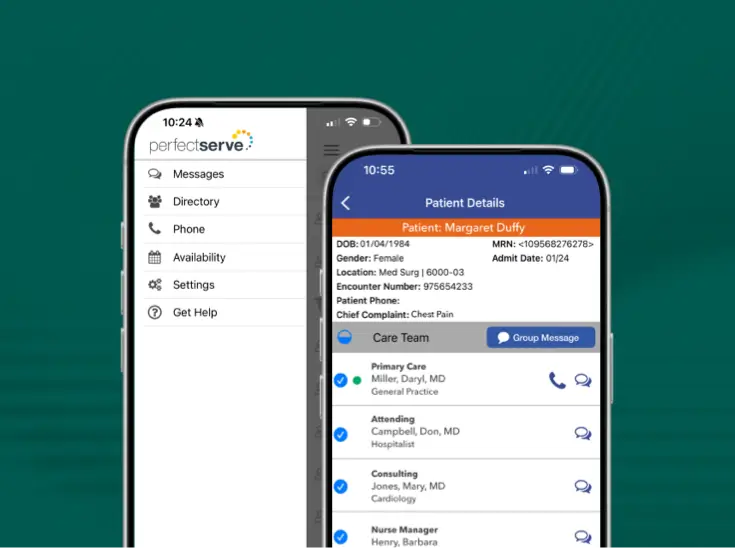
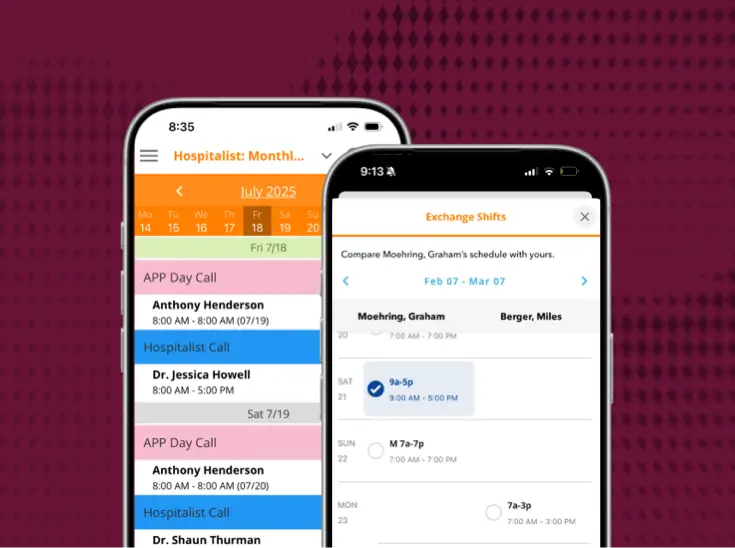
Those manual steps involve expensive staff time, and they’re completely unnecessary with a modern communication system. A platform with integrated scheduling and messaging collapses it all into a single step: look up who's on call, send a message, done. If someone doesn't respond, the system can automatically escalate to the next available person instead of leaving it to chance.
By closing these communication gaps, you can help to ensure patients get the care they need in a timely fashion.
Auditability and transparency
Pagers offer no record of whether a message was delivered. To Anna, that lack of transparency also means “there’s no accountability.” When there's no way to prove a message reached someone, there's no way to hold anyone responsible for what happened (or didn’t happen) next.
And it opens up the hospital to expensive legal action. With no record, there's no way to show who was notified, when, or whether they responded. By contrast, modern communication platforms log delivery and read status automatically, so important messages don’t get missed and hospitals have a clear record to point to if a patient incident is ever questioned.
Risk factors
Pagers also come with a cost to the quality of patient care. They make it all too easy for messages to be missed or delayed, because you have no idea whether or not the message was received.
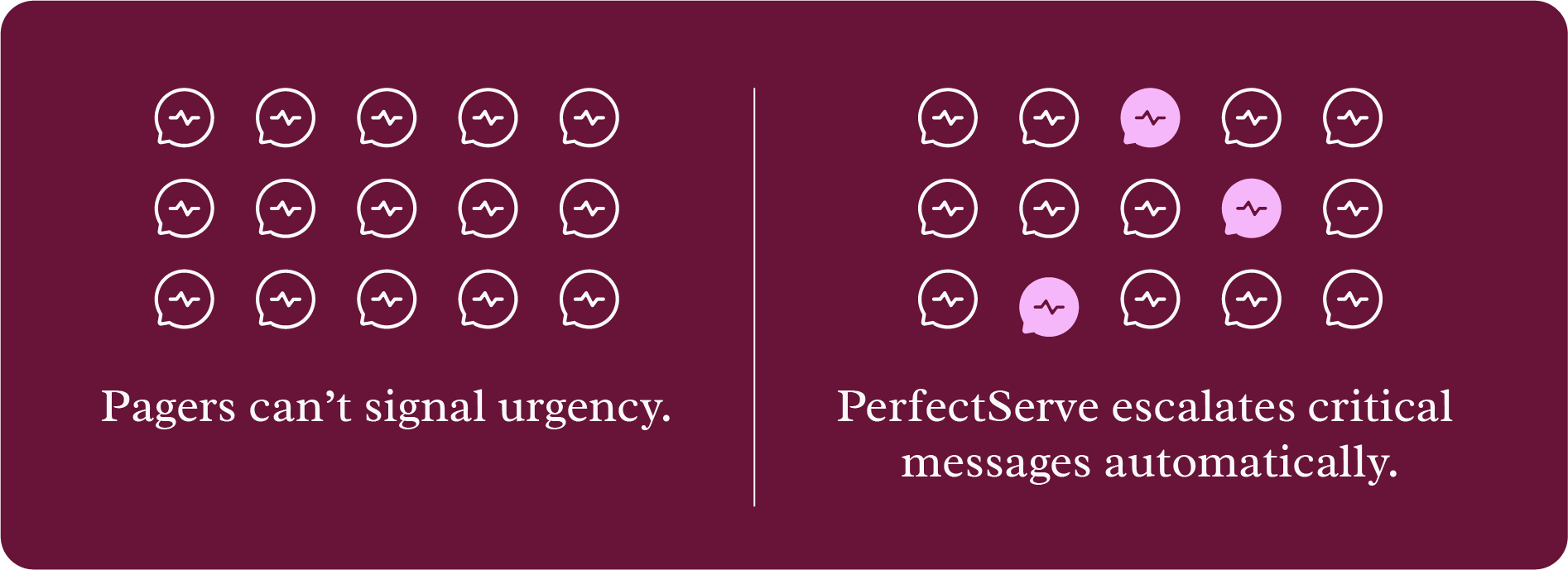
As Ben explains, “When you have a pager, all alerts are alerts. You don't know if it's urgent, and you have to respond.” Over time, this creates the perfect circumstances for alert fatigue: overwhelmed clinicians start to tune out the noise of notifications coming in, leading to possible delays in responding to urgent messages.
Anna, who worked in IT at a healthcare organization that used pagers, recalls: “It was a nightmare, especially during the busy days.” A new page would bump an unfinished one off the screen before she'd had a chance to fully read it; a small design flaw, but one that meant details could get missed in the shuffle.
The bigger risk is what pagers force staff to do with patient information. Because there's no structured way to attach details to a message, staff end up typing them out by hand directly into free text. Time consuming, and, of course, "A lot of times it's not HIPAA-compliant," Anna observes.
How to move clinical communication forward
None of this means pagers should be ripped out overnight. However, it does mean the "pagers still work" defense doesn't hold up to a real cost comparison. The path forward for most health systems starts in the same place Munson did: consolidating call center and clinical communication into one platform, rather than patching together pagers, switchboards, and disconnected apps.
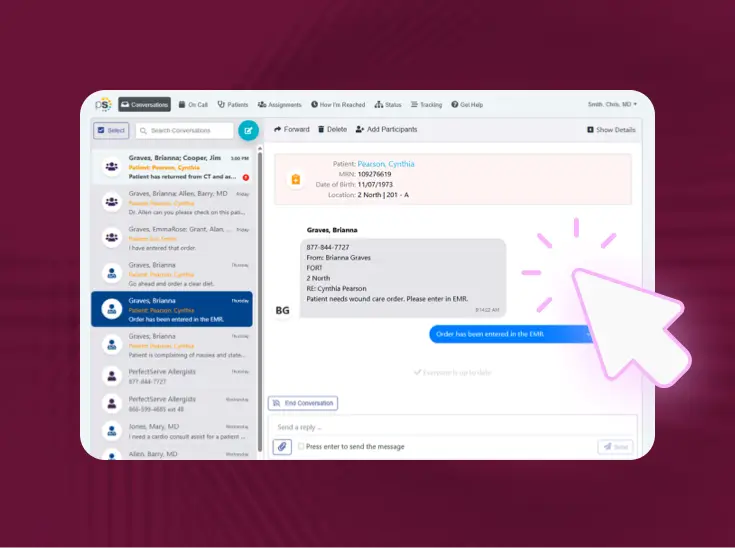
Munson replaced its on-prem paging and messaging setup with PerfectServe’s unified platform, so operators, clinicians, and schedules all live in one place instead of in several disconnected systems. That change saved Munson in many areas:
- Monthly pager costs dropped 50%
- Call volume to the call center fell by 56,000 over 13 months (including a 34% drop in internal switchboard calls)
- Operator-initiated pages fell by almost 30%
At the same time, adoption climbed. More than 2,000 clinicians now use the secure messaging platform, up from under 1,900 on the previous system. Message volume grew 32% year over year as clinicians leaned into the new way of reaching each other.


Beyond the pager line item
The cost of using pagers is easy to overlook because it's spread across so many places: service fees, hardware, on-prem servers, operator time, clinician time, and the risks that come with a system built for a different era of care. It’s rarely just a pager problem, and it signals that the rest of the communication stack is due for the same conversation.
If Munson's numbers look familiar, or if you don't actually know your own, it’s probably worth a second look. Our team can walk you through a full TCO breakdown for your pagers and operator console and show you where we might be able to make a real difference in your clinical communication workflows. Schedule a demo today!
See it working for real teams






.jpg)





.png)






Bring us the workflow that [hurts most]
We'll show you how it runs on PerfectServe, with your teams, your sites and your EHR.