





Spok vs. Amtelco vs. PerfectServe: Which Operator Console is Built for Modern Healthcare?
The operator console is the command center of your hospital. With so many on the market, which one is built for modern healthcare? Compare here.

Quick Summary
The operator console is like the command center of communication inside the hospital. Among other workflows, pain points like misrouted calls, delayed code responses, and unanswered transfer requests can often be traced back to what this system can and cannot do. These shortcomings are a major reason why 85% of healthcare leaders want to switch contact center vendors.
This guide compares three vendors based on the capabilities of their healthcare operator consoles: Spok vs. Amtelco vs. PerfectServe.
PerfectServe is the only telephony-agnostic, cloud-native platform that unifies live EHR data, automated routing, and real-time on-call scheduling in a single console. No more hardware lock-in, manual lookups or stitched-together tools.
Why Healthcare Contact Centers Are Stuck with "Good Enough" | Full Report
Which Operator Console Is Built for the Health System of 2026?
A majority of healthcare operator consoles were built to answer calls. Very few of them were built to route them intelligently, connect to live schedules, surface EHR data, and keep communication flowing without manual intervention.
That gap is precisely what slows your operators down at the wrong moment.
The vendors in this space all promise to fix that, but the reality for each looks a bit different. Spok hasn’t moved past on-premises PBX hardware. Amtelco gives you flexibility after months of complex setup. Here, PerfectServe is the only cloud-native, telephony-agnostic console that connects live scheduling, EHR data, and two-way messaging in one place, avoiding the workarounds. This is how all three stack up.
The Operator Console Landscape at a Glance
Why Listen to Us?
PerfectServe has spent nearly 30 years building communication, scheduling, and clinical workflow technology for healthcare. The platform integrates with 270+ clinical systems, is trusted across 100+ health systems and 500+ hospitals, and in 2026 was recognized as highest in execution and furthest in vision in the Gartner® Magic Quadrant™ for Clinical Communication and Collaboration.
PerfectServe also ranked #1 across all five use cases in the complementary Gartner Critical Capabilities for Clinical Communication and Collaboration report, and two of its solutions (for physician scheduling and ambulatory clinical communication) were repeat Best in KLAS winners in 2026.
Deep Dive: Healthcare Operator Console Vendors
Healthcare operator console limitations rarely show up in demos. They show up at random times when a code call gets misrouted or when a schedule change does not sync in time.
Some information to consider about three major vendors before you decide:
Spok: Legacy PBX Architecture in a Cloud-First World

Spok has a long history in hospital communications. Many U.S. hospitals have relied on Spok's paging infrastructure for decades. That legacy is also its biggest limitation when it comes to the operator console.
Spok's console is a computer telephony integration (CTI) system built on top of your existing PBX. It works as a bridge between your on-prem phone infrastructure and a desktop interface. That model was logical in 2005, but in 2026, it creates a maintenance burden that most health systems are actively trying to eliminate.
For operator teams, that architecture creates gaps at every level:
- Operators are tied to desktop workstations and on-site infrastructure, which makes remote work and business continuity significantly harder to support.
- Spok's on-call tools require staff to maintain schedules separately. The system does not auto-route based on live schedule data the way a unified platform can.
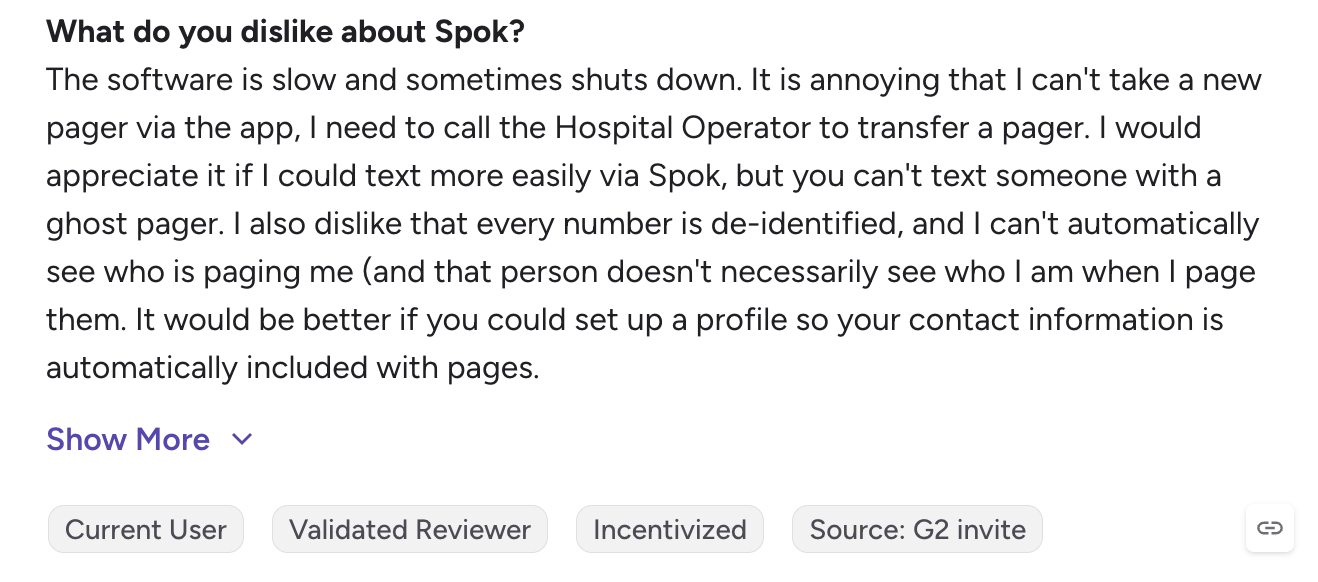
- Spok's secure messaging layer exists, but G2 reviewers consistently flag limitations in two-way texting capabilities, particularly around deidentified contact numbers.
- The HL7 interface supports basic patient lookups, but it can’t match the clinical system integration depth that cloud-native platforms deliver today.
G2 reviewers also flag software slowdowns and system shutdowns as recurring issues. In a hospital environment where time always matters, those moments of instability carry real consequences.
Spok's pricing structure adds another potential area of concern. Users report expensive contracts with limited flexibility, which creates budget predictability problems for health systems that need cost models tied to actual usage.
Amtelco: Powerful but Complex to Deploy and Maintain

Amtelco’s Infinity platform is one of the most customizable operator console systems in the healthcare space. That customization is also the source of its most common complaints.
Amtelco requires significant upfront configuration. Its drag-and-drop scripting tool, call flow builder, and multi-PBX support are genuinely capable, but getting there takes time, technical resources, and a learning curve that Capterra reviewers consistently describe as steep.
This creates real friction for health system IT teams already managing complex environments:
- Organizations must build call flow scripts, configure integrations, and train staff before the system delivers any real value.
- Because workflows are heavily customized, any change to staffing, routing rules, or schedules can require a full reconfiguration.
- Amtelco offers hosted options through partnerships with Amazon and other data centers, but it’s not a cloud-native architecture the way modern platforms are.
- Amtelco's Ellie IVA handles inbound call routing intelligently, but the healthcare-specific intelligence connecting operator workflows to clinical schedules and EHR data is not as deeply unified as what purpose-built clinical communication platforms offer.
For organizations with dedicated IT teams and time to configure a complex system, Amtelco can work well. For health systems that need to modernize quickly or operate at scale without heavy administrative overhead, the implementation burden is a real barrier.
How PerfectServe’s Healthcare Operator Console Excels
Rather than being built to modernize an existing switchboard, PerfectServe's healthcare operator console is designed to eliminate the operational gaps that switchboards create. Routing is automated, schedules are live and consistently referenced, and clinical context is easily referenceable for every interaction.
Here’s how these differences play out across the capabilities that make a significant impact.
True Cloud-Based, Telephony-Agnostic Architecture
PerfectServe’s console sits above your telephony layer entirely. It integrates via SIP and works independently of whatever PBX or UCaaS environment your organization runs. That means operator workflows don’t break when your infrastructure changes, and remote operators work with identical capabilities as on-site staff.
In calendar year 2025, the platform maintained 99.99% uptime, backed by a secure cloud infrastructure that eliminates the hardware dependency and maintenance burden of on-prem systems.
Dynamic Intelligent Routing®
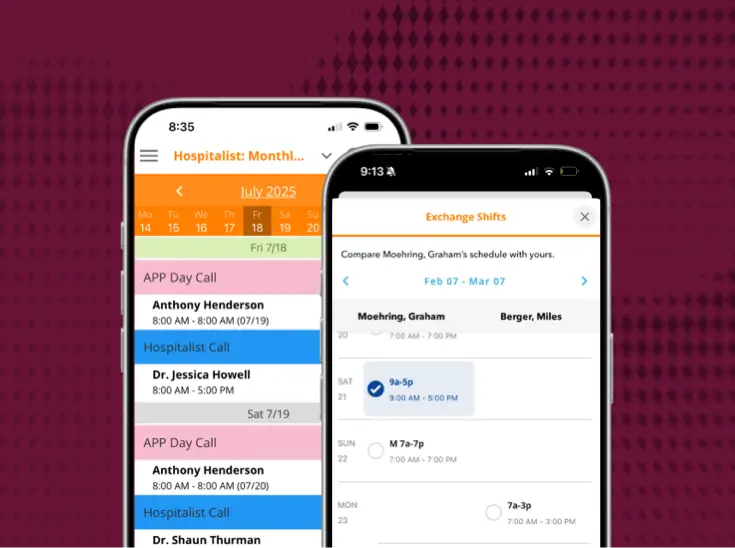
PerfectServe’s proprietary Dynamic Intelligent Routing® is the capability no other vendor in this comparison can replicate. It automatically routes every inbound call, message, and alert to the correct recipient in real time based on live schedule data, the clinician’s or care team member’s role, their preferred communication device, and the time of day (among other variables).
Operators never need to look up who’s on call, and they don’t need to cross-reference a separate schedule sheet. The routing engine does that work automatically, which translates to faster response times, fewer misrouted calls, and significantly less cognitive load on your operator staff.
Customers report outcomes that reflect this directly:
- A large health system that deployed Operator Console reported a nearly 30% drop in operator-initiated pages thanks to improved clinician-to-clinician communication.
- With PerfectServe handling all clinical communication, one academic medical center reported 73% faster rapid response times. Since operators are often involved in code calls and other urgent group communications, greater ease with communication pays off quickly.
- After implementing PerfectServe Operator Console, one customer reported that switchboard volume dropped by 34% over 11 months as clinicians began reaching each other directly instead of routing through operators.
Live EHR Data Inside the Operator Console
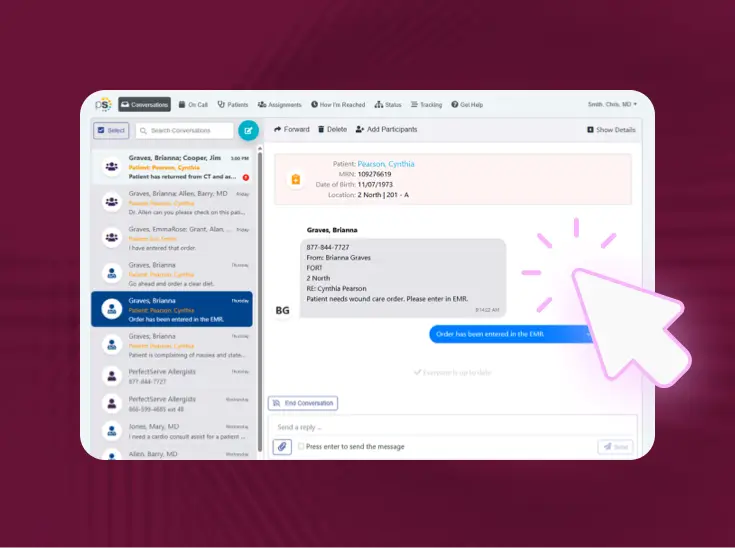
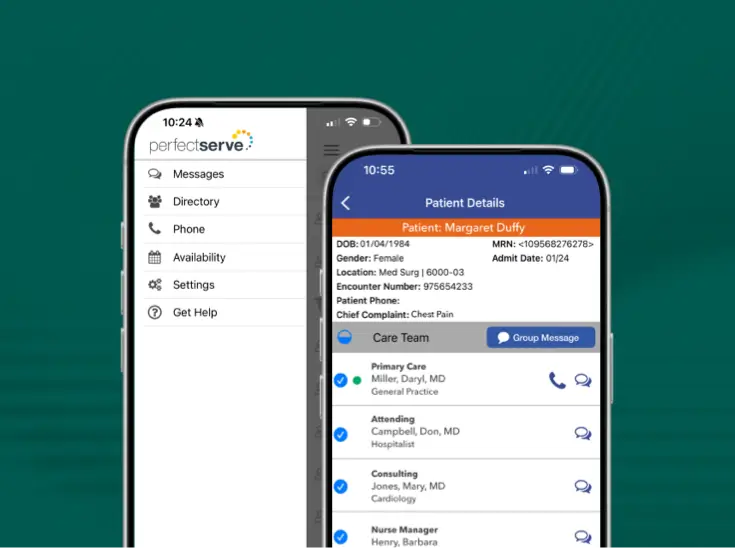
PerfectServe integrates with 270+ clinical systems, including EHRs, nurse call systems, laboratory information systems, and much more. When a call comes in, operators see relevant patient information from the EHR in real time without switching screens or jumping to a separate app.
This matters most in high-stakes situations. A caller asking about a patient transfer or an urgent clinical query doesn’t want to wait for the operator to navigate multiple tools, and the operator certainly doesn’t want to be a source of delays. With PerfectServe, all the information they need is already there on a single pane of glass.
One Platform to Replace a Stack of Modules
Spok and Amtelco typically require organizations to stitch together separate tools for scheduling, secure messaging, paging, and the operator console. PerfectServe delivers all of these capabilities in one place:
- Provider and staff scheduling with Lightning Bolt
- Clinical communication and collaboration with Dynamic Intelligent Routing®
- Healthcare operator console for contact, transfer, and patient command centers
- Medical answering service for medical practice communication and call management
- Patient engagement with HIPAA-compliant SMS and video
That consolidation eliminates integration gaps, reduces IT overhead, and creates a single source of truth for who’s reachable, when, and how. Munson Healthcare's 7-hospital system replaced its legacy call center infrastructure with PerfectServe’s Operator Console, Clinical Collaboration, and Lightning Bolt solutions and reported a stronger operator experience with more efficient enterprise care team communication.
Spok vs Amtelco vs PerfectServe: Side-by-Side Comparison
Three platforms, one comparison. Use this table to see exactly how Spok, Amtelco, and PerfectServe perform across the capabilities that define a modern healthcare operator console, from routing intelligence to EHR integration to analyst recognition.
Which One Is Right for Your Health System?
The right answer depends on where your organization stands today. Spok works for teams too embedded in paging infrastructure to migrate right now, but it probably can’t bridge the gap to modern clinical workflows. Amtelco is a capable choice for organizations with dedicated IT resources and the patience for a long configuration runway, but the maintenance overhead is ongoing.
If your goal is to modernize your healthcare operator console, eliminate manual routing, unify your clinical communication stack, and reduce operator workload, PerfectServe is the best option. It’s the only platform in this comparison to deliver all of this functionality without telephony lock-in, on-prem hardware, or steep configuration requirements.
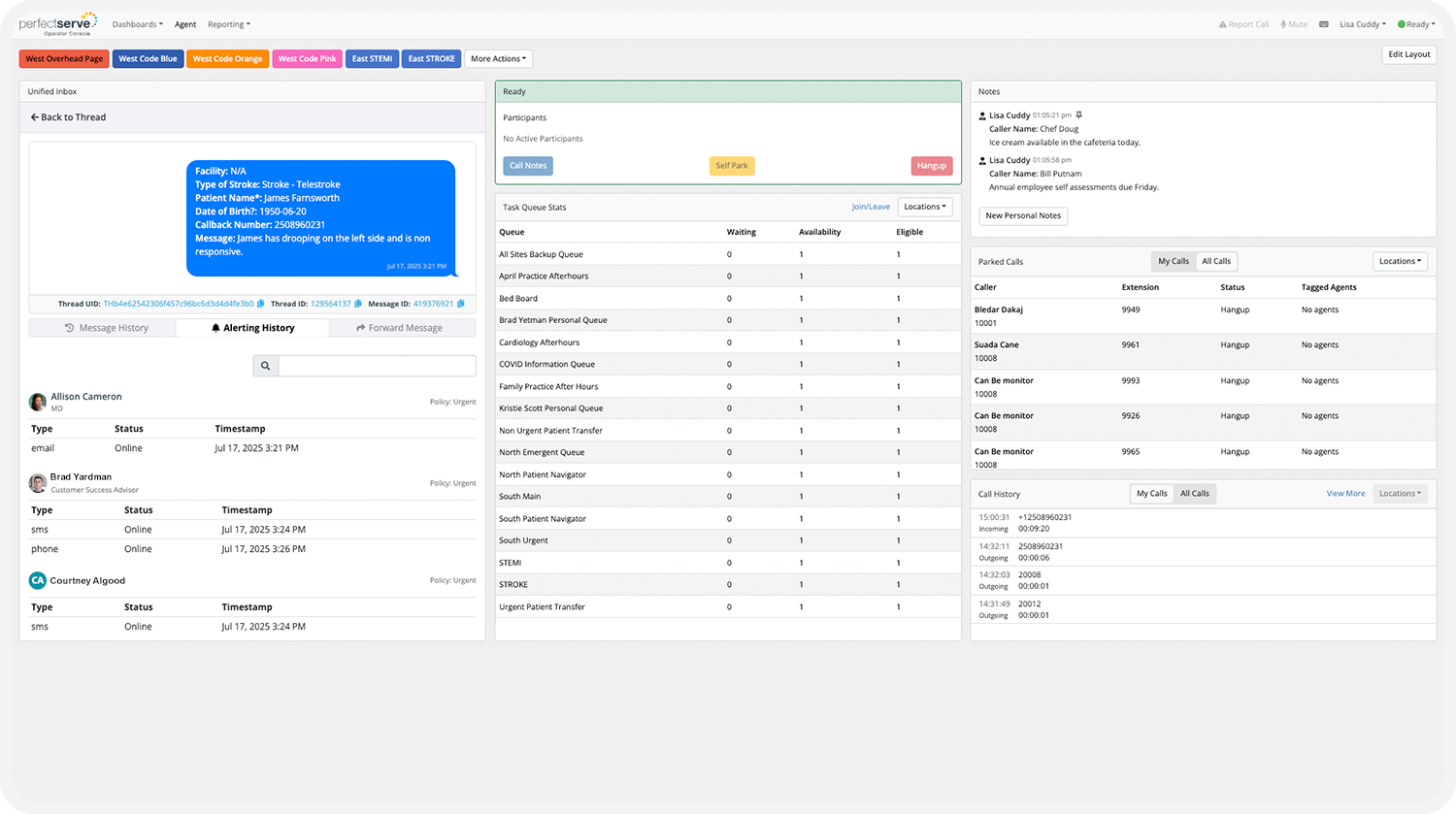
See PerfectServe's Operator Console in Action.
Your operators handle hundreds of calls a day. Give them a platform built to handle the complexity of care delivery and clinical communication in 2026. Book a free demo and see exactly how PerfectServe performs in a live clinical environment.
Latest news from PerfectServe




.jpg)



.png)





Bring us the workflow that [hurts most]
We'll show you how it runs on PerfectServe, with your teams, your sites and your EHR.