




How To Improve Communication for Better Care & Higher Patient Satisfaction
With the rise of value-based care, healthcare organizations can increase reimbursement rates through improved health outcomes and higher patient satisfaction scores. Keeping patients happy also increases patient loyalty, which boosts the bottom line.
With the rise of value-based care, healthcare organizations can increase reimbursement rates through improved health outcomes and higher patient satisfaction scores. Keeping patients happy also increases patient loyalty, which boosts the bottom line.
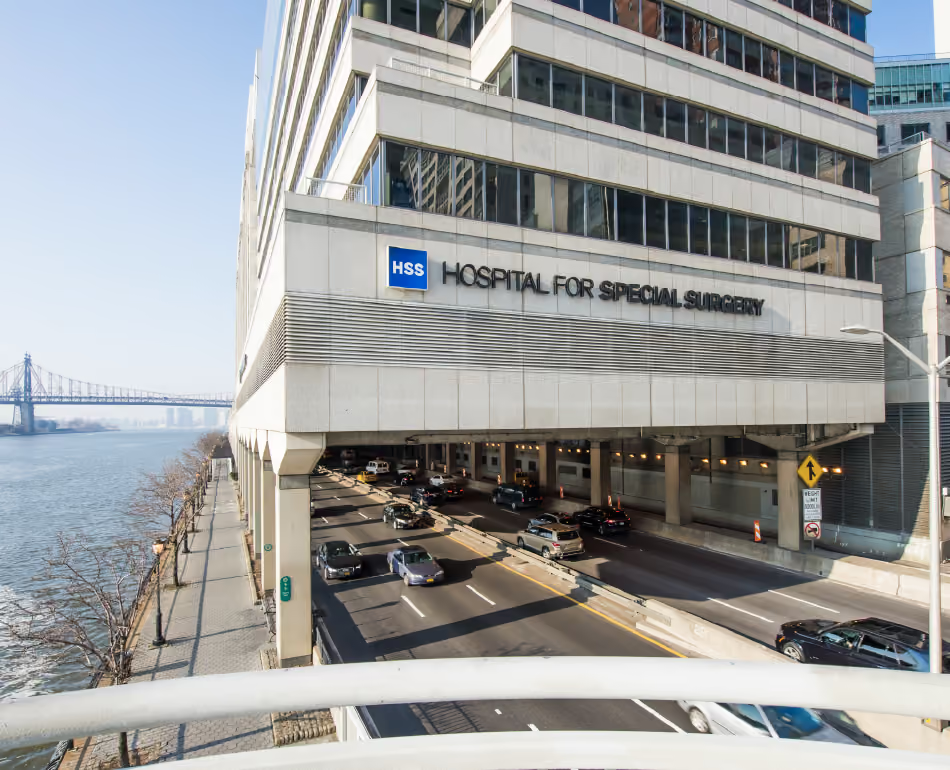
In 2017, Hospital for Special Surgery (HSS)—America’s premier academic medical center focused on musculoskeletal health—decided to make some changes to their care team communication by implementing PerfectServe’s Clinical Collaboration solution.
This brought tremendous improvements to a multitude of processes associated with care coordination, which yielded better health outcomes and higher patient satisfaction scores.
Faster Clinical Response Times
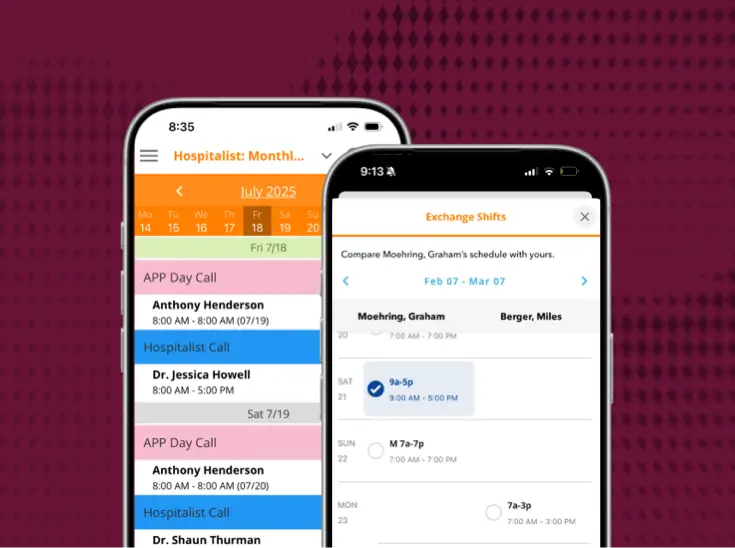
HSS implemented PerfectServe to successfully transition from pagers to smartphones, from disparate communication processes to a centralized contact system, and from delayed communication to instant connection with the right provider at the right time.
Critical Lab Results
Before PerfectServe, HSS relied on a manual process to deliver critical lab results. The lab tech had to call the ordering provider and ask them to log in to Epic to view the results. A live verbal exchange was required to satisfy HSS’s internal protocols, so leaving a voice message was not permitted.
Depending on the physician’s schedule and workload at any given point in the day, it could sometimes take a while before a message was relayed and the results viewed. Critical results are called “critical” for a reason, so a timely response and proper intervention are necessary to avoid patient harm.
Through integration with HSS’s Laboratory Information System, PerfectServe’s Dynamic Intelligent Routing® now automatically delivers each alert to the appropriate provider as soon as a critical result is verified. With all relevant information and patient context in the message, the provider can acknowledge the result in as little as seven seconds. PerfectServe also tracks when each result is received, read, and accepted/declined by the recipient.
Accepting closes the loop, while declining sends a message back to the lab for follow-up. Messages that are unacknowledged after six minutes are automatically escalated to the next provider in line.
Specialty Consult Requests
Dynamic Intelligent Routing also automatically directs requests for neurology and stroke protocols and consults. Regardless of who’s on-call or what kind of schedule changes have happened at the last minute, the right provider receives the request almost instantly.
Since implementation, HSS’s preoperative medical doctor has been contacted over 8,000 times, with 80% of urgent messages read in five minutes or less. Similarly, the neurology department has been contacted for consults more than 500 times via PerfectServe. 85% of these requests were retrieved in five minutes or less.
Sepsis Notifications
HSS uses PerfectServe to send out sepsis alerts using a two-part workflow:
- The nurse alerts a physician assistant (PA) to a possible case. Then the PA alerts the responsible physicians, if necessary (Modified Early Warning Score [MEWS] and Pediatric Early Warning Signs [PEWS]).
- If needed, an alert is sent to the Sepsis Response Team and automatically escalated every minute until a doctor responds.
Since going live, nearly 700 messages have gone out to the MEWS and PEWS groups. Only nine of those were further escalated to the Sepsis Response Team. The relatively low number of sepsis alerts is largely attributed to PerfectServe’s ability to quickly and preemptively activate the MEWS and PEWS teams.
Rapid Response Teams
PerfectServe also reduced HSS’s rapid response wait times to less than two minutes. This is a potentially life-saving improvement in situations where a patient’s condition may be worsening dramatically and fast intervention is critical.
An additional review of the “signal one” alerts (similar to code blue alerts) showed that PerfectServe reduced the median rapid response wait time from two and half minutes to just 40 seconds—an improvement of 73%.
Staff Response Times
Further analysis found that out of 8,000-10,000 monthly conversations conducted at HSS via PerfectServe, the average response time was less than 3.5 minutes. HSS physician assistants read 96% of initiated conversations from PACU and inpatient floors in under 15 minutes.
These efficiency gains give clinicians more time to focus on patient care and likely contribute to the rise in HSS’s Press Ganey survey results. Both the “Response to concerns” and “Staff address emotional need” categories have risen by 1.2 points.
In the increasingly digital world of healthcare, technology can sometimes detract from time spent on face-to-face patient interactions. That’s why technology that does the opposite by decreasing friction and giving time back to clinicians is worth its weight in gold.
Reducing Readmissions
Because PerfectServe also provides HSS with a system-wide answering service, covering approximately 175 clinics, all of the organization’s clinics have a built-in workflow for post-operative patients.
With the touch of a button, PerfectServe can facilitate an immediate connection to a clinical nurse practitioner when one of these patients calls an HSS clinic—regardless of the reason or urgency of the call. Post-surgery access to a provider is crucial for mitigating potential problems and helping patients adhere to their care plan.
Better Communication, Better Care
The results at HSS show that fast, accurate communication can simultaneously improve patient care and boost overall patient satisfaction. Manual, inefficient workflows that simply can’t facilitate care of the highest quality have been around for so long that they sometimes seem like the only option. But thankfully, the right solution for banishing these dated workflows already exists.
Learn more about how PerfectServe’s Clinical Collaboration solution can transform patient care and drive better satisfaction scores at your organization. You can also download the complete HSS case study to learn more about the results they’ve achieved with PerfectServe.
Discover the latest from PerfectServe





.jpg)


.png)






Bring us the workflow that [hurts most]
We'll show you how it runs on PerfectServe, with your teams, your sites and your EHR.