





Medical Answering Service Cost: Hidden Fees & Pricing Guide
Picking a medical answering service takes more than checking who has the lowest monthly rate. For healthcare organizations already dealing with rising operating costs, clear pricing matters just as much as the price itself.

Picking a medical answering service takes more than checking who has the lowest monthly rate. You need to understand pricing, what's included in a starting price, and whether it stays the same as you grow. Many vendors quote a low rate up front but add charges for call volume, after-hours coverage, or holidays until the bill looks nothing like the quote.
For healthcare organizations already dealing with rising operating costs, clear pricing matters just as much as the price itself. 1 Before you sign with a vendor, look deeper than the initial quote. Compare billing models, watch for hidden fees, check how well the service scales, and weigh the communication capabilities against what you'll actually need long-term.
PerfectServe vs. Other Medical Answering Services
The table below highlights how pricing structures often differ between PerfectServe’s intelligent answering services and other vendors, comparing billing models, included services, and potential long-term costs. 2
The key takeaway here is the sticker price isn’t always the best offer, and the lowest advertised price doesn't always mean the lowest long-term cost. If you understand how the pricing works, what's actually included, and how costs shift as you grow, you're less likely to get hit with surprise expenses down the road.
Medical Answering Services Pricing Models
There isn’t a universal price, because vendors use different billing models. Here’s an overview of the models below:
- Flat monthly pricing: Organizations pay one recurring fee for an agreed level of service. It’s predictable and easy to budget for, though it may include capacity you don’t fully use.
- Call volume pricing: One of the most common pricing models, vendors bill for calls answered, minutes used, messages sent, live transfers, and overflow calls. The base rate might look fine on its own, but when flu season hits or a provider calls out, volume swings can drastically impact your bill.
- Tiered pricing: Vendors offer packages built around estimated monthly usage, from small practices to large health systems with expanded support. This is more predictable than usage billing, but overage charges still apply once you exceed your tier.
- Enterprise custom pricing: Large health systems usually have more communication needs than what a typical answering service provides. Because of that, enterprise vendors build a custom proposal around an organization's size, workflows, and integration needs.
Want to calculate the cost savings you could achieve with a modern medical answering service? Calculate your medical answering service cost savings here.
What Hidden Costs Do Medical Answering Services Have? Volume Charges, Surcharges, Integration Fees, & More
For many organizations, the monthly invoice doesn’t match what was discussed during the sales process because the advertised rate often covers only a base service. As usage grows or workflows get more complex, additional charges might start to appear.
That doesn’t mean a vendor hides fees on purpose, but buyers still need to read the contract closely before signing. Here’s what gets overlooked most often.
Call volume charges
Variable billing tied to call volume is one of the biggest pain points healthcare organizations report. A month with double the normal volume can mean a much larger invoice, which makes budgeting difficult for finance teams.
Holiday and after-hours surcharges
Healthcare never closes, but some vendors bill nights, weekends, and holidays differently from standard business hours, with separate charges for federal holidays, weekend coverage, overnight answering, or high-priority escalations. These fees look small individually but add up fast for organizations that lean on after-hours support. It’s worth asking every vendor to explain exactly how coverage outside normal hours is billed before you sign anything.
Charges for additional services
Appointment scheduling, on-call lookups, secure messaging, directory updates, escalation management, additional departments or locations, and extra user licenses are often billed separately even when buyers assume they’re bundled into the base rate. Knowing what’s included versus what’s an add-on prevents surprises once the service is live.
Workflow inefficiencies
Sometimes the workflow itself is the real cost. Before modernizing communication, clinicians at Summit Health frequently called the answering service just to check who was on call.3 When answering services are used for tasks that could be automated, costs rise without improving efficiency.2 It’s worth asking whether a better workflow could eliminate some of those calls entirely.
Integration and implementation fees
EHR integrations, secure messaging configuration, staff training, API access, and custom workflow development aren’t always included in the base price. Not every organization needs all of these, but enterprise buyers should know upfront which implementation work is included and which is billed as a separate professional service. A detailed implementation plan prevents surprises later.
Cost of outgrowing your vendor
A low-cost service that works for one practice may not scale to multiple specialties, locations, or more complex escalation paths. If the platform can’t grow with the organization, switching later brings its own costs: contract termination fees, retraining, workflow redesign, data migration, and lost productivity during the transition. A platform built to scale may cost more upfront but save money over the life of the contract.
Cost of service disruptions
Some organizations end up shopping for a new vendor because their previous service shut down or couldn’t keep up. Replacing a critical communication system on short notice is disruptive at the least, so vendor stability deserves a place in the purchasing decision.
Cost of AI capabilities
Many vendors promise amazing AI advances, but it’s important to know whether their AI capabilities are designed from the ground up for healthcare call management. If you’ve tried AI before and it failed, it’s because most AI tools are not built for healthcare and require a blank-slate setup.
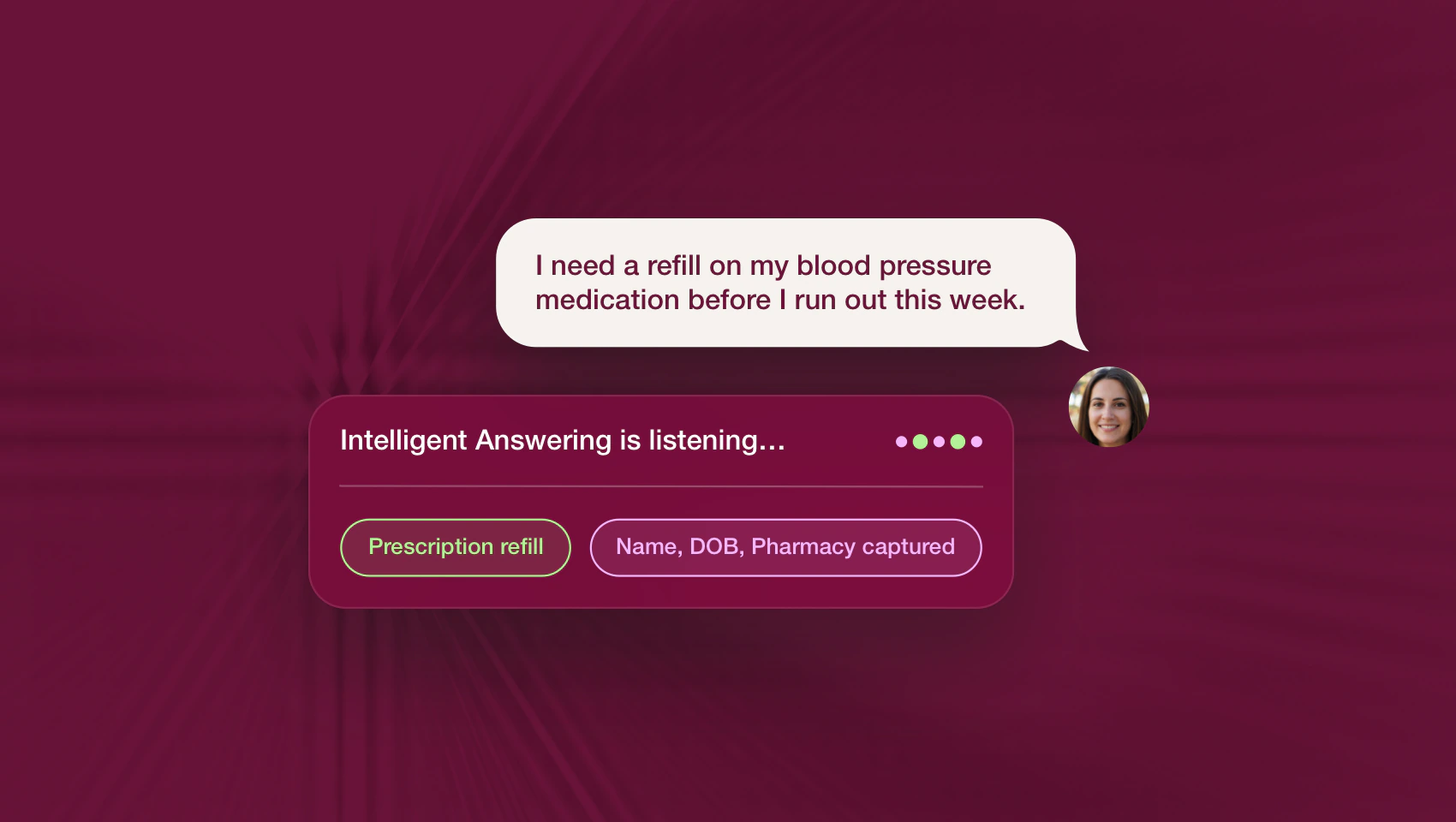
Purpose-built AI tools like PerfectServe’s Intelligent Answering Agent, Sloane, are built to understand caller intent and route calls to the right place every time. Intelligent Answering modernizes the call experience with natural conversation and routes only truly clinically urgent calls to the on-call provider.
Sloane isn’t a chatbot, and she’s configured based on your practice’s call history so you don’t start from scratch. You can get an overview of Intelligent Answering below.
PerfectServe Has Transparent Pricing, So You Can Measure True ROI
For healthcare orgs of all sizes, the goal isn't simply paying less for communication. It's reducing delays, eliminating manual work, and helping patients reach the right clinician faster. That means evaluating a medical answering service based on total cost of ownership, not just the monthly invoice.2
Unlike vendors that rely on standard packages or usage-based billing, PerfectServe evaluates each organization's communication workflows before recommending a solution. Pricing reflects factors such as organization size, facilities, integrations, clinical routing requirements, and implementation scope, giving buyers a much clearer picture of what's included from the start.2
Where organizations see measurable ROI
Instead of lowering costs on paper, many organizations reduce unnecessary work altogether:
- Summit Health automated after-hours communication and scheduling, eliminating the routine calls clinicians were making to check who was on call and freeing more time for patient care. Read the Summit Health case study.3
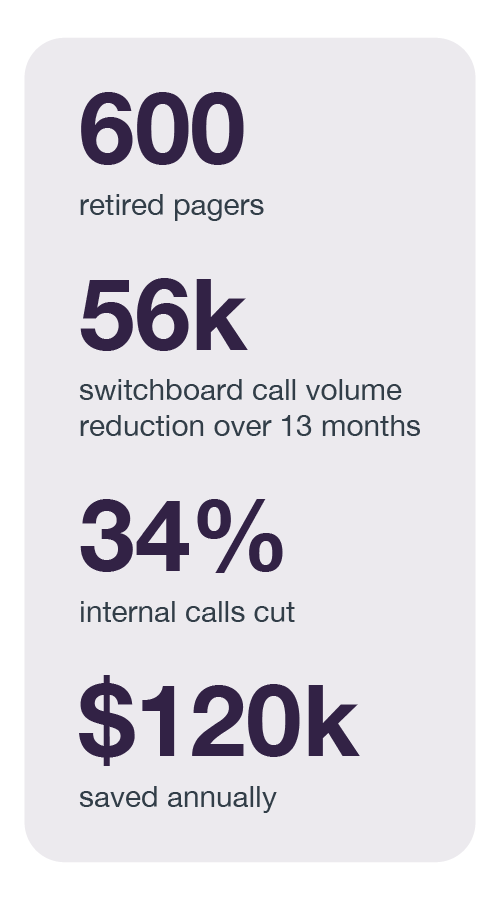
- Munson Healthcare replaced its legacy call center infrastructure and approximately 1,500 pagers with PerfectServe's communication platform. The result:
- Retired 600 pagers
- Reduced switchboard volume by 56,000 calls over 13 months
- Cut internal calls by 34%
- Saved approximately $120,000 annually
See the full Munson Healthcare case study. 6
Neither organization achieved these results by negotiating a lower monthly rate. They achieved them by removing communication bottlenecks and unnecessary manual work.
Questions to ask when comparing medical answering service vendors
When evaluating vendors, it’s important to gain an understanding of your current workflows so you can identify where you need the most help. Internally, ask:
- How much staff time is spent routing calls manually?
- How quickly are our urgent messages delivered?
- Do our providers know how to see who is on call?
- Do we understand our current bill and budget?
- Do we want/need to embrace AI, and would it benefit our call workflows?
Once you understand your own strengths and weaknesses, you can work with the vendor to understand how a service will improve communication in your organization. You should ask the vendor:
- What pricing model does the vendor offer?
- Can the service support your current workflows?
- How quickly are calls addressed with the service?
- Can the platform scale without replacing the entire system?
- Are secure, HIPAA-compliant messaging and clinical workflows included, or sold as add-ons?5
- Are AI capabilities included in your pricing, or as an add-on? What will the capabilities do for our practice?
These factors determine long-term ROI far more than the advertised monthly price.
Looking Beyond the Monthly Price
The right medical answering service should deliver more than predictable costs. It should improve communication, reduce administrative burden, and help clinicians reach the right people faster. It should also scale with your organization, support secure clinical workflows, and eliminate unnecessary manual steps that consume staff time every day.
Over time, those improvements often create more value than choosing the lowest monthly quote. If you want help evaluating your current answering service needs, schedule a call today and let us walk through your current workflows.
If you're evaluating vendors, learn how PerfectServe's medical answering service combines transparent pricing with integrated clinical communication workflows. You can also request a personalized demo to see how the platform fits your organization's needs, or contact our team to discuss your communication requirements.
See it working for real teams






.jpg)





.png)





Bring us the workflow that [hurts most]
We'll show you how it runs on PerfectServe, with your teams, your sites and your EHR.