




Smarter Alert Routing: How to Reduce Alarm Fatigue
An alert can stem from nearly anything. When those alerts reach the right person at the right time with the right context and urgency, they help clinicians understand what needs attention and how to respond appropriately.

What does the Boy Who Cried Wolf have to do with nursing?
More than you think. At its core, the story is about what happens when warnings keep coming but rarely require action: eventually, people stop paying attention. That same dynamic plays out in hospitals and other healthcare settings, where clinicians are surrounded by constant pings from monitors, call systems, patient requests, and a growing number of connected devices.
Over time, those alerts (the majority of which don’t require immediate action) can desensitize clinicians and make it easier for urgent ones to get lost in the noise.
That desensitization is known as alarm fatigue, and unlike the lesson in the fable, the consequences are far more serious. A missed or delayed response can increase provider stress, delay patient care, and even compromise patient safety.
Understanding Alarm Fatigue and Why It’s More Than a Volume Problem
An alert can stem from nearly anything: a patient asking for a glass of water, someone needing simple assistance, a lab result, a low battery, or a monitoring device detecting a change in someone’s condition. When those alerts reach the right person at the right time with the right context and urgency, they help clinicians understand what needs attention and how to respond appropriately.
The problem is that most alerts don’t require immediate action. In fact, an estimated 85-95% of alarms are false or require no intervention. Every single one still demands attention, meaning clinicians repeatedly have to stop what they’re doing, assess the message, and decide what to do next.

Over time, that constant, often unnecessary exposure can lead to alarm fatigue, which the American Association of Critical-Care Nurses defines as “sensory overload causing clinician desensitization, resulting in an increased rate of missed or delayed responses to alarms.”
That noise can come from several places:
- Nurse Call: Alerts generated when patients use nurse call systems for everything from non-clinical requests, like asking for a glass of water, to more urgent needs that do require immediate attention, like a patient experiencing pain.
- Time-Sensitive Results: Notifications that let care teams know when lab, radiology, or other diagnostic results require timely review or action.
- Patient Monitoring Devices: Alerts triggered by changes in a patient’s monitoring devices or the equipment itself, ranging from low-priority notifications, such as a low battery for a non-important device, to potentially life-threatening events like abnormal heart rhythms or changes in oxygen saturation.
- Medication and Infusion Systems: Alerts from medication administration systems and smart pumps that flag issues like infusion interruptions, occlusions, medication interactions, or other potential problems requiring clinician review.
- Patient Safety Systems: Alerts generated by technologies designed to prevent or detect safety events, such as bed-exit alarms, fall-detection systems, or other alerts related to a patient's risk of injury.
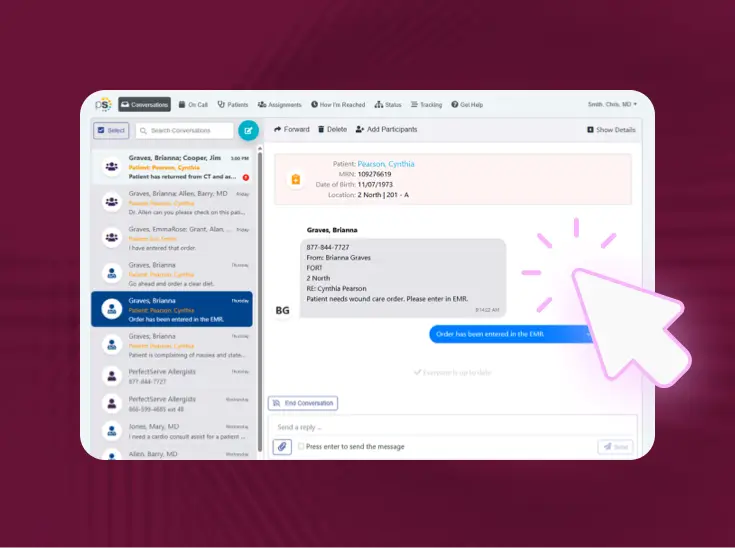
- Clinical Communication: Messages and notifications from secure messaging, care-team communication, and escalation systems that alert clinicians when they have a new request, update, or issue requiring their attention.
And that’s not an exhaustive list. Nurses may also receive alerts through overhead pages, pagers, personal devices, and other systems, including emergency notifications for severe weather events.
All of those signals compete for the same limited resource: attention.
Each alert serves a purpose, but when they come from different systems and carry different levels of urgency, the chance of delays, missed information, and diminished patient care increase. And in the worst cases, those communication breakdowns can contribute to sentinel events or other oversights that compromise patient safety.
In fact, according to The Joint Commission, communication breakdowns contribute to 70% of sentinel events, many of which stem from a reliance on communication systems that:
- Operate in silos across teams and patients
- Lack the context or data needed to inform decisions
- Sit isolated from core systems and tools
- Are unreliable, unsecured, or inaccessible when needed most
That’s why reliability matters so much. “The systems have to be reliable,” says Annie McCoy, Advisor at AdvisorRN. “Whether I’m the one reaching out or the hospital is contacting me, I need to trust the system will lead to the right outcome.” When that happens consistently, it supports the overall wellness of both patients and clinicians.
Patient safety and clinician wellness go hand in hand
Alarm fatigue creates unnecessary risk to patient safety, but the impact doesn’t stop there. It also takes a toll on clinician wellness. In fact, a study of more than 2,100 nurses found those who frequently experienced alarm overwhelm were nearly 2.5 times more likely to report elevated burnout.
When clinicians are constantly interrupted, overloaded with information, or forced to "hunt and gather" for details, they spend more energy navigating the work around patient care than actually providing it. Over time, that friction adds stress, increases cognitive load, and makes an already demanding job even harder to sustain.

As Annie puts it, "breakdowns in communication drive inefficiency, and inefficiency sets us up for bad outcomes." For clinicians, that means repeated interruptions, more workarounds, and the constant need to stay “on” even when the signals don’t require their immediate attention. It also means feeling like they’re letting patients down even when the inefficiencies of their environment aren’t their fault.
That’s why high reliability organizations (HROs) are so focused on clinician wellness: less variability and more predictable processes make day-to-day work less chaotic.
As Miriam Halimi, JD, DNP, MBA, RN-BC, Senior Vice President of Client Services at PerfectServe explains, that level of reliability means continually improving and standardizing communication workflows to reduce the gaps, errors, and inconsistencies that disrupt wellness and lead to burnout. “Every step is complex,” she says. “Highly reliable organizations work to understand that complexity because they know breakdowns increase risk.”
That’s also the idea behind operational wellness, which PerfectServe’s Chief Customer Officer and Chief Clinical Officer, Kelly Conklin, MSN, CENP, says is one of the biggest opportunities for health systems today as they collectively navigate communication friction, inadequate scheduling practices, and workload fatigue.
“If health system leaders want operational discipline and flexibility that help staff deliver better outcomes,” she shared in an article on Healthcare Business Today, “they need to give clinicians what they’re asking for: fairer and more streamlined scheduling, integrated communication, and tech systems that follow through on the promise of making it easier to facilitate patient care.”
How intelligent alert routing can improve operational wellness and patient outcomes
A patient asking for water still needs a response. So does a patient whose vital signs suddenly change. The bigger issue, and major driver of alarm fatigue, is whether these alerts reach the right clinician, at the right time, and with enough context to act.
That’s where intelligent routing comes into play. Instead of simply sending an alert or notification to the masses, intelligent routing uses factors like situational urgency, clinician role, availability, and escalation rules to determine an alert’s path.
For example, a routine request, like asking for water, can go to the appropriate support staff. Meanwhile, an alert for a change in a patient’s condition can immediately go to the responsible clinician and other members of the care team. At the same time, escalation rules are in place to ensure the next clinician in line is alerted if the first one doesn’t respond within a defined period.
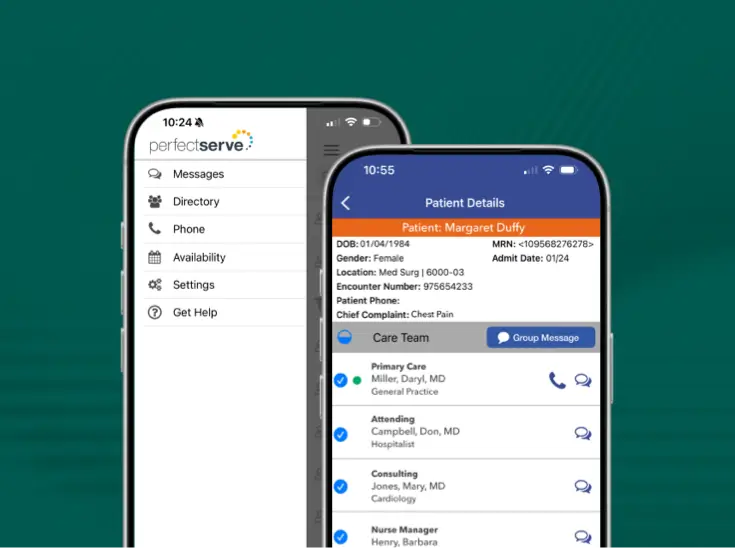
A large health system in Michigan put this approach into practice to improve response times for cardiac emergencies. Instead of relying on a pager-based workflow managed through an internal contact center, which often meant clinicians waiting on hold, PerfectServe allowed them to implement a system where any member of the incoming patient’s care team could initiate the alert. That alert sent a signal to all on-call cath lab providers on their mobile devices, which allowed them to check details, respond, and make their way to the hospital without having to call the contact center or wait for more information.
For Annie, that type of workflow comes back to simplicity: “If it's simple to find the on-call physician or who's on the care team, clinicians spend less time searching, and it takes the guesswork out of what they're trying to do.”
Removing the guesswork also supports reliability, Miriam explains: “Whenever you can hardwire workflows and standardize practices, it leads to less variability and fewer gaps in a process or workflow.”
In the context of alarm fatigue, that means using standardized alarm management protocols and communication templates so clinicians don’t have to reinvent the response whenever an alert appears. Instead, common requests follow a defined path, time-sensitive information is flagged as critical, and escalations automatically move an alert to the next person.
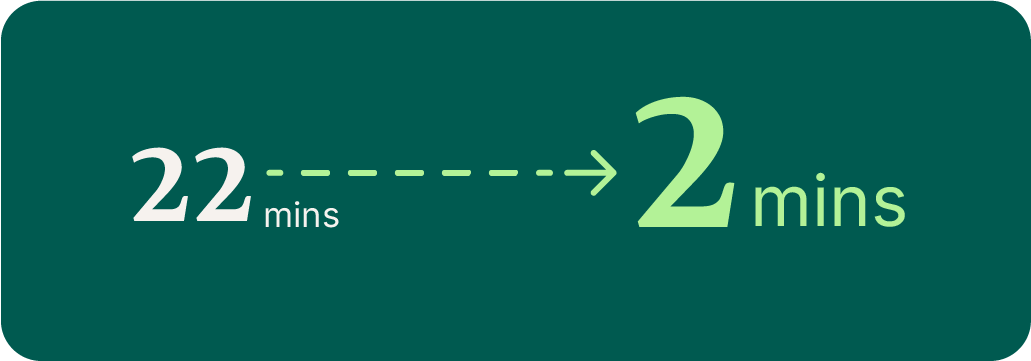
The impact speaks for itself: At one 772-bed acute care hospital in Michigan, the team was able to reduce on-call neurologist response time from 22 minutes to two. That’s a 90% decrease.
Quieter floors are safer floors and the key to operational wellness
When clinicians have to sort through unnecessary noise, decipher inconsistent communication, and jump across devices with undifferentiated tones, it’s harder for them to separate what matters from the noise.
As Annie explains, when organizations use multiple systems without clear accountability, "variability creeps back into the system, and we lose some of the predictability in our outcomes."
And when predictability disappears, so can safety. “When hospitals communicate in multiple modalities,” shares Kelly, “they form gaps in knowledge and shared understanding. Where those gaps exist, harm happens.”
That’s why healthcare organizations need to address alarm fatigue, but not necessarily through the lens of volume alone. Instead, reversing the trend requires clearer and more consistent routing that ensures the right information reaches the right clinicians at the right time, and in a way they can easily understand.
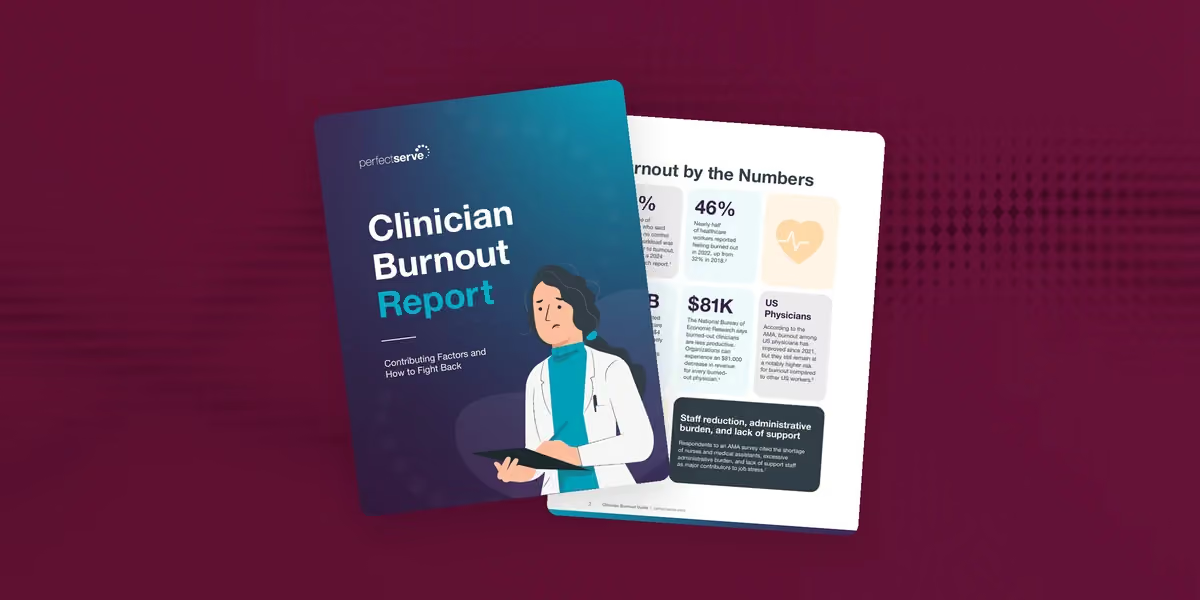
Want to create a more stable and sustainable work environment for clinicians? Download our Operational Wellness guide today.
See it working for real teams





.jpg)





.png)






Bring us the workflow that [hurts most]
We'll show you how it runs on PerfectServe, with your teams, your sites and your EHR.