




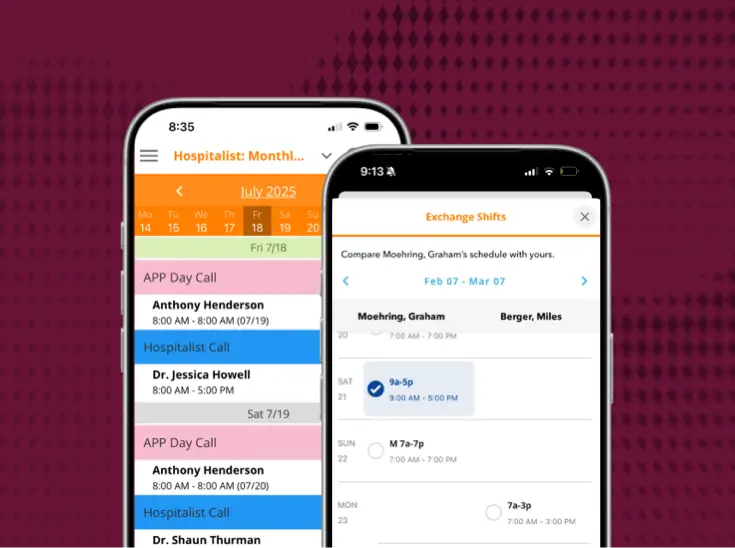
Strengthening Communication With EHR Embedded Messaging
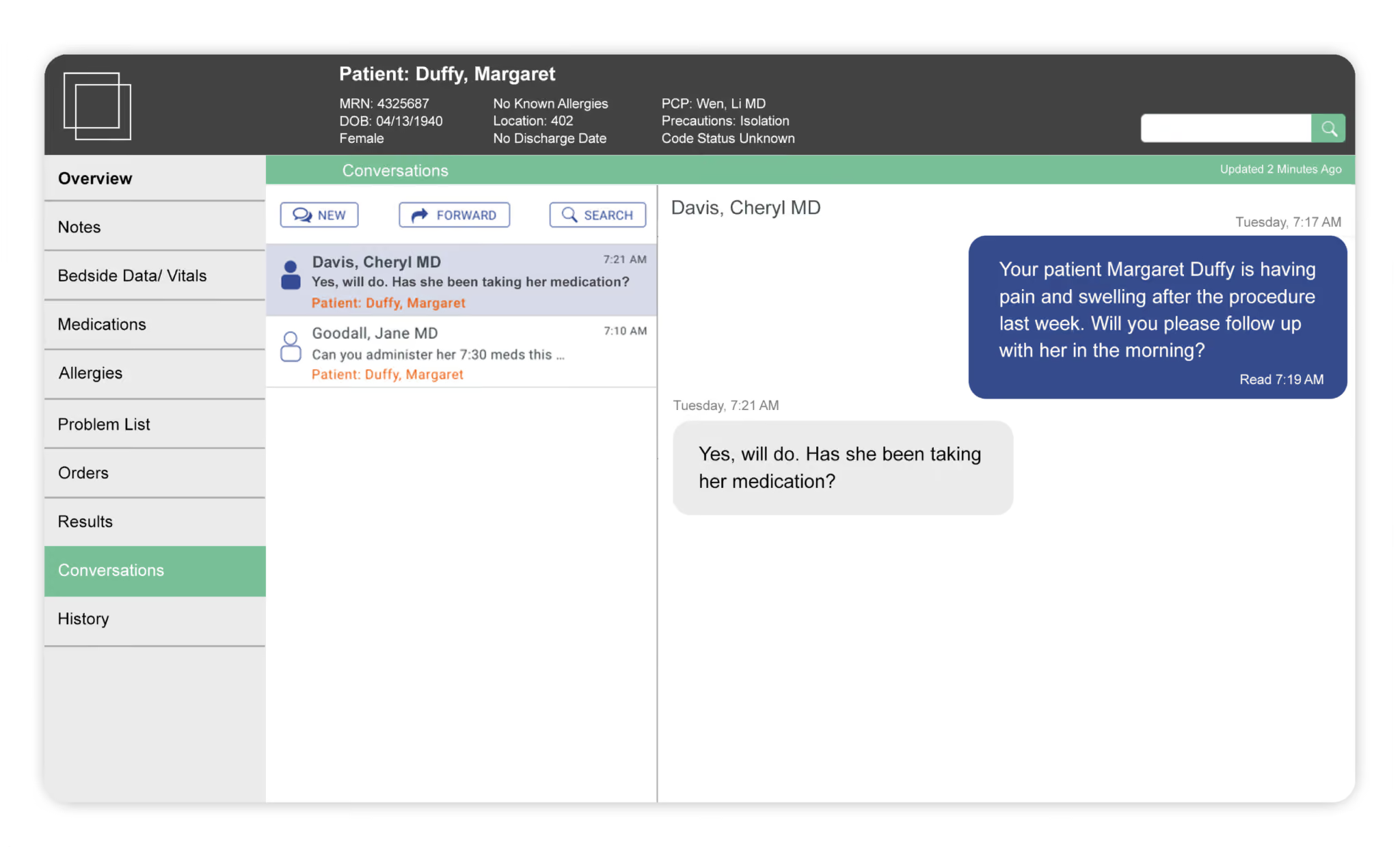
Fragmented Communication Channels
Effective clinical communication is a crucial element of high-quality patient care. Problems arise when communication tools and software are not properly integrated with other solutions used by the entire care team, which can make clinical communication a disjointed affair. When you have several different applications that create disparate channels for communication and collaboration, it means clinicians often have to overcome time-consuming, frustrating processes to do their jobs. This hinders patient care, decreases provider satisfaction, and ultimately contributes to burnout.
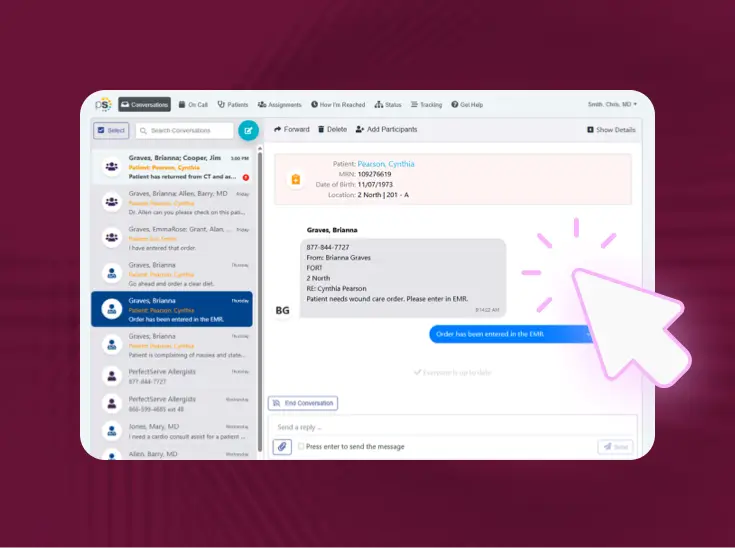
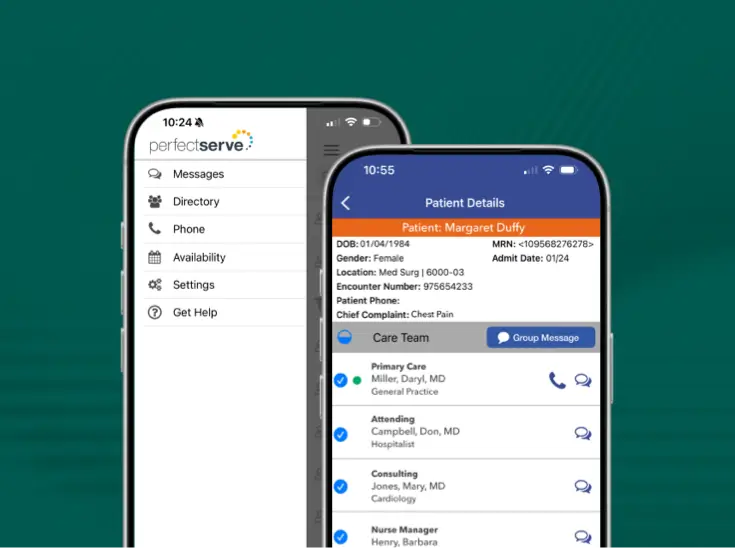
The electronic health record (EHR) often sits at the center of disjoined communication processes. EHRs have become ubiquitous over the past decade, and they’re immensely powerful (and necessary) tools, but facilitating care team communication is often not one of their strengths. That’s where companies like PerfectServe—which makes purpose-built communication solutions—can fill the gap. PerfectServe’s Clinical Communication software can be embedded directly within the EHR, which means clinicians can avail themselves of a highly capable, integrated messaging solution inside of the EHR environment that supports complex clinical workflows. Importantly, that means clinicians no longer have to toggle back and forth between the patient record and a separate application to communicate with other care team members.
Let’s take a deeper look at why this is beneficial and how PerfectServe’s embedded messaging capability strengthens communication across the care team.
Closing EHR Communication Gaps
Hospitals and health systems use EHRs to keep track of patient data and contact information and to track a patient’s health over time. Because EHRs were designed for data collection/storage and not for communication, they often complicate workflows for providers by forcing them to use solutions outside of the EHR to send communications, whether they’re intended for patients or other providers. As a result, many organizations purchase (or consider the purchase of) a more robust, standalone clinical communication platform.
Embedding a focused secure messaging platform in the EHR interface closes this gap by giving clinicians extensive messaging functionality inside of the tool they use most. Some EHRs have more basic native messaging capabilities, but in general, an embedded clinical communication solution means clinicians no longer have to toggle back and forth between the EHR and a separate communication platform to send important patient care information to other care team members. This puts critical patient information at the caregiver’s fingertips and allows clinicians to stay inside the EHR environment, which saves time, helps to reduce errors, and makes the clinician’s day-to-day workflows more seamless overall.
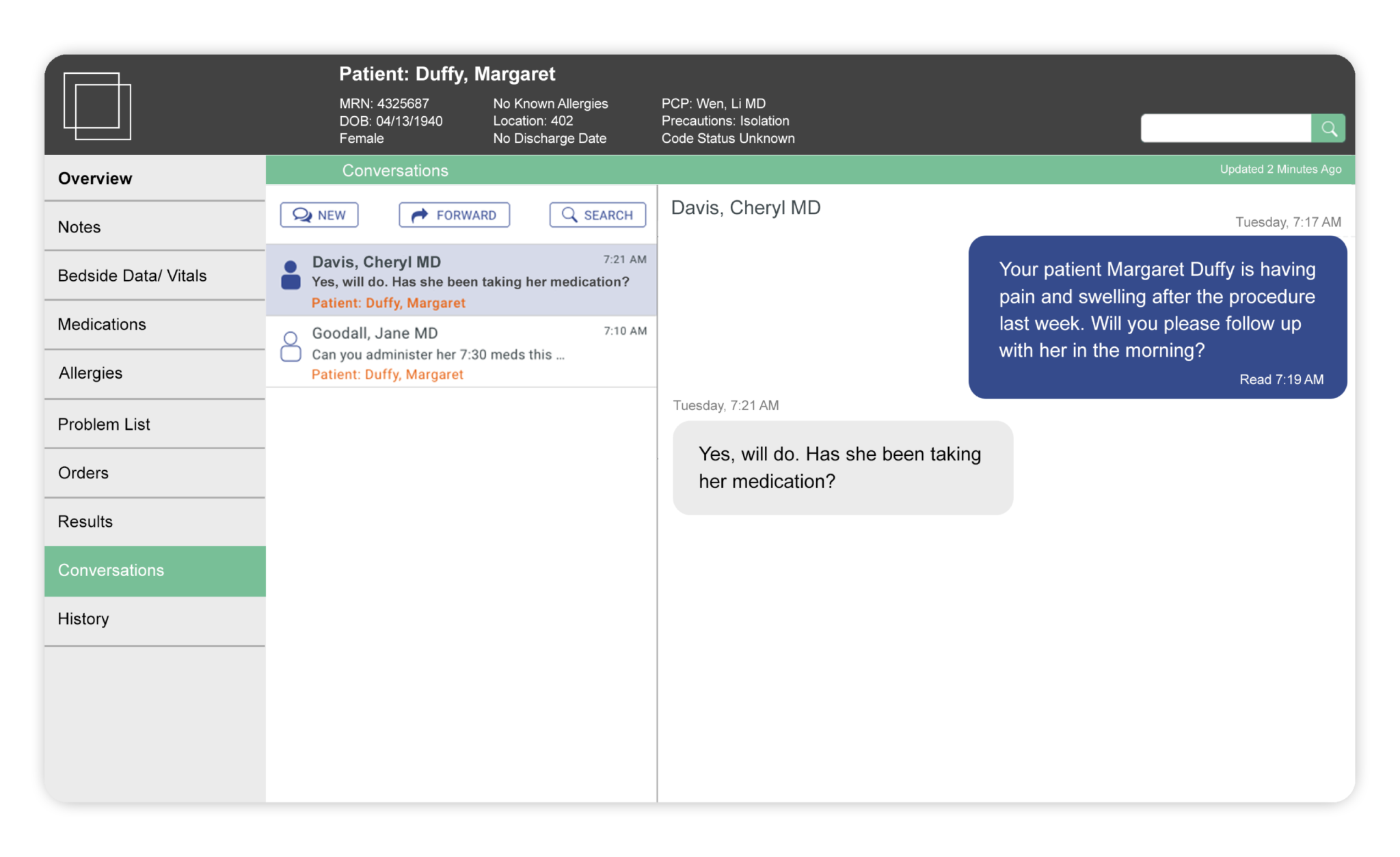
Core to PerfectServe’s messaging functionality is the proprietary Dynamic Intelligent Routing® rules engine, which is capable of accounting for many different variables (date, time of day, urgency, service line, on-call schedule, and more) to deliver communications to the right person at the right time. This routing sophistication remains intact when PerfectServe is embedded in the EHR, meaning it constantly evaluates the communication reason and urgency, references on-call schedules, accounts for alternate care team coverage, and checks other variables to ensure messages are always sent to the correct covering provider. With fewer communication delays, information necessary for care decisions is available faster, which reduces time to treatment. The limited (or nonexistent) messaging capabilities of EHRs make it impossible to drive these kinds of workflows without some outside assistance.
EHR Embedded Messaging Saves Time and Money
Because an EHR with embedded messaging keeps clinicians inside the EHR environment, there are many benefits for healthcare organizations that take advantage of this deep integration. Some of these include increased data integrity, time savings, reduced click fatigue, decreased likelihood of human error, easier access to patient data, and more transparent messaging and communication.1 After setting out to streamline communication workflows, increase provider satisfaction, and accelerate patient care by implementing EHR embedded messaging with PerfectServe’s Clinical Collaboration solution, the University of Tennessee Medical Center (UTMC) realized many of these benefits.
UTMC measured the impact of PerfectServe’s embedded messaging capabilities by dividing their staff into two study groups, chosen specifically because of their comparatively high communication volumes. Data was collected for provider and nurse satisfaction levels, the time it took to initiate a PerfectServe message pre- and post-deployment, and for overall PerfectServe utilization (measured by communications initiated).
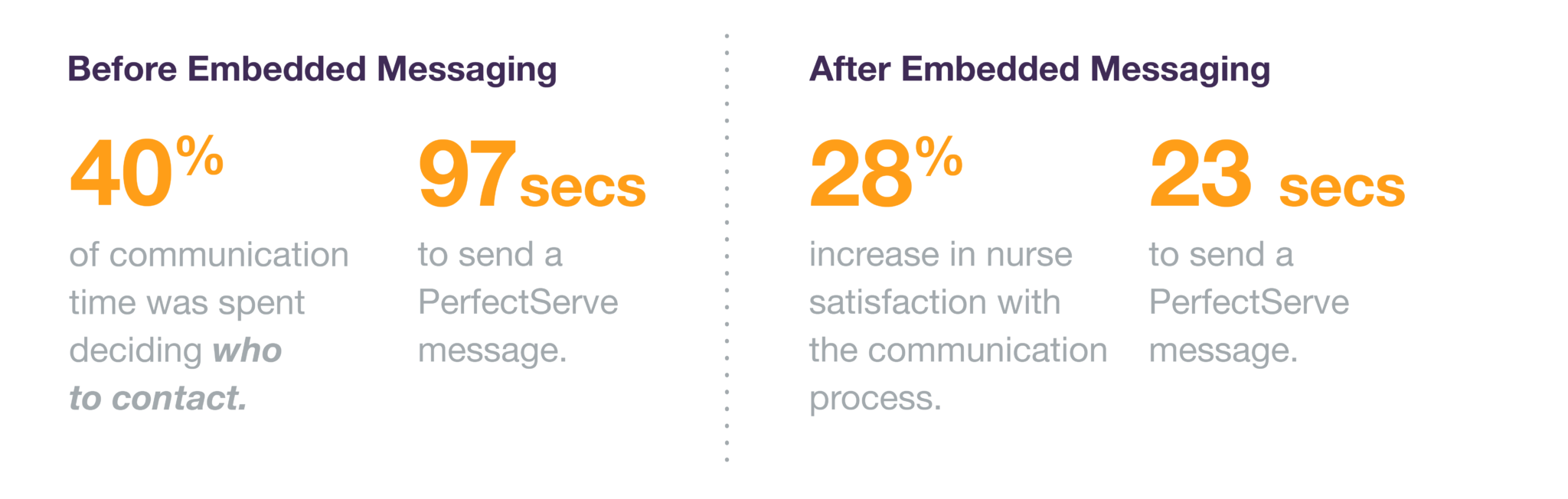
The results were hard to ignore. With the EHR’s existing capabilities augmented by PerfectServe’s competency with communication workflows, nurse satisfaction with communication processes increased by 28%, and provider satisfaction increased by 12%. With this setup, UTMC also saw a 76.3% decrease in time required to initiate asynchronous communication, meaning each message sent using PerfectServe embedded within the EHR took 74 fewer seconds on average. With UTMC’s nurses and ancillary team members initiating nearly 20,000 messages each month, the 74 seconds per message given back to essential care tasks was profound, totaling approximately $117,675 in annual time savings.
Learn What Embedded EHR Messaging Can Do for Your Organization
Communication has a tremendous, well-documented impact on hospitals, care teams, and patients. Clinical communication platforms have emerged in the past decade as a comprehensive solution for efficient and standardized healthcare communication. Embedding PerfectServe’s Clinical Collaboration solution within the EHR saves time, drives additional solution utilization, and increases clinician satisfaction.
To learn more about what EHR embedded messaging can do for your organization, schedule a demo to see PerfectServe in action today.
1 EHR Insider: Moving Beyond Basic EHR Secure Messaging, For The Record, Vol. 33 – No. 2 – P. 28, Julie Mills: https://www.fortherecordmag.com/archives/MA21p28.shtml
See it working for real teams





.jpg)


.png)



Bring us the workflow that [hurts most]
We'll show you how it runs on PerfectServe, with your teams, your sites and your EHR.