





Cardiology Call Scheduling: Achieving Call Equity Without Burnout
Call equity in cardiology is understandably difficult to achieve. Here's how to find a solution that can make the most accurate, fair, and scalable schedules possible.

Call equity in cardiology is understandably difficult to achieve. The specialty is complex and emergent on its own, and its numerous sub-specialties make fair schedules and call shifts that much more diffficult to acheive.
What adds to a complicated scheduling process is manual or Excel-based workflows that often require hours to work, edit, and approve. The schedules often need changes after the fact that take more hours to fix, share, and re-approve, not only delaying care delivery but adding a mountain of stress to scheduler's plate.
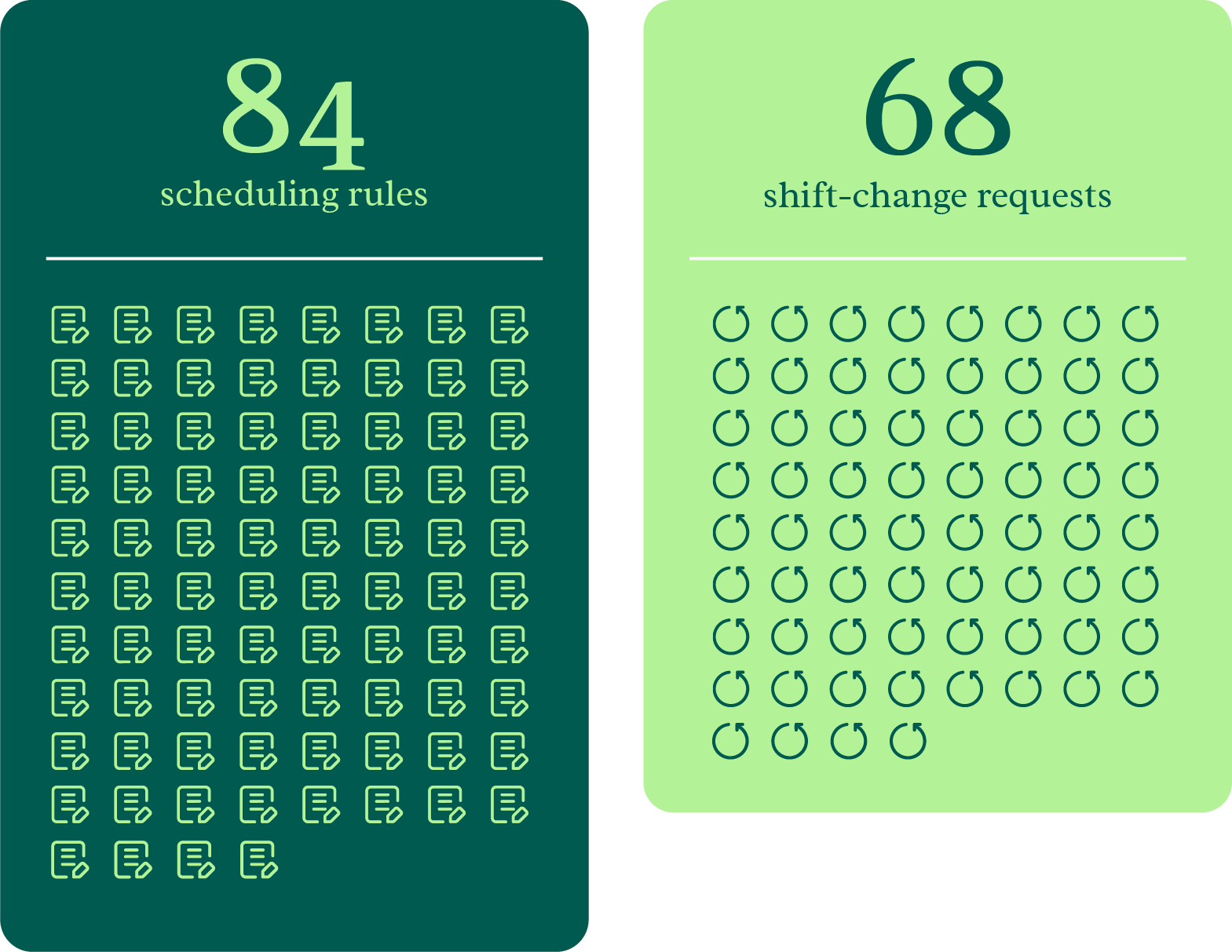
Cardiology practices might manage hundreds of scheduling rules and shift-change requests a month, numbers that are just not sustainable by hand. But the good news is, purpose-built scheduling software exists that's built exactly for the call volume and sub-specialty complexity that cardiology handles every day.
We'll look at why cardiology is complex to schedule for, why fair schedules matter, and how to find a solution that can make the most accurate, fair, and scalable schedules possible.
Cardiology on-call scheduling: why fairness matters
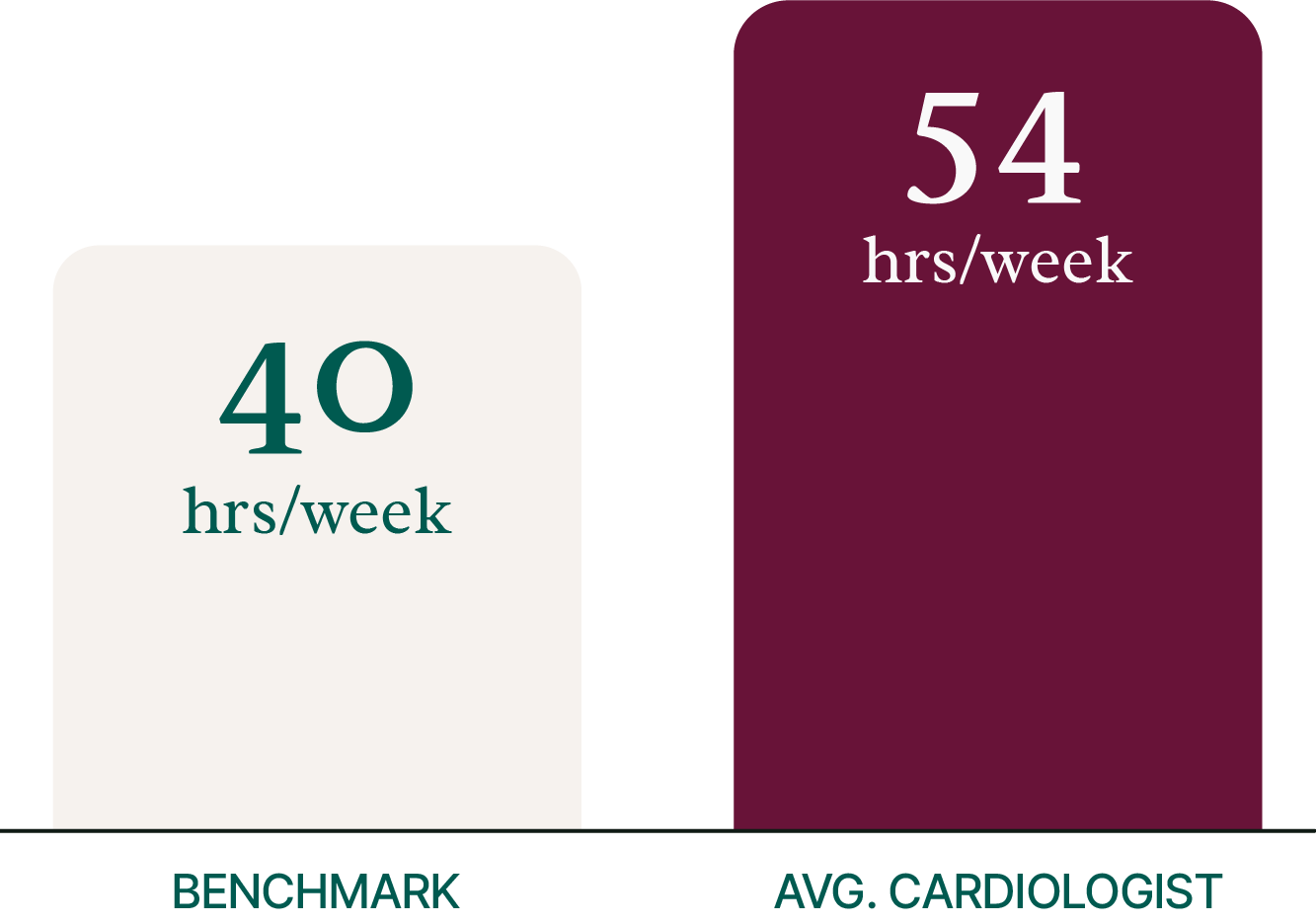
Building equitable call schedules matters for every specialty, but cardiologists feel some of the heaviest burdens that unfair schedules create. Cardiologists average 54 hours per week, which is well above standard full-time work.1 One study found 53% of cardiologists say they would take a pay cut in exchange for better work-life balance,2 and in our clinician wellness report, 49% of clinicians said their employer's current scheduling system does not adequately consider patient census or acuity when assigning schedules.3
Cardiology is among the highest-acuity specialties, which only compounds on the nature of call coverage. Cardiac emergencies don't wait for convenient call times, meaning speciality-specific call needs—cath lab, STEMI responses, and EP device coverage—must always be staffed to handle any number of emergencies. Cardiology also spans both inpatient and outpatient care, meaning all types of patient needs compete for the same physician time.
Even outside of call, regular shifts, consult requests, and scheduled procedures add to compounding feelings of burnout. And while fighting burnout in cardiology matters immensely, fairer schedules also means better clinician-to-scheduler relationships, as unfair schedules may appear as favoritism to providers who might feel they get placed on the less desirable call shifts more often than others.
When providers speak up or continuously ask off or to switch a shift without accommodation, they are more and more likely to feel less valued by their organization. Over 80% of cardiologists who reported themselves to be “completely burned out” cited having no control over workload as one of the main factors contributing to their unhappiness.4
Lastly, cardiology is an aging speciality. In 2019, almost 63% of active cardiologists were over 55 years old,5 meaning admin and other management staff must find ways to attract a younger workforce. 91% of residents surveyed said they placed a higher priority on work-life balance and workplace culture over compensation.6 Not to mention, turnover is costly. Depending on their sub-specialty, replacing a cardiologist can run an average of $1.8-$2.8 million.7
What all of this tells us is that fair call schedules matter beyond being balanced on paper. Fair schedules deeply impact provider well-being, work-life balance, and even patient care delivery. That's why it's essential to find tools that make it easier to create schedules that cardiologists actually like.
Why on-call equity is hard to achieve
Building truly equitable schedules by hand is largely impossible in today's complex care world, and not because schedulers don't try. The real job of a scheduler is to align a physician's availability with patient demand, but to do that, a scheduler has to account for provider availability, their credentials, the locations they practice at, travel time in between locations, their requested time off, resident pairing, and emergency consults and requests. They then have to do that for every provider on their care team.
If you get all of these things right, your patients get seen faster, and they get better access to their provider, the cath lab, and other specialty-specific treatments and needs. Get it wrong, and your patients don't get seen and providers become more frustrated.
So imagine you're a provider doing this by hand, surrounded by sticky notes and saved voicemails. Or maybe you use a rudimentary Excel sheet or other basic scheduling software that only prolongs your workflow. When one provider calls out sick, every other provider then has to shift around to accommodate. The hours of work you did to get the schedule where it is now just unraveled, and it's time to start over.
If your tool is based on manual scheduling of any kind, you're decades behind the curve. That's not a callout, as there are lots of reasons not to have a modern healthcare scheduling solution. Sometimes it price or complexity, or maybe you just haven't found the right tool. The question is, can you keep going the way you're going?
Fair schedules that account for sub-specialty credentialing
It's not a secret that some shifts are more preferred than others, and call is no different. Weekend cath lab call, overnight STEMI call, and holiday coverage are among the least favorite. Schedulers can try their best to ensure their providers are covering these shifts equally, but by hand, is that truly possible?
Not every cardiologist is credentialed to cover these types of shifts, making it that much more difficult to balance. Dr. Carrey is an interventionalist, by Dr. Osman isn't, so Dr. Osman can't take STEMI call. Dr. Grey works at the downtown and upper city locations, but she doesn't take call on any Mondays or Fridays downtown based on her contract. And, some providers have distinct preferences, like Dr. French, who wants Thursday evenings off for soccer practice, or Dr. Long, preferring call shifts 5 nights a week over taking any weekend call. Can your pencil-and-pen method keep up?
Another example: In March, Dr. Carrey was scheduled for Friday call twice, but ended up taking Dr. Osman's Friday call at the end of the month. Then Dr. Tyler took Valentine's Day even though he requested the night off to be with his wife. Dr. French covered July 4th, and Dr. Carrey took multiple STEMI calls in a row in August, and ... and so on and so on. Week after week, month after month, how fair have the schedules really been? Chances are, the schedules have more impact on burnout than you realize.
Cardiology is complex enough, and scheduling system shouldn't force an admin or physician scheduler to play referee. It's not just about making clinician work live easier, but also about empowering the scheduler to create schedules easier and more efficiently.
The AMA suggests that “physician practices and health systems might be able to ameliorate burnout—and hence, its damaging effects—by giving physicians more control over their jobs and workdays.”
How to build fair cardiology schedules
Fair scheduling is one of the only direct, controllable levers practice leaders have on burnout, and it doesn't have to be difficult. Fairer schedules:
- Improve provider satisfaction
- Balance provider supply and patient demand
- Increase visibility across the care team
- Improve care delivery and communication workflows
- Are easier to maintain and update in real-time
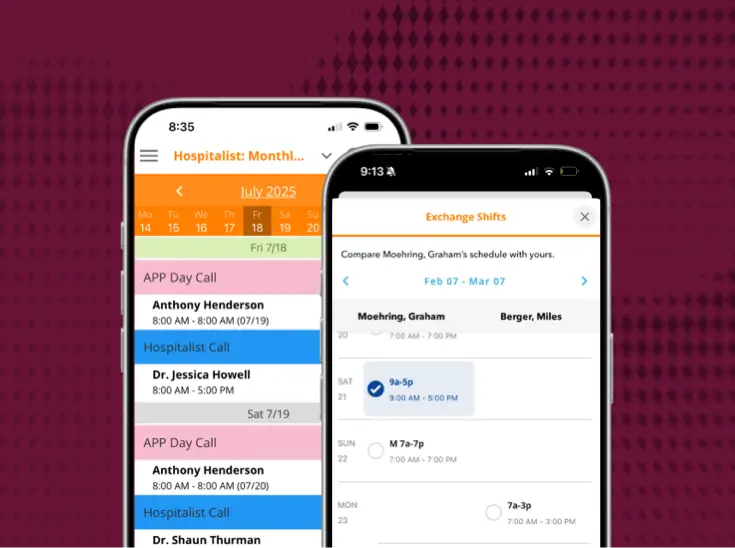
Intelligent healthcare scheduling solutions allow schedulers to build equalized schedules from the ground up. Cardiology scheduling software exists that can balance call schedules and shifts, optimize based on your team's credentials, and schedule based on patient demand. They can also generate transparent, custom reports so every shift can be audited in just a few clicks.
"Fair" schedules don't come from intention, and they certainly don't survive the change requests and shift swaps managed by hand over the past few years. Fairness comes from using tools that are designed with equitability at their core. And while high-acuity specialties like cardiology make it harder to get fair call shifts right, it also makes better schedules that much more valueable.
Sometimes, the complexity of schedules becomes an emergency. St. Luke's had just three months to replace their current scheduling solution, which was being discontinued. They had to implement optimized schedules across various departments in 11 different locations. They turned to Lightning Bolt due to its flexible and scalable growth capabilities. See how St. Luke's did it here.
Why automated scheduling is best for cardiology
Cardiology isn't getting any less complex. With multiple subspecialties, credentialing requirements, provider preferences, and high-acuity call coverage, fair scheduling takes more than good intentions.
Purpose-built scheduling technology can help practices build equitable schedules, reduce administrative work, and give providers more control over their time. Automated scheduling backed by the power of AI is best for cardiology due to its ability to balance complex organizational needs into organized, equalized shifts.
See how the Lightning Bolt handles cardiology's sub-specialty call rules and high-acuity shift distribution. Schedule a demo today!
See it working for real teams






.jpg)





.png)






Bring us the workflow that [hurts most]
We'll show you how it runs on PerfectServe, with your teams, your sites and your EHR.