





The Truth About Healthcare Interoperability
Interoperability needs to become a strategic priority for vendors and health systems alike to ensure a better experience for everyone.


Most healthcare technology vendors follow a standard playbook: build solutions that deliver value within their own ecosystems. From a business perspective, it makes sense. A tightly integrated platform can create a consistent experience and strengthen customer-vendor relationships.
But healthcare organizations don’t operate within a single ecosystem, and when critical systems can’t communicate, information gets trapped in silos, creating friction for care teams and delaying decisions that impact patients.
That’s why interoperability can no longer be a box to check on a list of technical capabilities. It needs to become a strategic priority for vendors and health systems alike to ensure a better experience for everyone.
Key Healthcare Interoperability Takeaways
- Healthcare systems can’t start from scratch. Their tech stacks represent years and years of decisions and investments, and they can’t just start with a clean sheet overnight.
- Closed ecosystems slow down care. When systems can’t readily share information, clinicians lose time trying to close the gaps.
- Interoperability requires vendors to work together. Yes, that may include competitors.
- The technology already exists. Cloud-native architecture, APIs, and AI make strong connections more achievable than ever.
Benefits of Interoperability in Healthcare
What’s the biggest benefit of healthcare interoperability? Simple: It removes barriers between technology systems. When those barriers are removed, clinicians can more easily access critical information to deliver more efficient patient care.
Other benefits include:
- Improved Patient Care: When clinicians have immediate access to a patient’s complete care history, they have all the context they need to make quick, well-informed treatment decisions.
- Better Care Coordination: Providers across departments, specialties, and locations can seamlessly share information to reduce communication and care gaps.
- Reduced Administrative Burden: Interoperability can mitigate duplicate documentation, manual data entry, and time spent searching for information across multiple systems. That gives clinicians more time to be with patients.
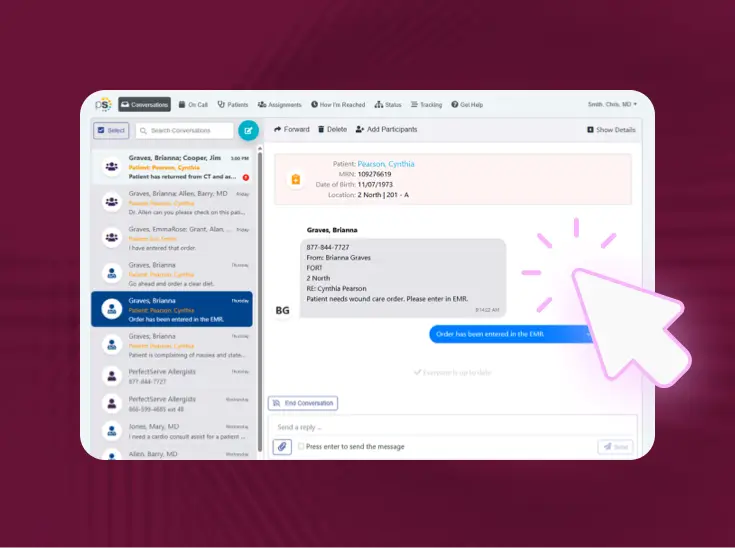
- Faster Clinical Communication: By connecting key clinical systems, important information like critical alerts, lab results, and other patient updates can automatically be delivered to the right provider at the right time to improve care team efficiency.
- Greater Operational Efficiency: Connected systems can streamline clinical workflows, automate manual processes, reduce IT burden, and maximize the value of existing technology investments without requiring a wholesale “rip and replace” approach.
What Interoperability Looks Like in Action
Interoperability in emergency care
A patient with sepsis arrives at the emergency department after being transferred from a rural hospital.
If the clinicians have immediate access to the patient's transfer notes, medication history, allergy information, and recent lab results, the patient’s chances of a positive outcome increase because it takes less time to gather needed context.
Why this matters: A connected care team (even across organizations) completes the care picture sooner, allowing them to find the right treatment without unnecessary delays.
Interoperability in complex care coordination
A pregnant patient with a high-risk pregnancy is receiving care from her OB-GYN, a maternal-fetal medicine specialist, and an endocrinologist managing gestational diabetes.
If all of these providers are on communication systems that can speak to one another, data and conversations can be accessed in one secure place, meaning the teams can work together to discuss the latest test results, review medication adjustments, and adjust care plans.
Why this matters: A care team that can stay connected across specialties will always be working from the same up-to-date patient information, reducing the risk of conflicting treatment decisions.
Interoperability for critical lab results
A patient is admitted to the hospital with heart failure symptoms, and a critical lab result reveals dangerous BNP levels that require immediate attention.
If the lab tech, nurse, and attending for that patient are all on one communication system, the lab result can be escalated if the nurse is busy with another patient or if the attending is unavailable to respond in a timely manner. This means the care team can quickly identify the cause and intervene before the patient requires more intense care.
Why this matters: When a provider doesn’t respond, connected technology can escalate critical labs even to the next available person, reducing the risk of delayed care during clinical emergencies.
Are there barriers to interoperability in healthcare?
Interoperability is one of those initiatives most organizations agree is important, but it might not be at the top of their priority list.
It's not because they aren’t interested; other things likely just take precedence. Healthcare leaders are constantly balancing competing priorities, including:
- Staffing shortages
- Financial pressures
- Cybersecurity concerns
- Regulatory requirements
With so many things demanding attention, improving how clinical, IT, and telecom systems connect can feel like a distant dream. And it makes sense, because health systems are facing more and more staffing and financial pressures:
- The nursing workforce is projected to see a decline of 64,000 nurses by 2030.1
- In 2024, the average financial disruption caused by cyberattacks was $1.47 million.2
- Hospitals lose between $3.9 million and $5.7 million annually due to nurse turnover on average.3
- Hospitals lose up to $9,000 per minute of downtime during a cybersecurity outage.4
On top of that, building meaningful interoperability requires significant investment in development and testing. That can mean creating hundreds of integrations with tech partners. Industry estimates suggest US hospitals collectively spend approximately $1.1 billion annually on interoperability and medical device integration already.5
Despite the cost, leaders know change is needed. 47% of health system CIOs identified the cost of initial and ongoing integrations as one of the biggest barriers to interoperability, but only 16% said their core EHR currently supports vendor-agnostic interoperability.6
The upfront cost of interoperability can't be ignored, but neither can the risks of siloed solutions.
Why Healthcare Interoperability Can’t Be Ignored
There’s a truth here that deserves attention: healthcare organizations already operate in a connected world, but they aren't optimized for it.
Most organizations rely on an EHR from one vendor, an imaging system from another, and dozens of other specialized apps for different workflows pertaining to specific departments and specialties. 91% of hospitals integrate third-party technologies for at least one clinical purpose, and 87% do so for at least one administrative purpose.7
Clinicians don't care which vendor owns the data. They just care whether they have the information they need. Since so many health systems already use multiple vendors and integrations, it's imperative they support the providers using those systems. That costly provider turnover? That's linked to siloed solutions providers are forced to use every day.
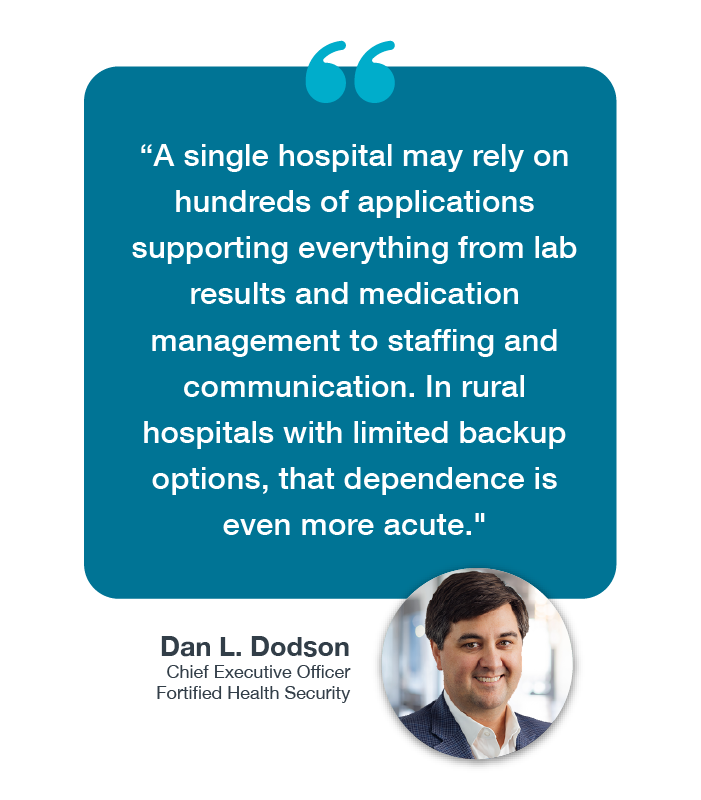
Studies have linked poor technology usability with higher rates of clinician burnout, job dissatisfaction, and intent to leave. In a study of over 12,000 nurses, poor EHR usability increased the odds of intending to leave by 31%.8 KLAS found that 40% of nurses who said their EHR contributed to burnout were likely to leave their organization within two years.9
Research shows adopting common interoperability standards could reduce interoperability costs in US hospitals by roughly $740 million per year.5 Combined with the money saved from not losing providers, interoperability savings start to add up.
Why Clinician Wellness Starts with Operational Wellness
The question is, what’s more costly? Investing in integrations that are proven to improve care team satisfaction and retention, or bleeding providers because of the prevalence of outdated, frustrating systems that make it harder to take care of patients?
That's why interoperability is a hill organizations should all be trying to climb. There are still some barriers to interoperability, but it’s hard to say they outweigh the benefits.
How to Improve Healthcare Interoperability at My Organization
No matter the size of an organization, supporting healthcare software interoperability will improve workflows and other daily operations for your care teams. Here are four steps to improve interoperability at your organization:
1) Take Advantage of the Cloud
Instead of relying on costly custom integrations, modern cloud platforms use standardized APIs to securely connect systems and share information in real time.
With cloud-based tech and strong healthcare integrations, the possibilities are almost endless:
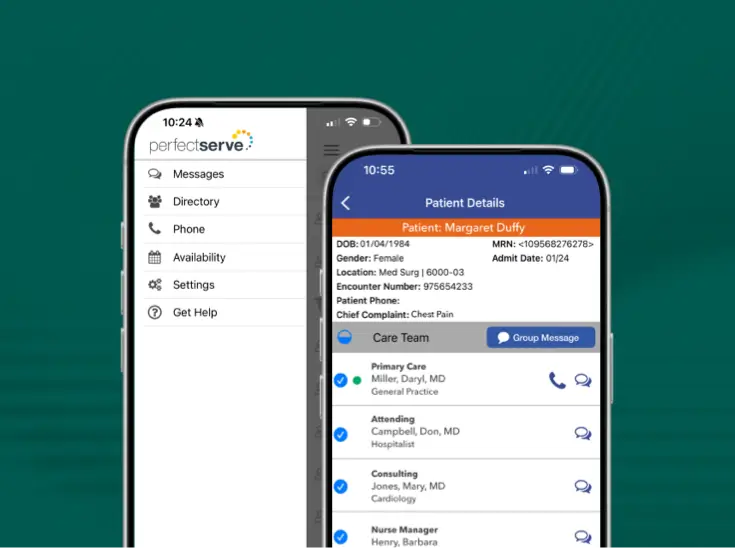
- Clinicians avoid having to search multiple applications for patient info.
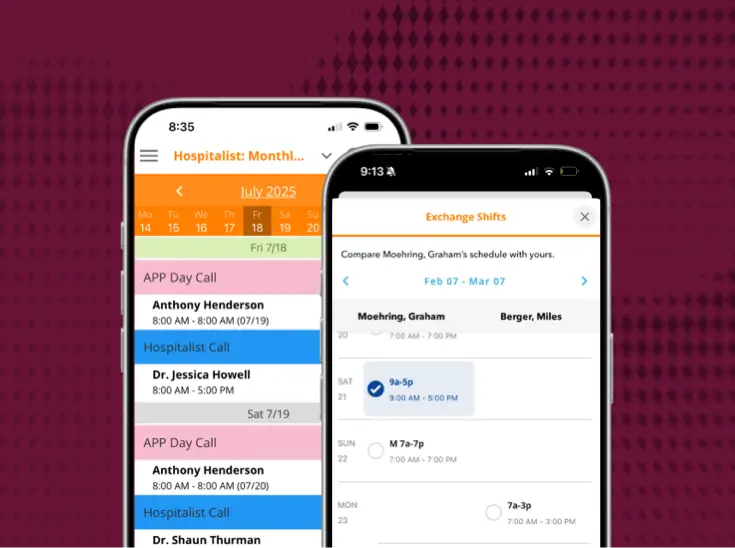
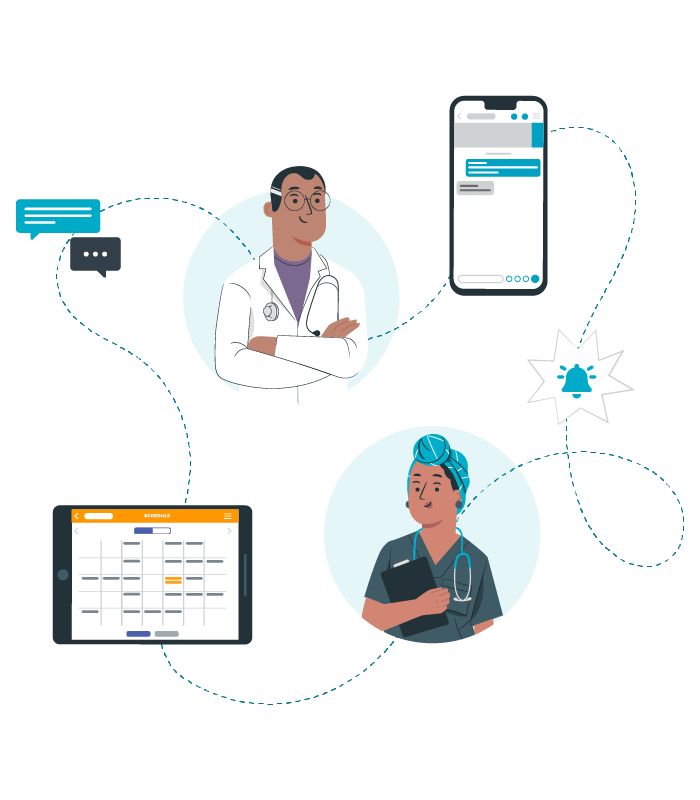
- Call schedules can be digitized and updated in real time to speed up provider communications.
- Data can flow automatically as patient conditions, schedules, and care plans change.
- Manual, planned hardware updates with downtime can become a thing of the past.
- Contact center operators can have a single pane of glass with all the information they need to direct call traffic.
2) Support Shared Governance
Interoperability requires alignment across the organization, so technology alone isn’t going to make it happen.
That’s where governance brings together all the key players inside an organization to ensure integration decisions are driven by actual care needs and organizational goals. This allows organizations to build connected systems that reduce friction and improve the care experience.
For more, check out this clinical communication governance strategy checklist.
3. Listen to Your Care Teams
Interoperability starts by knowing where the pain points lie. What siloed systems are causing problems?
Is the outdated schedule delaying care team communication? Does it take too long to deliver critical lab results to the ordering provider? Are nurses burned out because finding the on-call provider is a 10-step process that takes way too much time?
Your care team members know the answers. Listen to the issues they raise and their ideas for fixing them to begin piecing together what changes need to be made to current workflows. Then, look at the solutions you have in place to see how integrations might be able to help.
Work with your IT teams and vendors to begin making necessary changes that will allow your care teams to deliver faster care.
4. Partner with Forward-Thinking Vendors
Critically, integrations will only work if the solutions you use can be connected.
There are plenty of health IT vendors that don’t like to play nice with others, but that shouldn’t be the standard operating procedure. Many healthcare tech vendors understand that the end game is to deliver safer, faster patient care, and they’re willing to create solutions to help their health system partners do just that.
You don’t have to rip and replace your current solutions to make this happen. In fact, a lot of solutions can be connected with great impact. PerfectServe supports over 270 integrations with other technology solutions, and that catalog will only continue to grow.
Looking for a forward-thinking and collaborative partner to assist with your interoperability journey? Connect with us today to talk through your current tech stack. We’ll get you started!
Sources
- 2026 NSI National Health Care Retention & RN Staffing Report, NSI Nursing Solutions: https://www.nsinursingsolutions.com/Documents/Library/NSI_National_Health_Care_Retention_Report.pdf
- The Hidden Cost of Healthcare Cyber Attacks: Beyond Ransoms and Regulatory Fines, HIMSS Conference: https://www.himssconference.com/blog/the-hidden-cost-of-healthcare-cyber-attacks-beyond-ransoms-and-regulatory-fines/
- 2026 Healthcare Workforce Scan, American Hospital Association: https://www.aha.org/system/files/media/file/2025/12/2026-Health-Care-Workforce-Scan.pdf
- From Digital Innovation to Patient Harm: Why Healthcare Cybersecurity Is Now a C-Suite Imperative, Trellix: https://www.trellix.com/blogs/research/why-healthcare-cybersecurity-is-a-c-suite-imperative/
- Health Information Technologies: How Innovation Benefits Patients, Committee On Energy and Commerce: https://www.govinfo.gov/content/pkg/CHRG-113hhrg80806/pdf/CHRG-113hhrg80806.pdf
- Most health systems lack tools for vendor-agnostic interoperability: Survey, Becker's Health IT: https://www.beckershospitalreview.com/healthcare-information-technology/ehrs/most-health-systems-lack-tools-for-vendor-agnostic-interoperability-survey/
- Hospital Use of APIs to Enable Data Sharing between EHRs and Third-Party Technology, Office of the National Coordinator for Health Information Technology: https://healthit.gov/data/data-briefs/hospital-use-of-apis-to-enable-data-sharing-between-ehrs-and-third-party-technology
- Electronic Health Record Usability: Associations With Nurse and Patient Outcomes in Hospitals, National Library of Medicine: https://pubmed.ncbi.nlm.nih.gov/33797506/
- Dissatisfaction With EHR Increases Nurses’ Burnout Risk: Report, The Journal of Advanced Practice Nursing: https://www.asrn.org/journal-advanced-practice-nursing/3178-dissatisfaction-with-ehr-increases-nurses%E2%80%99-burnout-risk-report.html
See it working for real teams











.jpg)
.png)






Bring us the workflow that [hurts most]
We'll show you how it runs on PerfectServe, with your teams, your sites and your EHR.