



How To Convert the Medical Answering Service Into a System-Wide Clinical Asset
Background
The Harbin Clinic is the largest physician-led, multi-specialty clinic in the state of Georgia. Serving the community for over 150 years, they now have more than 250 medical professionals working in 40-plus specialties at 19 locations.
In 2024, the Harbin Clinic announced that it had combined with Atrium Health Floyd and become part of the Advocate Health system. Advocate Health has 69 hospitals across six states in the Midwest and Southeast.
Challenges
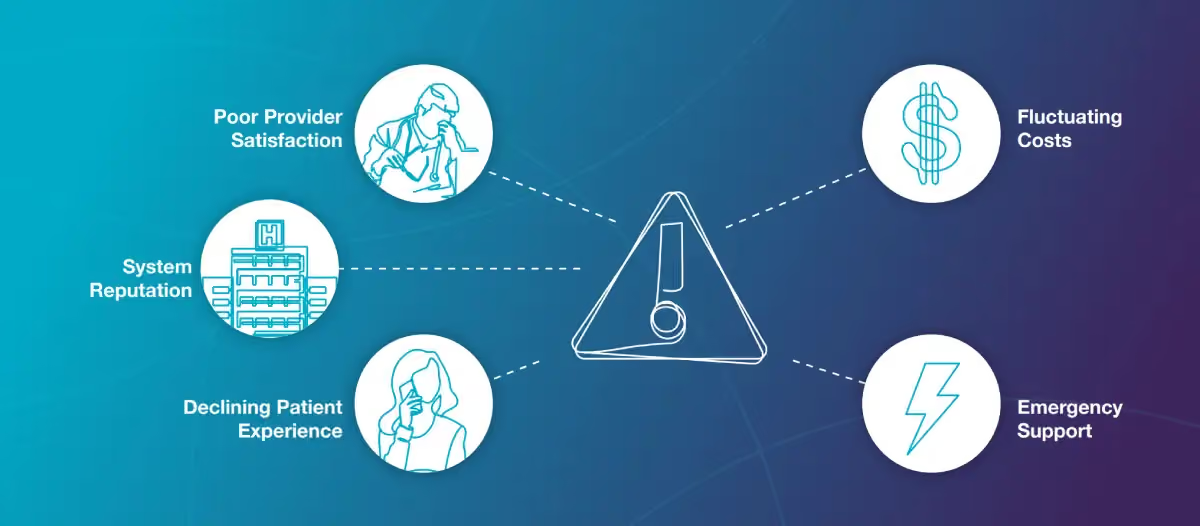
As a multi-specialty, multi-site physician group, The Harbin Clinic sometimes struggled to provide a consistent and efficient call-in experience for patients across all of their office locations. Because each specialty has its own care delivery needs and workflows, many clinic locations crafted their own ad hoc rules for call management that led to varied patient call-in experiences. For example, the clinical lab may close at 5:30 PM and send all inbound calls to a messaging system to be checked the next day, but the radiology or internal medicine sites may not close until 8 PM and send every after-hours call to the on-call provider. Every location used the same live answering service provider, but the variable communication rules made it difficult to create a consistent experience for patients, whose outreach was sometimes accompanied by long wait times and incorrectly routed calls.
Operators and providers felt the weight of the legacy system’s outdated technology. Agents struggled to handle elevated call volumes during busy weekend and holiday periods, and providers were often interrupted after hours by the delivery of non-urgent messages that didn’t require immediate attention. The Harbin Clinic needed a much better solution—one that could be tailored to their needs to simplify the call-in process, flexibly handle call volume fluctuations, improve wait times, and boost patient and provider satisfaction.
Creating Goals for Improvement
To find the best medical answering service on the market, The Harbin Clinic started by establishing a set of communication goals. This way, they had a detailed understanding of the capabilities they were looking for and how they expected them to improve daily operations. The goals were as follows:
1. Route Urgent Calls to On-Call Providers 100% of the Time
- With their live answering service, some urgent calls were not reaching providers. This was due in part to the aforementioned ad hoc rules put in place by differing specialties.
- They needed a solution that listened to patients. Their stance was that patients calling with urgent matters should always be connected to a provider.
2. Improve Patient Wait Times
- Data available to The Harbin Clinic suggested that most patients had an average wait time of 30-45 minutes, meaning it took that long to connect with a provider after speaking with one of the answering service agents.
- They wanted a solution that could drastically reduce the average wait time to improve the experience for their patients.
3. Elevate Provider Experiences
- Providers expressed a desire to have a better on-call experience. More specifically, they wanted a voice-to-text transcription option so they could read patient messages on their phone and understand the context of the situation before calling them back.
- Many providers strongly prefer this abbreviated workflow over listening to a complete voicemail to glean important information.
4. Manage Non-Urgent Calls
- The Harbin Clinic’s previous answering service provider often routed calls incorrectly. Most of the time, this meant clinicians were interrupted at night with non-urgent messages.
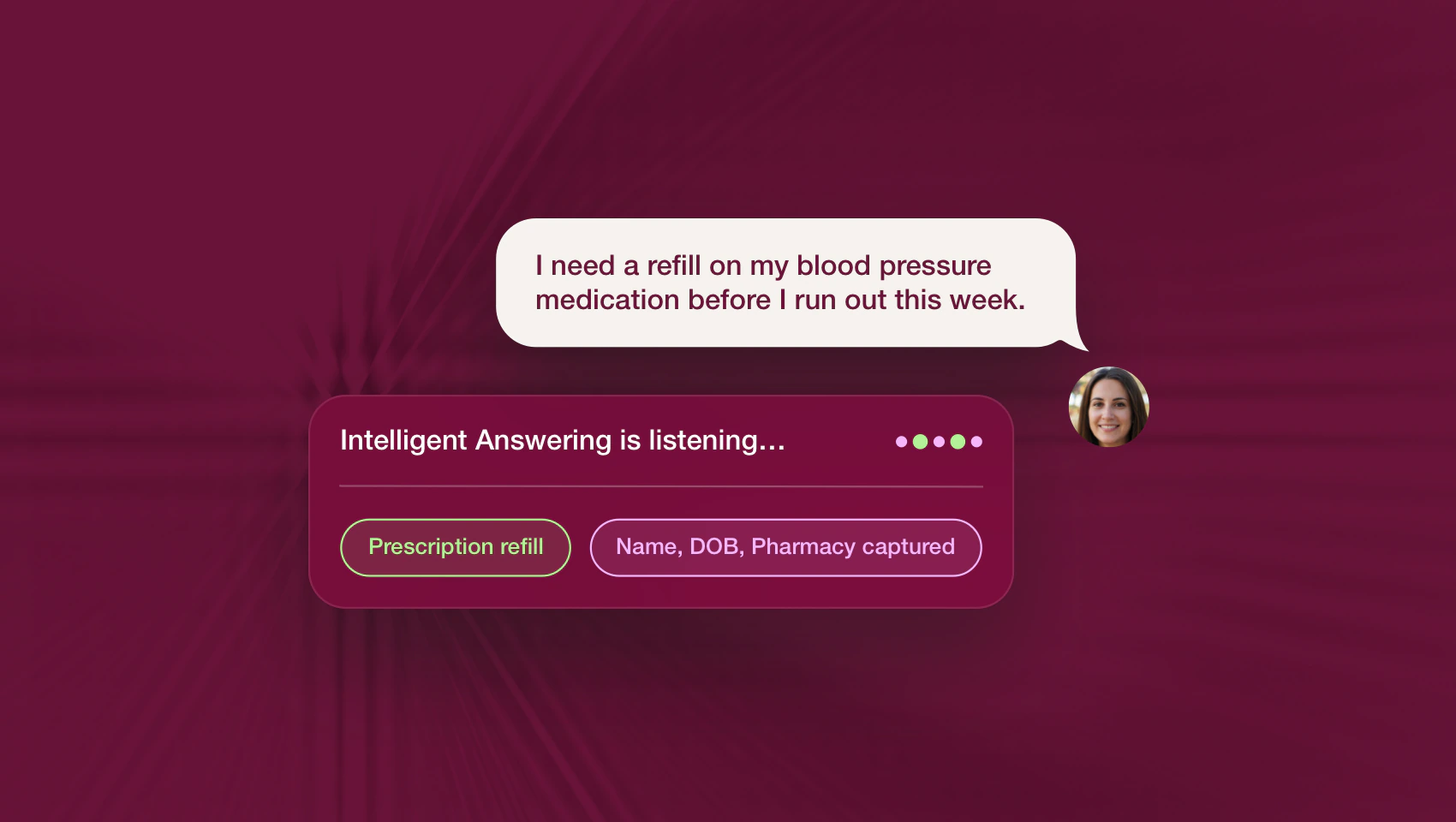
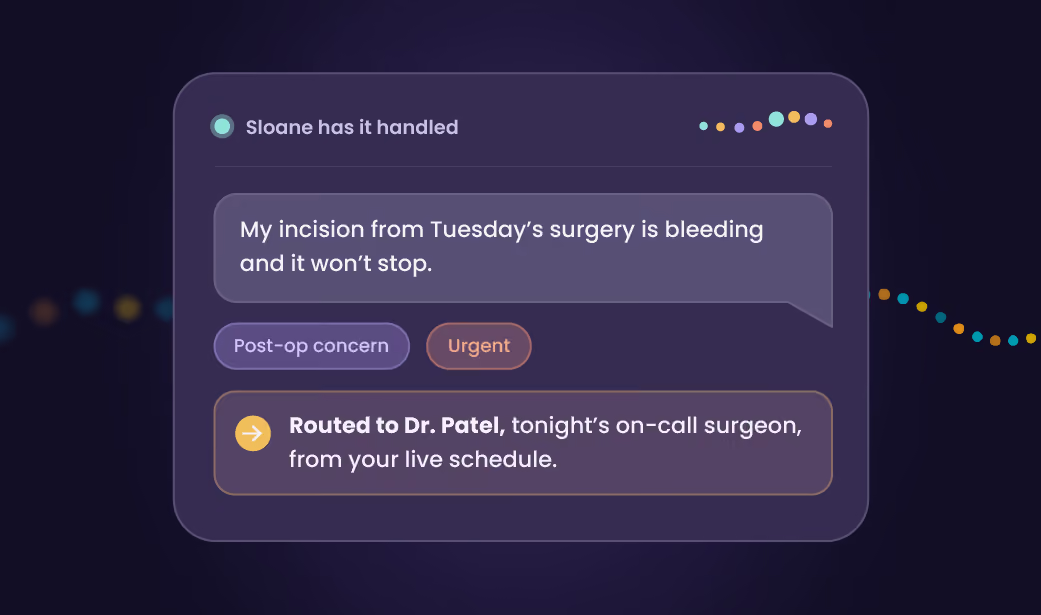
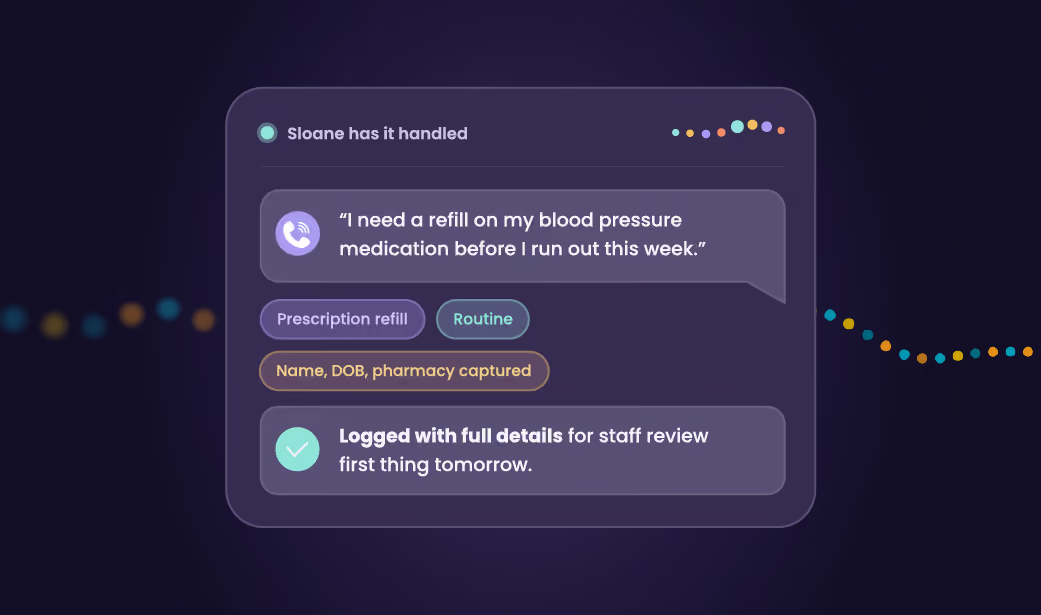
- The new solution needed to ensure that only urgent calls were routed to providers in real time. Non-urgent messages are still important, but an on-call physician shouldn’t be handling prescription refill requests or appointment cancellations—those can wait until the next day.
5. Find a scalable partner—Not Just a Vendor
- The Harbin Clinic wanted a scalable solution backed by a vendor who was prepared to grow with them. They wanted to find the right partnership to lay the groundwork for any future scaling needs.
Implementation
To pick the right healthcare communications system partner, The Harbin Clinic piloted a few solutions to gather feedback from key stakeholders. The selection process was designed to find the right fit for both patients and providers. After verifying pricing and analyzing feedback from providers and other non-urgent call staff, The Harbin Clinic selected PerfectServe’s Practice Communication solution, which includes a tech-enabled answering service.
Adam Grant, a manager in the clinic’s Project Management Office, worked directly with PerfectServe throughout the pilot session and implementation timeline. As a project manager, Grant knew the importance of building tight vendor partnerships. He was also struck by the fact that so many people on the PerfectServe team had clinical experience of some kind, whether as lab techs, nurses, or any number of other roles. It was clear to Grant that PerfectServe’s 25+ years building healthcare communication technology would help The Harbin Clinic strengthen their communication workflows far beyond the implementation of a much-improved answering service.
“[PerfectServe] gave us a best practice opportunity, because even though we think we’re [adhering to] best practices, [PerfectServe is] the expert, and we found that out very quickly as we adopted most, if not all, of their recommendations for changing up our phone systems.” said Grant.
He and others worked closely with PerfectServe throughout the implementation process. As they moved from phase to phase, from blueprinting workflows to encouraging internal adoption, PerfectServe was there to make tweaks, provide guidance, and suggest best practices as needed. From one-on-one provider training sessions to interactive webinars, the PerfectServe team didn’t just flip the switch on the answering service and disappear. They also educated users at The Harbin Clinic about PerfectServe’s live support center, which is available 24/7/365 to handle general troubleshooting, support requests from on-call providers, and any other questions that arise.
Results
"What we were able to do in a lot of our larger practices that have lots of non-urgent calls is we have a lot of people working that bucket. They can go in, listen to the message when they get free time, work the message, mark it as complete, and move on to the next thing. That allows us to have a collaborative approach if we need to send that message to a different provider if it wasn't meant for us, cancel that appointment, or follow up with that patient. Whatever [the reason for the outreach is], we don’t have one person that has to be responsible for that.”

Adam Grant
Conclusion
The Harbin Clinic knew their patients deserved better than long wait times and disjointed communication. Live answering services have some benefits, but their rudimentary workflows, dated technology, and variable quality often struggle to meet the communication needs of modern practices. And for answering services without dedicated, 24/7 support, it’s almost inevitable that customers will be frustrated when they don’t have assistance to fix urgent problems.
Healthcare organizations looking to provide the best patient care simply can’t afford long hold times, muddled communication pathways, and vendors whose products and/or services can’t keep up with modern technology. An enhanced medical answering service, paired with decades of vendor experience, can open the door for better communication management, better patient experiences, faster care delivery, and happier providers.
Discover the latest from PerfectServe












Bring us the workflow that [hurts most]
We'll show you how it runs on PerfectServe, with your teams, your sites and your EHR.